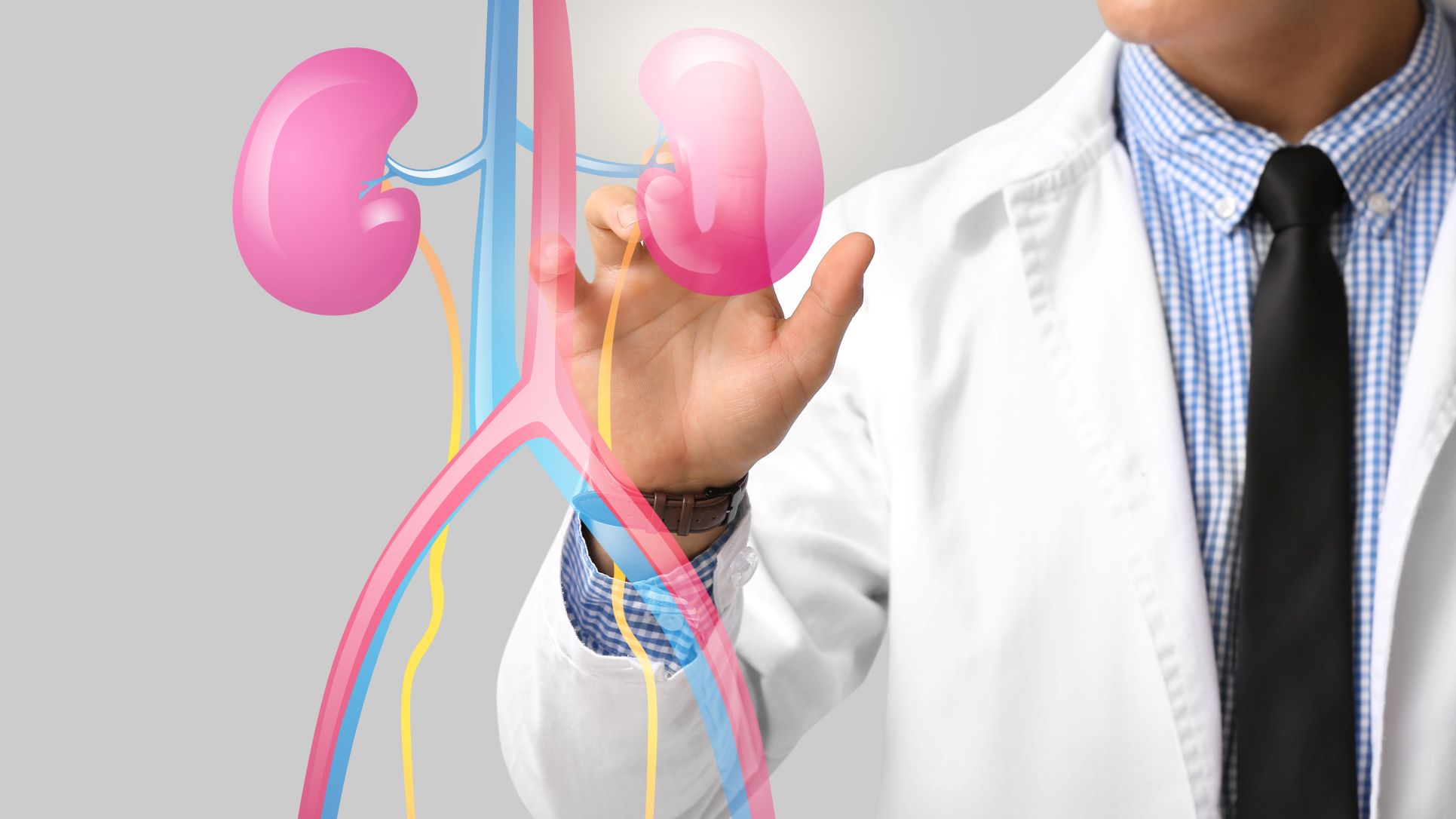
People often search for “50 percent kidney function life expectancy” after receiving an eGFR or kidney-function test result that appears to show their kidneys are working at half capacity.
However, kidney function is not usually measured as a simple percentage.
Doctors commonly assess kidney filtration using estimated glomerular filtration rate (eGFR), reported in mL/min/1.73 m². An eGFR around 50 indicates moderately reduced filtration, but it does not mean that exactly 50% of the kidneys have stopped working.
The meaning of an eGFR around 50 depends on factors such as age, urine albumin levels, whether the reduction persists, underlying medical conditions and how kidney function changes over time.
At Prabhakar Bhurke Clinic, Dr. Sandip Prabhakar Bhurke, super specialist nephrologist and transplant physician, provides individualized assessment and management for chronic kidney disease and reduced kidney function.
Does 50 Percent Kidney Function Mean Kidney Failure?
No, not necessarily.
An eGFR around 50 generally falls within the range of moderately decreased kidney function, commonly associated with CKD G3a when the finding is persistent and other criteria for chronic kidney disease are met.
Kidney failure is generally associated with much more severe loss of kidney function, typically corresponding to an eGFR below 15, although treatment decisions depend on the entire clinical situation.
Therefore, a person with an eGFR around 50 should not automatically assume that kidney failure is imminent.
Can You Live a Long Life With 50 Percent Kidney Function?
Many people with moderately reduced kidney function continue to live for many years, particularly when the underlying causes and risk factors are appropriately managed.
There is no single life-expectancy number for everyone with an eGFR around 50.
Two people with the same eGFR can have very different outcomes.
Factors that influence prognosis include:
-
Age
-
Cause of kidney disease
-
Urine albumin level
-
Blood pressure
-
Diabetes
-
Cardiovascular health
-
Smoking status
-
Weight and metabolic health
-
Other medical conditions
-
Rate at which kidney function is changing
-
Adherence to treatment and follow-up
This is why a nephrologist evaluates more than the eGFR value alone.
Why eGFR Is More Important Than a “Percentage”
Kidney function naturally changes with age, and eGFR is an estimate rather than a direct measurement of the percentage of kidney tissue that is functioning.
For example, an eGFR of 50 means the estimated filtration rate is approximately 50 mL/min/1.73 m². It does not mean that precisely half of the kidney tissue is working.
A single eGFR result also cannot tell whether kidney disease is stable, improving or progressing.
Doctors often compare results over time to understand the trend.
What CKD Stage Is Associated With an eGFR Around 50?
If an eGFR of approximately 50 persists for at least three months, it can fall into CKD G3a, which corresponds to an eGFR of 45–59 mL/min/1.73 m².
However, an isolated eGFR result does not automatically establish chronic kidney disease.
Doctors may also consider:
-
Urine albumin
-
Urine protein
-
Blood pressure
-
Kidney imaging
-
Previous kidney-function results
-
Medical history
-
Evidence of structural kidney abnormalities
What Does 50 Percent Kidney Function Mean for Daily Life?
Many people with moderately reduced kidney function may not experience noticeable symptoms.
Kidneys have substantial functional reserve, so symptoms do not necessarily appear when kidney function first becomes reduced.
Some people may continue their normal activities while making adjustments recommended by their healthcare team.
Depending on the individual's condition, doctors may advise:
-
Regular kidney-function monitoring
-
Blood-pressure control
-
Diabetes management
-
Appropriate physical activity
-
A balanced diet
-
Avoidance of unnecessary kidney-harming medicines
-
Weight management where appropriate
Symptoms to Watch For
Moderately reduced kidney function may cause no obvious symptoms.
If kidney disease progresses, possible symptoms can include:
-
Fatigue
-
Swelling around the feet or ankles
-
Changes in urination
-
Foamy urine
-
Muscle cramps
-
Itching
-
Reduced appetite
-
Nausea
-
Sleep difficulties
-
Difficulty concentrating
These symptoms can occur for many reasons and do not by themselves determine kidney function.
What Causes Kidney Function to Fall to Around 50?
Several conditions can contribute to reduced kidney function.
Diabetes
Long-term high blood glucose can damage kidney filtering structures.
High Blood Pressure
Persistent hypertension can damage blood vessels and filtering units within the kidneys.
Glomerular Diseases
Conditions affecting the kidney's filtering units can cause protein leakage and declining kidney function.
Polycystic Kidney Disease
Inherited kidney disorders such as polycystic kidney disease can gradually reduce kidney function.
Recurrent Kidney Injury
Repeated episodes of acute kidney injury may contribute to chronic kidney impairment.
Urinary Tract Problems
Long-standing obstruction, recurrent stones or other urinary tract abnormalities may affect kidney function.
Can 50 Percent Kidney Function Improve?
The answer depends on the cause.
If reduced kidney function is partly related to a reversible factor, such as dehydration, an acute illness or certain medications, kidney function may improve after the problem is addressed.
However, established chronic kidney damage generally cannot simply be restored to normal.
Even when eGFR does not return to a previous level, appropriate treatment can help preserve remaining kidney function and reduce the risk of progression.
How to Protect Kidney Function at 50 Percent
1. Control Blood Pressure
Blood-pressure control is one of the most important ways to reduce kidney and cardiovascular risk.
Take prescribed medications regularly and monitor blood pressure as advised.
2. Manage Diabetes
For people with diabetes, appropriate blood-glucose management can help reduce the risk of kidney disease progression.
3. Check Urine Albumin
Urine albumin provides important information about kidney damage and future kidney risk.
A person with an eGFR around 50 and significant albuminuria may have a different risk profile from someone with the same eGFR but little or no albuminuria.
4. Take Kidney-Protective Medicines When Appropriate
Depending on the diagnosis, doctors may prescribe medications that help control blood pressure, reduce albuminuria or provide kidney and cardiovascular protection.
Medication selection depends on kidney function, potassium levels, blood pressure and other health factors.
5. Avoid Unnecessary NSAID Use
Some non-steroidal anti-inflammatory drugs can affect kidney function, particularly in people with existing kidney disease or other risk factors.
Discuss regular pain medicines with your doctor.
6. Follow an Appropriate Diet
There is no universal “50 percent kidney function diet.”
Dietary recommendations depend on:
-
CKD stage
-
Potassium levels
-
Phosphorus levels
-
Protein intake
-
Blood pressure
-
Diabetes
-
Body weight
-
Other health conditions
Avoid extreme dietary restrictions unless medically recommended.
7. Stay Physically Active
Regular, appropriate physical activity can support cardiovascular health, blood pressure and metabolic health.
The exercise plan should reflect the person's age and overall medical condition.
How Often Should Kidney Function Be Checked?
Monitoring frequency depends on the CKD stage, urine albumin, underlying cause and stability of kidney function.
Your doctor may periodically check:
-
Serum creatinine
-
eGFR
-
Urine albumin-to-creatinine ratio
-
Blood pressure
-
Potassium
-
Other electrolytes
-
Blood glucose or HbA1c when appropriate
A trend over several tests can be more informative than one isolated result.
What If Kidney Function Keeps Declining?
A gradual decline in eGFR requires evaluation.
The nephrologist may look for:
-
Poorly controlled blood pressure
-
Uncontrolled diabetes
-
Increasing proteinuria
-
Medication-related kidney injury
-
Recurrent urinary obstruction
-
New kidney disease
-
Cardiovascular problems
-
Other potentially treatable factors
The earlier a cause is identified, the greater the opportunity to address modifiable risks.
Does 50 Percent Kidney Function Mean Dialysis Is Needed?
Usually, no.
An eGFR around 50 is far above the level at which kidney replacement therapy is generally considered solely because of kidney filtration.
Dialysis decisions are based on severe kidney failure and its complications rather than a simple “percentage” of kidney function.
Patients with moderately reduced kidney function generally focus on identifying the cause, protecting remaining kidney function and monitoring progression.
When Should You Consult a Nephrologist?
A nephrology consultation may be appropriate when you have:
-
Persistently reduced eGFR
-
Protein or albumin in the urine
-
A declining eGFR trend
-
Difficult-to-control blood pressure
-
Diabetes with kidney abnormalities
-
Recurrent kidney stones or obstruction
-
Unexplained kidney-function abnormalities
-
A history of acute kidney injury
-
Abnormal potassium or other electrolytes
Specialist evaluation can help determine whether kidney disease is stable and what measures may reduce future risk.
50 Percent Kidney Function Care at Prabhakar Bhurke Clinic
At Prabhakar Bhurke Clinic, Dr. Sandip Prabhakar Bhurke, super specialist nephrologist and transplant physician, provides individualized evaluation for patients with reduced kidney function and chronic kidney disease.
Depending on the patient's needs, care may include:
-
Interpretation of eGFR and creatinine trends
-
Urine albumin and protein assessment
-
Identification of CKD causes
-
Blood-pressure management
-
Diabetes-related kidney evaluation
-
Medication review
-
Management of CKD complications
-
Dietary and lifestyle guidance
-
Monitoring of kidney-function progression
-
Planning for advanced kidney care when required
The objective is to understand the patient's individual risk rather than relying on a single kidney-function percentage.
Frequently Asked Questions
Is 50 percent kidney function serious?
It indicates reduced kidney filtration, but it does not automatically mean kidney failure. Its significance depends on whether the reduction is persistent, urine albumin levels, the underlying cause and other health factors.
How long can someone live with 50 percent kidney function?
There is no fixed life expectancy. Many people live for many years with moderately reduced kidney function, particularly when risk factors are well managed.
Can kidney function at 50 percent return to normal?
If the reduction is caused partly by a reversible problem, improvement may occur. Established chronic kidney damage generally cannot simply be reversed, but progression can often be slowed.
Is dialysis required with 50 percent kidney function?
Generally, no. Dialysis is usually considered for advanced kidney failure and specific complications, not simply because eGFR is around 50.
Does an eGFR of 50 mean I have CKD?
Not necessarily. If an eGFR of 50 persists for at least three months, it may meet one criterion for CKD. Doctors also consider urine findings and other evidence of kidney damage.
Can diet improve kidney function?
An appropriate diet can help manage blood pressure, diabetes and other factors affecting kidney health. However, diet alone cannot reverse established chronic kidney damage.
Conclusion
Searching for “50 percent kidney function life expectancy” can naturally create concern, but an eGFR around 50 does not automatically mean that a person is approaching kidney failure or has a specific life expectancy.
Kidney health is assessed using the complete clinical picture, including eGFR, urine albumin, underlying disease, blood pressure, diabetes, age and the rate of change in kidney function.
With appropriate monitoring and treatment, many people with moderately reduced kidney function can maintain a good quality of life for years. Identifying the cause early and addressing controllable risk factors are important steps in protecting remaining kidney function.
For specialized assessment and long-term kidney care, Dr. Sandip Prabhakar Bhurke at Prabhakar Bhurke Clinic provides super specialist nephrology and transplant-related medical care.
Medical Disclaimer
This article is intended for general educational purposes only and does not constitute medical advice, diagnosis or treatment. “50 percent kidney function” is not a precise medical measurement, and life expectancy cannot be determined from an eGFR value alone. Individual prognosis depends on kidney function, urine albumin, underlying disease, age, cardiovascular health, treatment response and other factors. Do not start, stop or change medicines or dietary restrictions based solely on this article. Patients with reduced kidney function should consult a qualified healthcare professional for individualized evaluation and follow-up.