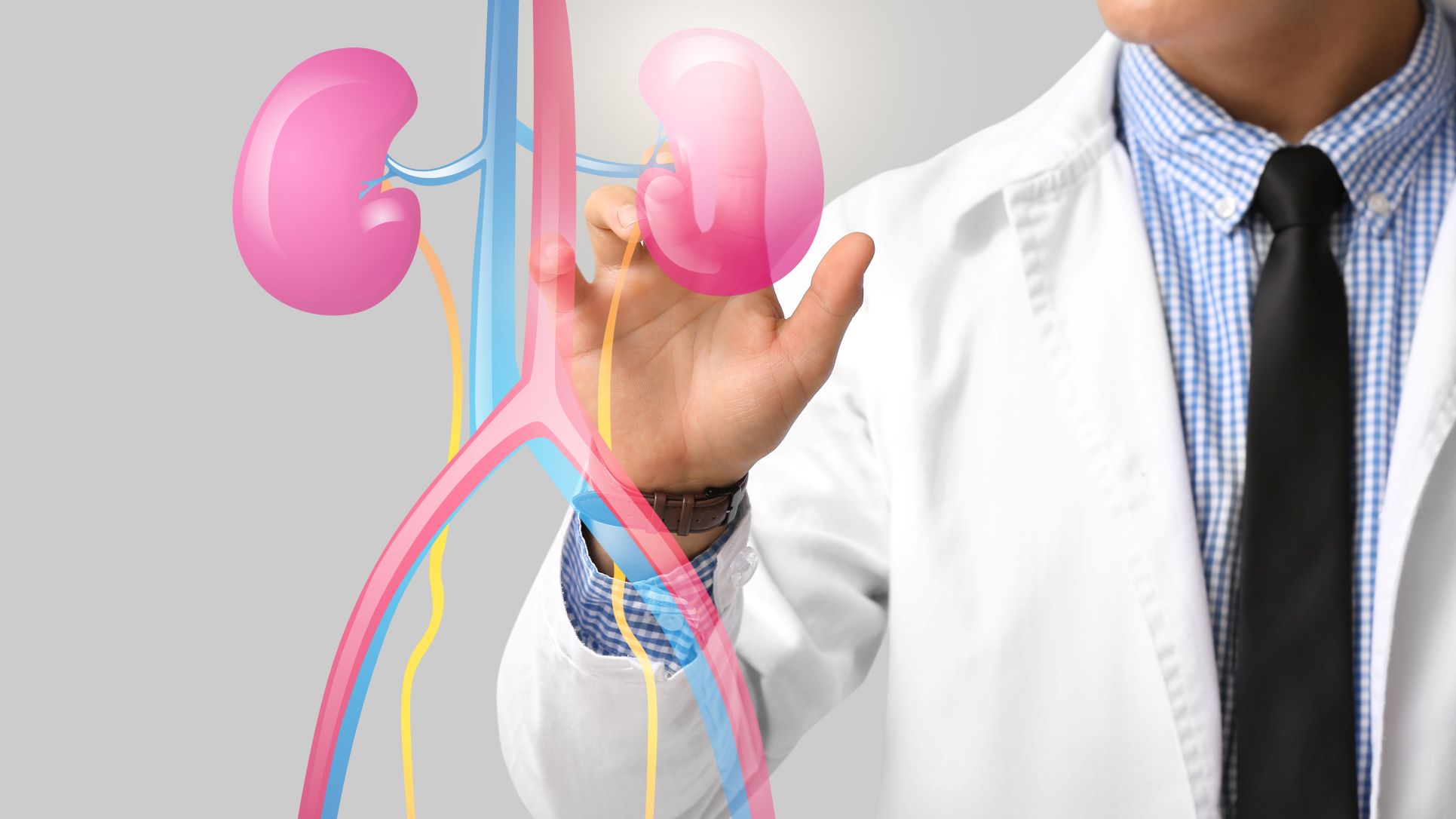
Extracorporeal lithotripsy, commonly known as extracorporeal shock wave lithotripsy (ESWL), is a procedure used to break certain kidney or urinary stones into smaller fragments so they can pass through the urinary tract.
Unlike conventional surgery, ESWL uses shock waves generated outside the body. The waves are focused on the stone using imaging guidance, allowing the stone to be fragmented without making a surgical incision.
The procedure can be an appropriate option for selected patients, but it is not suitable for every stone. Stone size, location, composition, anatomy, kidney function and the presence of obstruction or infection all influence treatment selection.
At Prabhakar Bhurke Clinic, Dr. Sandip Prabhakar Bhurke, super specialist nephrologist and transplant physician, provides evaluation and medical management of kidney and urinary tract conditions and can guide patients regarding appropriate stone-care options.
How Does Extracorporeal Lithotripsy Work?
During ESWL, the patient is positioned so that the stone can be accurately located.
Imaging such as ultrasound or X-ray may be used to identify and target the stone.
A lithotripsy device then generates controlled shock waves that travel through the body and concentrate their energy on the stone.
Repeated shock waves can break the stone into smaller pieces.
The resulting fragments may then leave the body naturally through urine.
The exact technique, number of shock waves and treatment duration vary depending on the stone and the equipment being used.
Which Kidney Stones Can Be Treated With ESWL?
ESWL may be considered for selected:
-
Kidney stones
-
Renal pelvis stones
-
Upper ureteral stones
-
Certain smaller or moderately sized urinary stones
The success of treatment depends on several factors.
Stone Size
Smaller stones generally have a better chance of being successfully fragmented and passed.
Stone Location
A stone in an accessible part of the kidney or upper ureter may be more suitable for ESWL than one in a difficult location.
Stone Composition
Some stones are harder and more resistant to shock-wave fragmentation than others.
Body Anatomy
Patient anatomy and the distance between the skin and stone can affect how effectively shock waves reach the target.
When Might Extracorporeal Lithotripsy Be Recommended?
A specialist may consider ESWL when:
-
The stone is appropriately sized
-
Its location is suitable
-
The stone can be targeted effectively
-
There is no uncontrolled urinary infection
-
There is no severe obstruction requiring urgent drainage
-
The patient's overall condition makes the procedure appropriate
The decision should be made after reviewing imaging and the patient's medical history.
When Is ESWL Not the Best Choice?
Extracorporeal lithotripsy may not be appropriate in certain situations.
Examples include:
-
Very large kidney stones
-
Certain very hard stones
-
Stones in locations where fragmentation is unlikely to be effective
-
Significant urinary obstruction
-
Active urinary infection
-
Certain bleeding disorders
-
Some anatomical abnormalities
-
Pregnancy, depending on the circumstances
For larger or complex stones, another procedure may provide a better chance of complete stone clearance.
Extracorporeal Lithotripsy vs Other Stone Treatments
Several treatment approaches are available for urinary stones.
ESWL
Uses externally generated shock waves to fragment the stone.
Potential advantages:
-
No traditional surgical incision
-
Usually less invasive than surgical stone removal
-
Suitable for selected kidney and ureteral stones
-
Recovery can be relatively quick
Ureteroscopy
A small endoscope is passed through the urinary tract to reach the stone. The stone may be removed or fragmented using a laser.
Percutaneous Nephrolithotomy
A small access tract is created through the skin into the kidney to remove larger or complex stones.
The best treatment depends on the stone rather than on the procedure that sounds least invasive.
Is Extracorporeal Lithotripsy Painful?
Patients may experience discomfort during shock-wave treatment.
The amount of discomfort varies depending on:
-
Individual pain sensitivity
-
Stone location
-
Number and intensity of shock waves
-
Treatment technique
Pain-control or sedation methods may be used according to the clinical setting and patient requirements.
What Happens After ESWL?
After treatment, the fragmented stone material may gradually pass through the urine.
Patients may experience:
-
Mild discomfort
-
Blood-tinged urine for a short period
-
Urinary frequency
-
Mild abdominal or flank discomfort
-
Passage of small stone fragments
Follow-up imaging may be recommended to determine whether the stone has been adequately cleared.
Sometimes more than one treatment session is required.
How Long Does It Take to Recover From Extracorporeal Lithotripsy?
Recovery varies from person to person.
Many patients can return to normal activities relatively quickly, depending on the procedure, symptoms and healthcare provider's instructions.
The passage of stone fragments may continue for days or longer after treatment.
Patients should follow the individualized advice provided regarding:
-
Fluid intake
-
Activity
-
Pain medicines
-
Follow-up imaging
-
Warning signs
-
Collection or analysis of stone fragments when recommended
What Are the Possible Risks of ESWL?
Although ESWL is generally considered a minimally invasive stone treatment, complications can occur.
Possible risks include:
-
Blood in the urine
-
Pain during passage of stone fragments
-
Bruising
-
Incomplete stone fragmentation
-
Residual stone fragments
-
Urinary obstruction caused by fragments
-
Infection
-
Need for repeat treatment
-
Rare injury to surrounding tissues
The risk depends on the patient's medical condition and characteristics of the stone.
What Is a Steinstrasse?
A possible complication after shock-wave lithotripsy is the formation of a collection of stone fragments within the ureter.
This is sometimes called steinstrasse, meaning "stone street."
A significant accumulation of fragments can obstruct urine flow and may require additional treatment.
Patients should contact their healthcare team promptly if they develop severe pain, fever, chills, difficulty urinating or worsening symptoms after lithotripsy.
Can ESWL Completely Remove a Kidney Stone?
ESWL aims to fragment the stone so that the pieces can pass through the urinary tract.
Complete clearance is not guaranteed after one session.
The outcome depends on:
-
Stone size
-
Stone composition
-
Stone location
-
Kidney anatomy
-
Fragment size
-
Patient factors
Some patients may need another ESWL session or a different stone-removal procedure.
Does ESWL Prevent Future Kidney Stones?
No. ESWL treats an existing stone but does not automatically eliminate the reasons why a person forms stones.
Patients with recurrent stones may benefit from evaluation for contributing factors.
Depending on the individual situation, prevention may include:
-
Adequate fluid intake
-
Dietary adjustments
-
Reducing excessive sodium intake
-
Maintaining an appropriate dietary pattern
-
Treating metabolic abnormalities
-
Stone analysis
-
Blood and urine testing
-
Preventive medicines when medically indicated
How Is a Patient Evaluated Before ESWL?
Before deciding on extracorporeal lithotripsy, the treating team may review:
Imaging
Ultrasound, X-ray or CT imaging can help determine stone size, location and anatomy.
Urine Testing
Testing may identify blood or urinary infection.
Blood Tests
Kidney function and other relevant laboratory values may be checked.
Medical History
The doctor may ask about:
-
Previous stones
-
Previous procedures
-
Medicines
-
Bleeding disorders
-
Pregnancy
-
Other kidney conditions
-
Current symptoms
This assessment helps determine whether ESWL is an appropriate option.
Extracorporeal Lithotripsy and Kidney Function
Patients with kidney disease require individualized assessment before undergoing a stone procedure.
A stone causing urinary obstruction can itself affect kidney function, while some patients already have reduced kidney function from another condition.
Treatment should therefore consider both stone clearance and preservation of kidney health.
When Should You Seek Urgent Medical Attention After ESWL?
Contact a healthcare professional promptly if you develop:
-
Fever or chills
-
Severe or increasing pain
-
Persistent vomiting
-
Difficulty passing urine
-
Very low urine output
-
Heavy or persistent bleeding in the urine
-
Significant weakness or worsening symptoms
Fever associated with urinary obstruction can indicate a serious infection and requires urgent assessment.
Extracorporeal Lithotripsy Care at Prabhakar Bhurke Clinic
At Prabhakar Bhurke Clinic, Dr. Sandip Prabhakar Bhurke, super specialist nephrologist and transplant physician, evaluates patients with kidney disease and urinary stone-related problems.
The evaluation can help determine:
-
Whether a stone is likely to pass naturally
-
Whether medical management is appropriate
-
Whether ESWL may be suitable
-
Whether another stone-removal approach should be considered
-
How to protect kidney function
-
How to reduce the risk of recurrent stones
Treatment recommendations are based on the patient's imaging, symptoms, kidney function and overall health.
Frequently Asked Questions About Extracorporeal Lithotripsy
Is extracorporeal lithotripsy the same as ESWL?
Yes. Extracorporeal shock wave lithotripsy, abbreviated as ESWL, is the commonly used term for this type of externally delivered shock-wave treatment.
Is ESWL a surgery?
ESWL is generally considered a non-incisional or minimally invasive procedure because shock waves are delivered from outside the body rather than through a surgical incision.
Can ESWL treat large kidney stones?
It may be less effective for larger stones. Depending on stone size and location, procedures such as ureteroscopy or percutaneous nephrolithotomy may be more appropriate.
How many ESWL sessions are needed?
Some stones clear after one treatment, while others may require additional sessions or another treatment method.
Does ESWL remove the stone immediately?
Not necessarily. The procedure fragments the stone, and the resulting pieces may pass through urine over the following days or longer.
Can kidney stones come back after ESWL?
Yes. ESWL removes or fragments an existing stone but does not eliminate the underlying tendency to form stones. Preventive evaluation can help reduce recurrence.
Conclusion
Extracorporeal lithotripsy, or ESWL, offers a non-incisional approach for treating selected kidney and urinary stones. By using focused shock waves to break a stone into smaller fragments, it can help some patients avoid more invasive procedures.
However, ESWL is not appropriate for every stone. Size, location, composition, anatomy, urinary obstruction, infection and kidney function all influence the choice of treatment.
A proper evaluation before treatment and appropriate follow-up afterward are important for achieving effective stone clearance while protecting kidney health.
For specialized evaluation of kidney and urinary stone conditions, Prabhakar Bhurke Clinic provides nephrology care under Dr. Sandip Prabhakar Bhurke, super specialist nephrologist and transplant physician.
Medical Disclaimer
This article is intended for general educational purposes only and does not constitute medical advice, diagnosis or treatment. Extracorporeal lithotripsy may not be appropriate for every patient or every type of kidney stone. Treatment decisions should be made by a qualified healthcare professional after reviewing appropriate imaging, medical history, kidney function and other relevant factors. Do not delay urgent medical care if you develop fever, chills, severe pain, inability to urinate, very low urine output or other rapidly worsening symptoms. Do not start or stop medicines without advice from your treating healthcare professional.