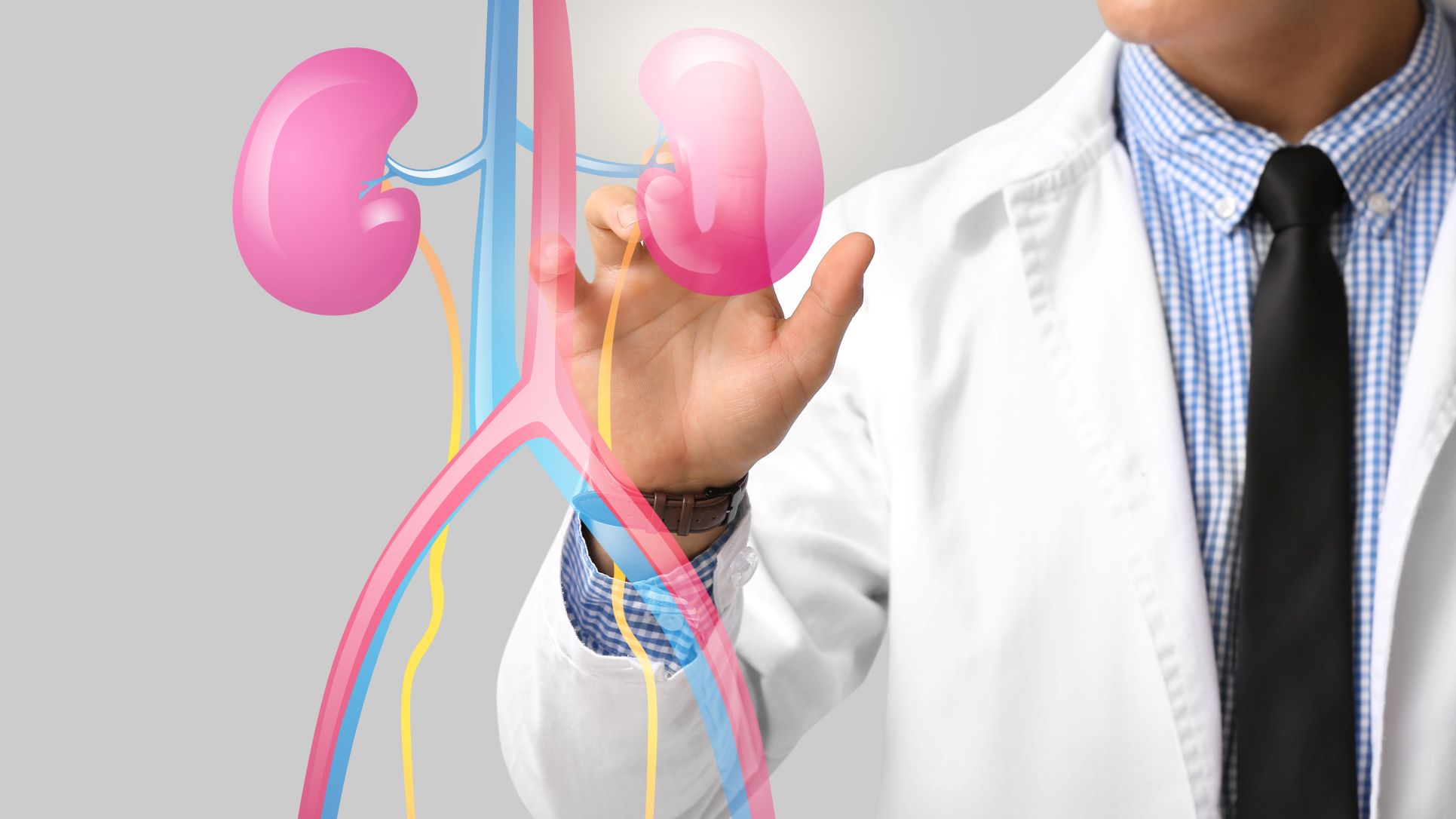
A 4mm kidney stone is considered a relatively small urinary stone, but its effect can vary significantly depending on where it is located.
A 4mm stone sitting inside the kidney may cause no symptoms at all. If it moves into the ureter, it can cause sudden flank pain, nausea, blood in the urine or difficulty with urine flow.
The size of the stone is only one part of the treatment decision. Its location, shape, symptoms, degree of obstruction, kidney function and presence or absence of infection also matter.
At Prabhakar Bhurke Clinic, Dr. Sandip Prabhakar Bhurke, super specialist nephrologist and transplant physician, provides evaluation of kidney function and stone-related kidney problems and can help determine when specialist assessment is appropriate.
Can a 4mm Kidney Stone Pass Naturally?
In many cases, a 4mm stone may pass without a procedure, particularly when it has entered the ureter and is moving toward the bladder.
However, natural passage is not guaranteed.
The likelihood of passage depends on factors such as:
-
Stone location
-
Stone shape
-
Ureter anatomy
-
Degree of obstruction
-
Whether the stone is moving
-
Previous stone history
-
Individual urinary tract characteristics
A stone located closer to the bladder may have a better chance of passing than one positioned higher in the urinary tract.
Therefore, the appropriate approach should be based on the individual's imaging and symptoms rather than stone size alone.
How Is a 4mm Kidney Stone Diagnosed?
A doctor may use several tests to determine the stone's size and location.
Ultrasound
Ultrasound can identify many kidney stones and can show whether the kidney is swollen because of impaired urine drainage.
CT Scan
A non-contrast CT scan may provide detailed information about:
-
Stone size
-
Stone location
-
Number of stones
-
Urinary obstruction
-
Hydronephrosis
The decision to perform CT imaging depends on the clinical situation.
Urine Tests
Urinalysis can identify blood and other abnormalities. A urine culture may be recommended if infection is suspected.
Blood Tests
Blood testing may include:
-
Serum creatinine
-
eGFR
-
Electrolytes
-
Other tests based on the patient's condition
These tests help determine whether the stone is affecting kidney function.
4mm Kidney Stone Treatment Options
Treatment depends on whether the stone is causing symptoms or obstruction and whether it is likely to pass naturally.
Observation and Monitoring
If a 4mm stone is small, symptoms are manageable, there is no significant obstruction or infection and kidney function is stable, a doctor may recommend observation.
Follow-up may be used to determine whether the stone has passed or remains in the urinary tract.
Medicines for Stone Passage
In selected patients with a ureteric stone, a doctor may prescribe medication to help manage symptoms or facilitate stone passage.
The choice of medicine depends on the patient's health, stone location and other factors.
Do not take prescription stone medicines without medical advice.
Pain Management
Kidney stones can cause significant pain.
A healthcare professional can recommend an appropriate pain-relief strategy after considering kidney function, stomach health, other medicines and medical conditions.
Some commonly used painkillers may not be appropriate for people with kidney disease.
ESWL
Extracorporeal shock wave lithotripsy (ESWL) uses externally generated shock waves to break a stone into smaller fragments.
It may be considered for selected kidney or ureteric stones depending on their location, composition and other factors.
Ureteroscopy
During ureteroscopy, a thin instrument is passed through the urinary tract to reach the stone.
The stone may be removed or fragmented using appropriate equipment, including laser technology.
Ureteroscopy can be considered when a stone does not pass naturally or causes ongoing symptoms or obstruction.
When Does a 4mm Stone Need a Procedure?
A 4mm stone does not automatically require surgery or another procedure.
Intervention may be considered when there is:
-
Persistent or severe pain
-
Failure of the stone to pass
-
Significant urinary obstruction
-
Worsening hydronephrosis
-
Infection associated with obstruction
-
Reduced kidney function
-
Recurrent emergency visits because of symptoms
-
A clinical situation in which continued observation is unsuitable
The goal is not simply to remove a stone because it measures 4mm. The objective is to protect kidney function and resolve clinically significant obstruction or symptoms.
Can a 4mm Kidney Stone Cause Severe Pain?
Yes.
Stone size and pain intensity do not always correspond.
A small stone can cause severe pain when it enters the ureter, particularly if it interferes with urine flow.
Pain may be felt in:
-
The side of the back
-
Flank
-
Lower abdomen
-
Groin
It may also occur in waves and be accompanied by nausea or vomiting.
Symptoms of a 4mm Kidney Stone
A 4mm stone may cause:
-
Sharp flank pain
-
Pain radiating toward the groin
-
Blood in the urine
-
Burning while urinating
-
Frequent urination
-
Nausea
-
Vomiting
-
Urinary urgency
Some stones remain asymptomatic and are discovered incidentally during imaging.
4mm Kidney Stone With Hydronephrosis
Hydronephrosis means that urine is not draining normally and the kidney has become swollen.
A 4mm stone can produce hydronephrosis if it obstructs the ureter.
The significance depends on:
-
Degree of obstruction
-
Duration
-
Whether one or both kidneys are affected
-
Kidney function
-
Presence of infection
A stone causing significant obstruction may require closer monitoring or intervention.
4mm Kidney Stone With Infection
A blocked urinary system combined with infection can become a serious medical condition.
Warning symptoms include:
-
Fever
-
Chills
-
Severe flank pain
-
Vomiting
-
Feeling very unwell
-
Reduced urine output
When infection occurs behind an obstruction, antibiotics alone may not adequately resolve the problem if urine cannot drain. Urgent drainage may be required in appropriate cases, followed by definitive stone treatment after stabilization.
Seek urgent medical attention if these symptoms occur.
Can Drinking Water Help a 4mm Kidney Stone Pass?
Adequate hydration is important for urinary health and kidney stone prevention.
However, forcing large quantities of water does not guarantee that a stone will pass faster.
If a stone is obstructing urine flow, excessive fluid intake may increase pressure and discomfort.
People with chronic kidney disease, heart failure or a prescribed fluid restriction should follow their doctor's individualized fluid recommendations.
What Should You Eat With a 4mm Kidney Stone?
Dietary recommendations depend partly on the type of stone and the patient's risk factors.
General preventive measures may include:
-
Maintaining appropriate fluid intake
-
Limiting excessive salt
-
Eating a balanced diet
-
Avoiding unnecessary extreme diets
-
Maintaining a healthy weight
Patients with recurrent stones may benefit from stone analysis and metabolic evaluation to identify specific dietary or medical risk factors.
How Do You Know if a 4mm Stone Has Passed?
Pain relief alone does not always prove that the stone has passed.
A stone may stop causing pain while remaining in the urinary tract.
Depending on the clinical situation, follow-up may involve:
-
Urine testing
-
Kidney-function testing
-
Ultrasound
-
Other imaging
If you actually capture the stone after passing it, your doctor may recommend stone analysis to help determine its composition and guide future prevention.
What Happens If a 4mm Stone Does Not Pass?
If the stone remains in place, the doctor may reassess:
-
Its current location
-
Symptoms
-
Degree of obstruction
-
Kidney function
-
Presence of infection
-
Likelihood of eventual passage
Continued observation may be appropriate in selected patients, while persistent obstruction or symptoms may make a procedure more appropriate.
Treatment should be individualized rather than based solely on the 4mm measurement.
When Should You Seek Urgent Medical Care?
A person with a known kidney stone should seek urgent medical assessment if there is:
-
Fever or chills
-
Very little or no urine
-
Severe or worsening pain
-
Persistent vomiting
-
Confusion
-
Severe weakness
-
Fainting
-
Sudden deterioration
-
Known solitary functioning kidney with suspected obstruction
These symptoms can indicate infection, significant obstruction or another complication.
How Can You Prevent Another Kidney Stone?
A previous stone increases the possibility of developing stones again.
Depending on your stone type and medical history, prevention may include:
Maintain Appropriate Fluid Intake
Adequate fluid intake can help dilute substances that contribute to stone formation.
Reduce Excess Salt
High sodium intake can increase urinary calcium in some people and may contribute to calcium stone formation.
Follow an Individualized Diet
The appropriate diet depends on the type of stone and metabolic risk factors.
Consider Stone Analysis
If a passed stone is available, laboratory analysis can provide useful information about its composition.
Evaluate Recurrent Stones
People who repeatedly form stones may benefit from blood and urine testing to identify preventable risk factors.
When Should You See a Kidney Specialist?
Specialist evaluation can be particularly useful if you have:
-
Recurrent kidney stones
-
Elevated creatinine
-
Chronic kidney disease
-
Hydronephrosis
-
Repeated urinary infections
-
A solitary functioning kidney
-
Multiple or bilateral stones
-
Abnormal urine findings
A nephrologist can evaluate overall kidney health and help manage kidney-function-related issues. A urologist may be involved when a stone requires an endoscopic or surgical procedure.
Kidney Stone and Kidney Function Care at Prabhakar Bhurke Clinic
At Prabhakar Bhurke Clinic, Dr. Sandip Prabhakar Bhurke, super specialist nephrologist and transplant physician, provides specialized evaluation for kidney-function abnormalities and kidney conditions associated with urinary stones.
Depending on the patient's clinical situation, care may include:
-
Assessment of kidney function
-
Creatinine and eGFR monitoring
-
Urine examination
-
Evaluation of hydronephrosis
-
Assessment of urinary obstruction
-
Recurrent kidney stone evaluation
-
Prevention-focused kidney care
-
Management of associated chronic kidney disease
-
Coordination with urology when stone procedures are required
The treatment plan is based on the patient's symptoms, imaging findings, kidney function and overall medical condition.
Frequently Asked Questions
Is a 4mm kidney stone considered large?
No. A 4mm stone is relatively small, and many such stones may pass naturally. However, location and obstruction are important in deciding treatment.
Can a 4mm kidney stone pass without surgery?
Yes, many 4mm stones can pass naturally. The likelihood depends on where the stone is located and individual factors.
How long does a 4mm kidney stone take to pass?
There is no fixed time for every patient. Some stones pass relatively quickly, while others remain in the urinary tract for longer. Follow-up may be needed if passage is uncertain.
Do all 4mm kidney stones need removal?
No. A 4mm stone does not automatically require a procedure. Observation may be appropriate when symptoms are controlled and there is no significant complication.
Can a 4mm stone cause kidney damage?
A small stone can potentially affect kidney function if it produces significant or prolonged obstruction, particularly when infection or another risk factor is present.
Is ESWL used for a 4mm kidney stone?
ESWL can be an option for selected stones, but it is not necessary for every 4mm stone. Location, composition and other clinical factors influence the decision.
Should I see a nephrologist for a 4mm kidney stone?
A nephrologist can be particularly helpful when a stone is associated with abnormal kidney function, recurrent stones, chronic kidney disease or other kidney-related concerns. A urologist may be needed for procedural stone removal.
Conclusion
4mm kidney stone treatment does not necessarily mean immediate stone removal. Because many stones of this size may pass naturally, doctors often consider observation and appropriate symptom management when there is no infection, significant obstruction or deterioration in kidney function.
However, a 4mm stone can still cause severe pain or urinary obstruction. Persistent symptoms, hydronephrosis, infection or impaired kidney function may require more active treatment, including a procedure when appropriate.
The safest approach is to base treatment on the stone's location, symptoms, imaging findings and kidney function rather than size alone.
For specialized kidney evaluation and management, consult Dr. Sandip Prabhakar Bhurke at Prabhakar Bhurke Clinic.
Medical Disclaimer
This article is provided for general educational and informational purposes only and should not be considered medical advice, diagnosis or treatment. A 4mm kidney stone may pass naturally in some patients, but treatment depends on stone location, obstruction, symptoms, kidney function, infection and other individual factors. Do not start prescription medicines, antibiotics or stone-treatment products without medical guidance. Do not force excessive amounts of water in an attempt to pass a stone, particularly if you have kidney disease, heart disease or a fluid restriction. Fever, chills, severe or worsening pain, persistent vomiting, very little or no urine, confusion or sudden deterioration require urgent medical assessment. Consult Dr. Sandip Prabhakar Bhurke or another qualified healthcare professional for personalized care.