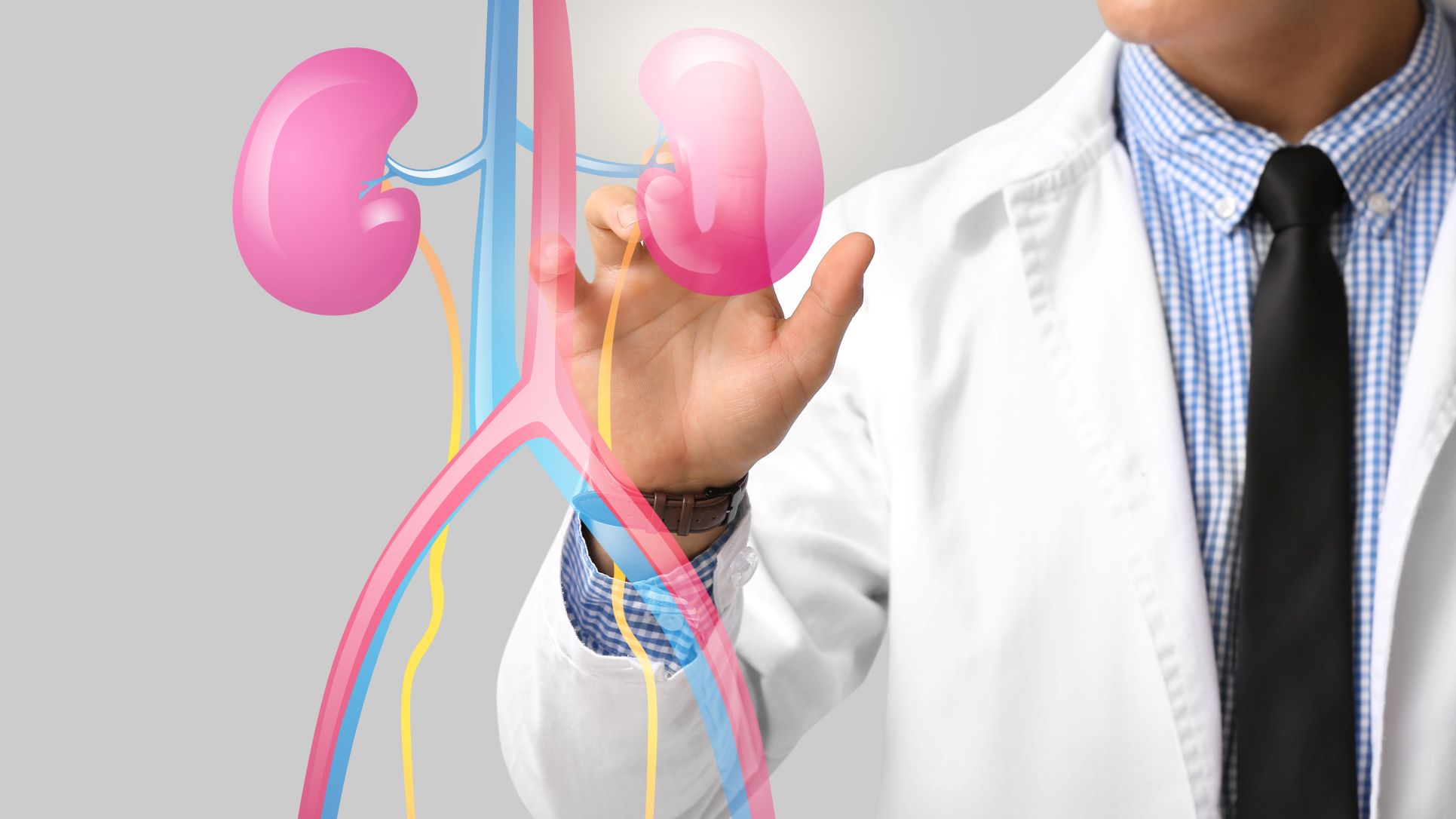
Knowing the signs of kidney pain can help you decide when back, side or abdominal discomfort needs medical evaluation.
Kidney-related pain is often felt in the flank, the area between the lower ribs and the side of the waist. It may occur on the right side, left side or both sides, depending on the underlying condition.
Kidney stones and kidney infections are among the more common causes of kidney-related pain. However, pain in the kidney area does not always originate from the kidneys. Muscle strain, spinal problems, nerve irritation, gastrointestinal conditions and other disorders can produce similar discomfort.
For this reason, the location of pain alone cannot establish the diagnosis.
At Prabhakar Bhurke Clinic, Dr. Sandip Prabhakar Bhurke, super specialist nephrologist and transplant physician, provides evaluation of kidney-related symptoms and associated kidney conditions.
Where Is Kidney Pain Usually Felt?
Kidneys are located toward the back of the upper abdomen, below the lower ribs and on either side of the spine.
Kidney-related pain is commonly described as discomfort in:
-
The side of the back
-
The flank
-
The area below the ribs
-
One side of the waist
-
The upper or side portion of the abdomen
Pain caused by a kidney stone may travel from the flank toward the lower abdomen or groin.
The exact location and pattern depend on the underlying cause.
What Does Kidney Pain Feel Like?
There is no single description that applies to everyone.
Depending on the cause, kidney-related pain may feel:
-
Sharp
-
Severe
-
Cramping
-
Aching
-
Constant
-
Intermittent
-
Deep or difficult to pinpoint
Kidney stone pain may come in waves as the stone moves through the urinary tract.
Pain associated with a kidney infection may be more persistent and may occur with fever or urinary symptoms.
Common Signs Associated With Kidney Pain
Kidney-related pain may occur alongside other symptoms.
1. Pain in the Flank
Flank pain is one of the most recognizable locations of kidney-related discomfort.
It may occur on one side or, less commonly, on both sides.
Severe flank pain that begins suddenly may occur with a kidney stone.
2. Pain That Spreads Toward the Groin
A stone moving through the ureter can cause pain that travels from the side or back toward the lower abdomen or groin.
The pain may change location as the stone moves.
This pattern can be different from typical muscle-related back pain.
3. Fever and Chills
Kidney infection can cause:
-
Fever
-
Chills
-
Flank pain
-
Burning during urination
-
Frequent urination
-
General weakness
A combination of fever and significant flank pain should be assessed promptly because an untreated urinary infection can become serious.
4. Burning or Pain During Urination
Pain while urinating can occur with urinary tract infections and other urinary conditions.
If it occurs together with flank pain, fever or blood in the urine, medical evaluation becomes particularly important.
5. Blood in the Urine
Blood in urine, known as hematuria, can occur with kidney stones, urinary infections and several other urinary tract conditions.
Visible blood in urine should not be ignored, even if the pain subsequently disappears.
6. Nausea and Vomiting
Severe kidney stone pain can cause nausea and vomiting.
Persistent vomiting can lead to dehydration and may complicate kidney function.
If vomiting is severe or the person cannot keep fluids down, prompt medical attention may be necessary.
7. Changes in Urination
Kidney or urinary problems may sometimes cause:
-
Increased urinary frequency
-
Urgency
-
Reduced urine output
-
Difficulty passing urine
-
Cloudy urine
-
Foamy urine
These symptoms have multiple possible causes and should be interpreted alongside other findings.
Kidney Stone Pain vs. Kidney Infection Pain
Understanding the differences can be useful, although only medical evaluation can confirm the cause.
| Feature | Kidney Stone | Kidney Infection |
|---|---|---|
| Pain | Often severe and may come in waves | Often persistent aching or flank pain |
| Location | Flank, back, abdomen or groin | Often flank or back |
| Fever | Usually absent unless infection is also present | Common |
| Chills | Less typical | Can occur |
| Nausea | Common with severe pain | May occur |
| Urinary symptoms | May occur | Often present |
| Blood in urine | Can occur | Can occur |
A stone causing urinary obstruction together with infection can be particularly serious and requires urgent medical attention.
Kidney Pain on the Right Side
Right-sided flank or upper abdominal pain can have several causes.
Possible kidney-related causes include:
-
Right kidney stone
-
Kidney infection
-
Urinary obstruction
-
Other kidney conditions
However, right-sided pain can also arise from the gallbladder, liver, appendix, bowel, muscles or spine.
Therefore, right-sided pain should not automatically be assumed to be kidney pain.
Kidney Pain on the Left Side
Left-sided flank pain may occur with:
-
Left kidney stones
-
Kidney infection
-
Urinary obstruction
-
Other kidney conditions
But problems involving the muscles, spine, bowel, spleen or other abdominal structures can also cause pain in this region.
The accompanying symptoms and clinical examination help determine the likely source.
How Is Kidney Pain Different From Back Pain?
This distinction is not always straightforward.
Kidney-Related Pain
It may:
-
Feel deeper inside the body
-
Occur in the flank beneath the ribs
-
Travel toward the abdomen or groin
-
Occur with urinary symptoms
-
Be associated with fever or nausea
Musculoskeletal Back Pain
It may:
-
Be affected by movement or posture
-
Occur after lifting or physical activity
-
Feel closer to the muscles or spine
-
Improve with rest in some cases
These are general patterns rather than diagnostic rules.
A healthcare professional should evaluate persistent, severe or unexplained pain.
What Causes Kidney Pain?
Several conditions can produce kidney-related pain.
Kidney Stones
A kidney stone may cause severe pain when it moves into the ureter and obstructs urine flow.
Pain can be sudden and may come in waves.
Kidney Infection
A bacterial infection involving the kidney can cause flank pain, fever and urinary symptoms.
Prompt treatment is important.
Urinary Obstruction
A blockage can prevent normal urine drainage and may cause pain or kidney swelling.
Possible causes include stones, narrowing of the urinary tract and other conditions.
Kidney Cysts or Other Conditions
Some kidney conditions can occasionally cause discomfort, although many kidney cysts do not cause symptoms.
The significance depends on the type, size and location of the cyst or other abnormality.
Can Kidney Disease Cause Pain?
Not always.
Many forms of chronic kidney disease do not cause noticeable pain, particularly in the early stages.
Kidney disease may instead be detected through:
-
High blood pressure
-
Elevated serum creatinine
-
Reduced eGFR
-
Protein or albumin in urine
-
Abnormal urine findings
Therefore, the absence of kidney pain does not necessarily mean kidney function is normal.
What Tests Are Used to Find the Cause of Kidney Pain?
A doctor may recommend different investigations depending on symptoms.
Urine Tests
Urinalysis can help identify:
-
Blood
-
Infection
-
Protein
-
Other abnormalities
Blood Tests
Testing may include:
-
Serum creatinine
-
eGFR
-
Complete blood count
-
Electrolytes
-
Other tests when indicated
Ultrasound
Ultrasound can help identify:
-
Kidney stones in some cases
-
Urinary obstruction
-
Kidney swelling
-
Cysts
-
Structural abnormalities
CT Scan
A non-contrast CT scan may be recommended when a kidney stone or another urinary condition needs more detailed assessment.
The appropriate imaging method depends on the patient's circumstances.
How Is Kidney Pain Treated?
Treatment depends on the underlying cause.
If a Kidney Stone Is Responsible
Management may include observation, medication, ESWL, ureteroscopy, PCNL or another procedure depending on stone size, location, obstruction and other factors.
If a Kidney Infection Is Responsible
Appropriate antimicrobial treatment may be needed.
If there is an obstructed infected urinary system, urgent drainage may also be required.
If There Is Urinary Obstruction
The obstruction may need to be relieved to restore urine flow and protect kidney function.
If the Pain Is Not Kidney-Related
Treatment is directed toward the actual cause, such as a muscle, spinal, gastrointestinal or other condition.
When Should Kidney Pain Be Treated as an Emergency?
Seek urgent medical attention for kidney-area pain accompanied by:
-
High fever or chills
-
Severe or rapidly worsening pain
-
Persistent vomiting
-
Very little or no urine
-
Fainting
-
Confusion
-
Severe weakness
-
Significant blood in urine
-
Breathlessness
-
Rapid deterioration in health
Severe flank pain with fever can be particularly concerning for an infected urinary obstruction.
What Should You Avoid Doing for Kidney Pain?
Avoid relying on unverified home remedies or kidney-cleansing products.
Also avoid taking painkillers repeatedly without professional guidance, particularly if you have known kidney disease, dehydration or other medical conditions.
Do not assume that drinking excessive amounts of water will solve every cause of kidney pain. In some situations, particularly urinary obstruction or certain kidney conditions, fluid intake needs to be individualized.
Kidney Pain Evaluation at Prabhakar Bhurke Clinic
At Prabhakar Bhurke Clinic, Dr. Sandip Prabhakar Bhurke, super specialist nephrologist and transplant physician, evaluates patients with kidney-related symptoms and abnormal kidney-function findings.
Depending on the presentation, evaluation may include:
-
Detailed symptom assessment
-
Blood-pressure measurement
-
Urine examination
-
Kidney-function testing
-
Review of ultrasound or CT reports
-
Assessment for stones or obstruction
-
Evaluation for urinary infection
-
Assessment of recurrent kidney problems
-
Long-term kidney-care planning when required
When a condition requires procedural or surgical management, appropriate specialist coordination may be recommended.
Frequently Asked Questions
What are the main signs of kidney pain?
Common signs may include flank or side pain, pain below the ribs, pain radiating toward the groin, nausea, urinary symptoms or fever, depending on the underlying cause.
Where do you feel kidney pain?
Kidney-related pain is commonly felt in the flank or side of the back below the ribs. Stone-related pain can extend toward the lower abdomen or groin.
Does kidney pain always mean kidney stones?
No. Kidney infections, urinary obstruction and other conditions can cause kidney-area pain. Musculoskeletal and abdominal conditions can also feel similar.
Can kidney pain occur without urinary symptoms?
Yes. Some kidney conditions can cause pain without obvious changes in urination. Conversely, some kidney diseases may cause no pain at all.
Is severe kidney pain an emergency?
Severe pain should be assessed promptly, particularly when accompanied by fever, chills, vomiting, reduced urine output, confusion or rapid worsening.
Can kidney disease cause back pain?
Some kidney or urinary conditions can cause flank or back discomfort, but many chronic kidney diseases are painless. Persistent back pain should therefore not automatically be attributed to the kidneys.
Conclusion
Recognizing the signs of kidney pain can help people seek appropriate care when flank, side or back discomfort develops. Kidney stones, infections and urinary obstruction are important possible causes, but pain in the kidney area can also originate from muscles, the spine, digestive organs or other structures.
Pain accompanied by fever, chills, vomiting, blood in urine or reduced urine output deserves prompt medical attention. Severe flank pain with fever may indicate an infected obstruction and can require urgent treatment.
Because symptoms alone cannot identify the exact cause, appropriate urine testing, blood tests and imaging may be necessary.
For specialist evaluation of kidney-related pain, stones, infections and kidney-function problems, consult Dr. Sandip Prabhakar Bhurke at Prabhakar Bhurke Clinic.
Medical Disclaimer
This article is provided for general educational and informational purposes only and does not constitute medical advice, diagnosis or treatment. Pain in the kidney area can have many causes, and the information in this article cannot determine whether pain is caused by a kidney stone, infection, obstruction or another condition. Do not start, stop or change medicines, painkillers, supplements or fluid intake based solely on this information. Seek urgent medical attention for severe flank pain with fever or chills, very little or no urine, persistent vomiting, confusion, fainting, severe weakness, significant blood in urine or rapidly worsening symptoms. Consult Dr. Sandip Prabhakar Bhurke or another qualified healthcare professional for individualized evaluation.
text inline or in the module Content settings. You can also style every aspect of this content in the module Design settings and even apply custom CSS to this text in the module Advanced settings.