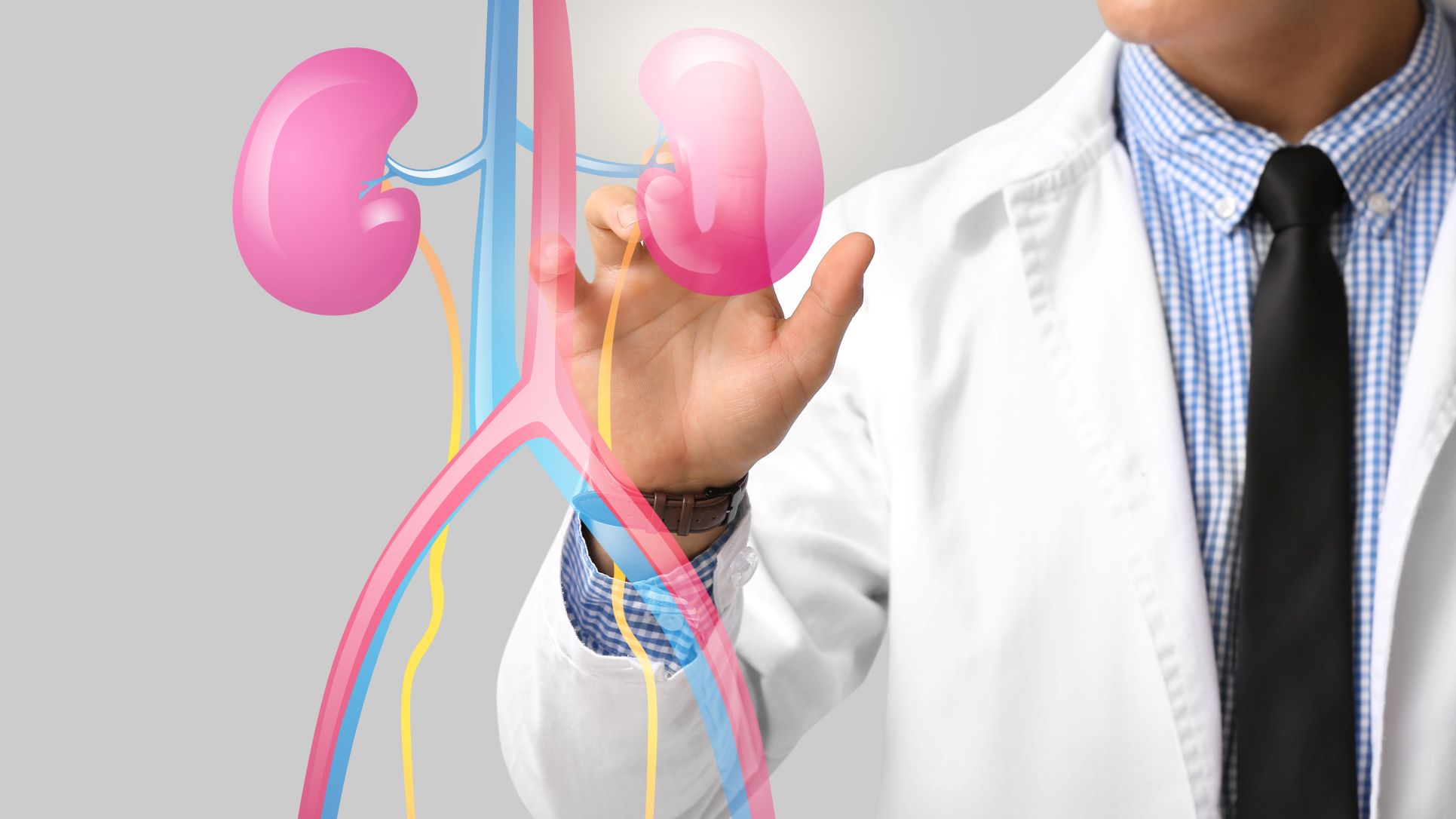
Dull kidney pain is often described as a persistent ache, pressure or uncomfortable sensation felt toward the side of the back, beneath the ribs or around the flank.
People commonly refer to this location as the "kidney area." However, pain in this region does not always originate from the kidneys. Muscles, the spine, nerves, digestive organs and other structures can produce similar symptoms.
Kidney-related causes can include:
-
Kidney infection
-
Kidney stones
-
Urinary obstruction
-
Certain kidney cyst complications
-
Kidney inflammation
-
Kidney trauma
-
Other urinary tract conditions
The nature of the pain and accompanying symptoms can provide clues, but medical evaluation may be necessary to determine the actual cause.
At Prabhakar Bhurke Clinic, Dr. Sandip Prabhakar Bhurke, super specialist nephrologist and transplant physician, provides individualized assessment and management for kidney and kidney-function problems.
What Does Dull Kidney Pain Feel Like?
Unlike the sudden, severe waves of pain that can occur when a kidney stone moves through the ureter, some kidney-related conditions may cause a more persistent discomfort.
Dull pain may feel:
-
Aching
-
Deep
-
Heavy
-
Pressure-like
-
Mild to moderate
-
Constant or intermittent
It may occur on one side or, depending on the underlying condition, affect both sides.
Pain that changes significantly with movement, bending or certain positions may be more suggestive of a musculoskeletal cause, although this alone cannot establish the diagnosis.
Common Causes of Dull Kidney Pain
1. Kidney Infection
A kidney infection can cause an aching sensation in the flank or back.
Other symptoms may include:
-
Fever
-
Chills
-
Burning while urinating
-
Frequent urination
-
Nausea
-
Vomiting
-
Cloudy or foul-smelling urine
Flank pain combined with fever should receive prompt medical attention.
2. Kidney Stones
Kidney stones do not always cause severe pain immediately.
A stone that remains within the kidney may cause little or no discomfort, while movement into the ureter can produce intense, cramping pain.
Some patients may experience an intermittent ache in the flank.
Possible accompanying symptoms include:
-
Blood in urine
-
Nausea
-
Vomiting
-
Urinary urgency
-
Burning during urination
-
Pain extending toward the abdomen or groin
3. Urinary Obstruction
A blockage that prevents normal urine drainage can cause pressure or discomfort around the kidney.
Possible causes include:
-
Kidney stones
-
Ureteric narrowing
-
Enlarged prostate
-
Blood clots
-
Other structural abnormalities
Persistent obstruction can damage kidney function, so unexplained flank pain with urinary changes should be evaluated.
4. Kidney Cysts
Many simple kidney cysts do not produce symptoms.
Larger or complicated cysts can occasionally cause discomfort, particularly if they become:
-
Enlarged
-
Infected
-
Bleeding
-
Complicated by other changes
Imaging can help determine whether a cyst is likely to be responsible for symptoms.
5. Kidney Inflammation
Certain kidney diseases involving the glomeruli or surrounding tissues can affect kidney function and sometimes cause discomfort.
These conditions may be associated with:
-
Protein in urine
-
Blood in urine
-
Swelling
-
High blood pressure
-
Abnormal kidney-function tests
Kidney inflammation requires evaluation because treatment depends on the specific underlying disease.
Dull Kidney Pain May Actually Be Back Pain
One of the most important points is that pain around the kidney area does not automatically mean kidney disease.
The lower and middle back contain muscles, joints, discs and nerves that can all cause pain.
Musculoskeletal pain may be associated with:
-
Recent exercise
-
Heavy lifting
-
Poor posture
-
Prolonged sitting
-
Back injury
-
Certain movements
If the pain changes with posture or movement, a non-kidney cause may be considered.
However, persistent pain should not be diagnosed based on location alone.
Dull Kidney Pain on One Side
Pain affecting only one side can have several causes.
For example, right-sided discomfort may be associated with a right kidney stone, infection or obstruction, but gallbladder, liver, muscle or spinal problems can produce similar symptoms.
Left-sided pain can similarly arise from kidney or non-kidney causes.
The side of the pain is useful information for a doctor, but it does not establish the diagnosis.
Dull Kidney Pain With Urinary Symptoms
Kidney or urinary conditions become more likely when flank discomfort occurs alongside changes in urination.
Watch for:
-
Burning during urination
-
Frequent urination
-
Urgency
-
Blood in urine
-
Cloudy urine
-
Foul-smelling urine
-
Reduced urine output
-
Difficulty passing urine
A urine test can help identify infection, blood, protein and other abnormalities.
Dull Kidney Pain With Fever
Dull flank pain accompanied by fever or chills should not be ignored.
This combination can occur with a kidney infection.
If urine drainage is blocked at the same time as an infection, the situation can become particularly serious and may require urgent intervention to restore drainage.
Dull Kidney Pain With Nausea
Nausea can occur with kidney stones, kidney infection and several non-kidney abdominal conditions.
Persistent vomiting can cause dehydration, which may further affect kidney function.
Seek medical attention if pain and vomiting are severe or if urine output decreases.
Does Chronic Kidney Disease Cause Dull Kidney Pain?
Usually, chronic kidney disease does not cause a characteristic pain pattern in its early stages.
Many people with chronic kidney disease have no noticeable symptoms initially.
Kidney disease may instead be discovered through:
-
Elevated serum creatinine
-
Reduced eGFR
-
Protein in urine
-
Blood in urine
-
High blood pressure
Therefore, having dull pain does not necessarily mean chronic kidney disease, and the absence of pain does not rule it out.
How Is Dull Kidney Pain Diagnosed?
The evaluation depends on the symptoms and medical history.
Medical History
A doctor may ask about:
-
Exact location of pain
-
Duration
-
Severity
-
Whether pain is constant or intermittent
-
Movement-related changes
-
Fever
-
Urinary symptoms
-
Previous kidney stones
-
Previous infections
-
Recent injuries
-
Current medicines
-
Previous kidney problems
Physical Examination
The doctor may examine the abdomen, back and flank to assess tenderness and identify clues suggesting a kidney, muscular or abdominal cause.
Urine Testing
Urinalysis may look for:
-
Blood
-
Protein
-
White blood cells
-
Bacteria
-
Other abnormalities
A urine culture may be recommended if infection is suspected.
Blood Tests
Depending on the situation, testing may include:
-
Serum creatinine
-
eGFR
-
Urea
-
Electrolytes
-
Blood count
-
Other relevant investigations
Imaging
Ultrasound or other imaging may be recommended to identify:
-
Kidney stones
-
Urinary obstruction
-
Cysts
-
Kidney enlargement
-
Structural abnormalities
CT imaging may be appropriate in selected cases, particularly when a stone or another acute condition is suspected.
Treatment for Dull Kidney Pain
Treatment depends on the underlying cause rather than the pain alone.
Kidney Stone
Depending on the size and location, treatment may include observation, medication or a stone-removal procedure such as ureteroscopy, laser lithotripsy, ESWL or PCNL in selected patients.
Kidney Infection
Appropriate antibiotics may be required when a bacterial kidney infection is diagnosed or strongly suspected.
Severe infection may require hospital treatment.
Urinary Obstruction
The obstruction may need to be relieved using an appropriate procedure, such as ureteric stenting or nephrostomy, depending on the cause.
Kidney Cyst
Simple cysts may require no treatment. Complicated or symptomatic cysts may need further evaluation and, in selected cases, intervention.
Musculoskeletal Pain
If the pain is determined to be related to muscles or the spine, management may involve physical therapy, activity modification, appropriate medicines or evaluation by another specialist.
Should You Drink More Water for Dull Kidney Pain?
Not necessarily.
Adequate fluid intake is important for many people and may be useful in preventing certain kidney stones.
However, drinking excessive amounts of water does not treat every cause of kidney pain.
People with advanced kidney disease, heart conditions, fluid overload or urinary obstruction may have specific fluid requirements.
Follow individualized fluid advice from your healthcare professional.
What Should You Avoid When You Have Kidney Pain?
Avoid self-treatment with:
-
Unprescribed antibiotics
-
Unnecessary painkillers
-
Herbal kidney remedies
-
"Kidney detox" products
-
Unsupervised supplements
Certain medicines can affect kidney function, especially in people who are dehydrated or already have kidney disease.
If you have persistent pain, identifying the cause is more important than simply masking the symptom.
When Should Dull Kidney Pain Be Evaluated?
Arrange medical evaluation if the pain:
-
Persists for several days
-
Keeps returning
-
Becomes progressively worse
-
Is associated with urinary changes
-
Occurs with fever
-
Occurs with blood in urine
-
Is accompanied by nausea or vomiting
-
Occurs with reduced urine output
-
Develops after significant trauma
Persistent unexplained flank pain should not be assumed to be muscular or related to a kidney stone without appropriate assessment.
When Is Dull Kidney Pain an Emergency?
Seek urgent medical attention for dull or aching kidney-area pain accompanied by:
-
Fever and chills
-
Severe or rapidly worsening pain
-
Very little or no urine
-
Persistent vomiting
-
Severe weakness
-
Confusion
-
Fainting
-
Severe breathlessness
-
Rapidly increasing swelling
-
Significant blood in urine
These symptoms can indicate infection, obstruction or another serious medical problem.
Kidney Pain Evaluation at Prabhakar Bhurke Clinic
At Prabhakar Bhurke Clinic, Dr. Sandip Prabhakar Bhurke, super specialist nephrologist and transplant physician, provides individualized evaluation for patients experiencing flank discomfort and symptoms that may be related to kidney disease.
Depending on the clinical situation, assessment may include:
-
Detailed pain assessment
-
Kidney-function testing
-
Urine examination
-
Blood-pressure assessment
-
Kidney stone evaluation
-
Infection assessment
-
Evaluation for urinary obstruction
-
Review of ultrasound or other imaging
-
Assessment of protein or blood in urine
-
Long-term kidney-function monitoring when required
The aim is to identify the underlying cause rather than simply treating the sensation of pain.
Frequently Asked Questions
What causes dull kidney pain?
Possible causes include kidney infection, kidney stones, urinary obstruction and certain cyst or inflammatory conditions. Muscle, spine and digestive problems can cause similar pain.
Is dull kidney pain always a sign of kidney disease?
No. Pain in the kidney area can originate from several structures, including muscles and the spine. Medical evaluation may be needed to identify the cause.
Can a kidney stone cause dull pain?
Yes. A stone may sometimes cause mild or intermittent discomfort, although stones moving through the ureter can produce severe colicky pain.
Is dull kidney pain with fever serious?
It can be. Flank pain with fever or chills may indicate a kidney infection and requires prompt medical assessment.
Can kidney disease cause back pain?
Some kidney conditions can cause flank or back discomfort, but chronic kidney disease often has no pain symptoms in its early stages.
Can drinking water make kidney pain go away?
Water may help prevent some stones when consumed appropriately, but it does not treat every cause of kidney pain. Excessive fluid intake can be harmful in some patients.
Conclusion
Dull kidney pain can be caused by kidney stones, infection, urinary obstruction and certain kidney conditions, but similar discomfort can arise from muscles, the spine, digestive organs or other nearby structures.
The duration, location and character of the pain, together with symptoms such as fever, urinary changes, nausea or blood in urine, can help guide evaluation. Blood tests, urine testing and imaging may be necessary to determine the underlying cause.
Do not rely on pain location alone to diagnose a kidney problem or assume that persistent discomfort will resolve without treatment. Early evaluation can help identify infections, obstruction and other conditions that may require timely care.
For specialist evaluation of kidney-related symptoms and kidney-function problems, consult Dr. Sandip Prabhakar Bhurke at Prabhakar Bhurke Clinic.
Medical Disclaimer
This article is intended for general educational and informational purposes only and does not constitute medical advice, diagnosis or treatment. Dull pain in the kidney area can have many possible causes, and the location of pain alone cannot confirm a kidney disorder. Do not self-medicate with antibiotics, painkillers, supplements or herbal products, and do not consume excessive water as a substitute for medical evaluation. Seek urgent medical attention for severe or worsening pain, fever or chills, very little or no urine, persistent vomiting, significant blood in urine, severe breathlessness, confusion, fainting or rapidly worsening symptoms. Consult Dr. Sandip Prabhakar Bhurke or another qualified healthcare professional for individualized diagnosis and treatment.