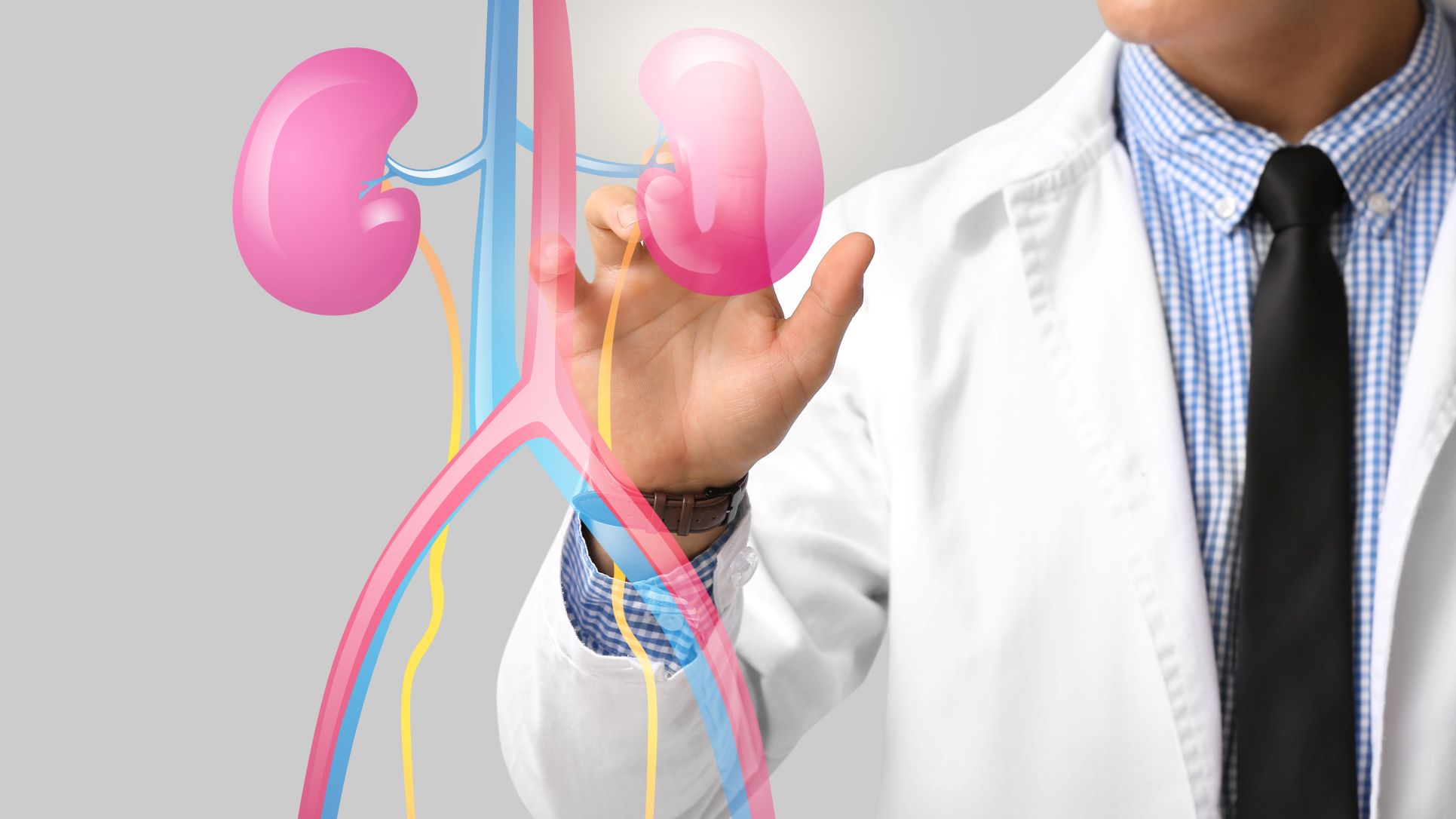
Shockwave therapy for kidney stones, commonly called extracorporeal shock wave lithotripsy (ESWL or SWL), is a non-invasive treatment that uses focused shock waves to break a kidney or urinary stone into smaller fragments.
Instead of making an incision to reach the stone, the shock waves are generated outside the body and directed toward the stone using imaging guidance.
The smaller fragments may then pass through the urinary tract in the urine.
ESWL can be an appropriate option for selected patients, but it is not suitable for every kidney stone. Stone size, location, composition, density, anatomy, obstruction, infection status and the patient's overall health all influence treatment selection.
At Prabhakar Bhurke Clinic, Dr. Sandip Prabhakar Bhurke, super specialist nephrologist and transplant physician, provides kidney-focused evaluation and can assess kidney function and coordinate appropriate specialist care for patients with kidney stones.
How Does Shockwave Kidney Stone Treatment Work?
During ESWL, a specialized machine generates repeated shock waves.
The treatment generally involves:
-
Identifying the exact location of the stone.
-
Positioning the patient appropriately.
-
Using imaging to target the stone.
-
Delivering controlled shock waves toward the stone.
-
Breaking the stone into smaller pieces.
-
Allowing suitable fragments to pass through the urinary tract.
The exact number of shock waves and treatment duration varies according to the stone and the equipment being used.
What Types of Kidney Stones Can Be Treated With ESWL?
ESWL may be considered for selected stones located in the kidney or ureter.
Its effectiveness can vary according to:
-
Stone size
-
Stone location
-
Stone composition
-
Stone density
-
Skin-to-stone distance
-
Kidney anatomy
-
Urinary drainage
-
Presence of obstruction
Some stones are harder and may be more resistant to fragmentation.
Imaging, particularly when detailed stone characteristics are needed, can help the treating specialist decide whether shockwave treatment is appropriate.
Is ESWL Suitable for Large Kidney Stones?
Not every large stone is a good candidate for ESWL.
As stone size increases, the amount of residual stone material after fragmentation may increase, and multiple treatment sessions may sometimes be required.
For larger renal stones, procedures such as percutaneous nephrolithotomy (PCNL) or ureteroscopy with laser lithotripsy may provide more appropriate stone-clearance options in selected patients.
The best approach should be decided after reviewing the patient's imaging and clinical condition.
Can a 6 mm or 10 mm Kidney Stone Be Treated With Shockwaves?
Selected stones of these sizes may be considered for ESWL.
However, size alone does not determine whether treatment will succeed.
A stone's location, density and the anatomy of the urinary tract can significantly influence the likelihood of successful fragmentation and passage.
A specialist may recommend observation, medication, ESWL, ureteroscopy or another approach depending on the individual case.
Benefits of Shockwave Therapy for Kidney Stones
When appropriately selected, ESWL may offer several advantages:
-
No surgical incision into the kidney
-
External treatment
-
Less invasive than some surgical stone-removal procedures
-
Potentially shorter recovery
-
May be performed without prolonged hospitalization in selected settings
-
Can fragment suitable kidney or ureteric stones
However, "non-invasive" does not mean risk-free, and successful treatment cannot be guaranteed for every stone.
What Happens Before ESWL?
Before shockwave therapy, the medical team may assess:
Imaging
Ultrasound, X-ray or CT imaging may be used to determine:
-
Stone size
-
Stone location
-
Number of stones
-
Stone density
-
Urinary obstruction
-
Kidney anatomy
Urine Testing
Urine testing may be performed to look for infection.
An active urinary infection generally needs appropriate treatment before elective stone fragmentation.
Blood Tests
Depending on the patient's condition, testing may include:
-
Serum creatinine
-
eGFR
-
Blood count
-
Electrolytes
-
Other relevant tests
These investigations help evaluate overall health and kidney function.
Why Kidney Function Matters Before Shockwave Treatment
Patients with kidney stones may also have impaired kidney function.
A blood test for creatinine and eGFR can help the doctor understand how well the kidneys are filtering.
A person searching for CKD creatinine levels should understand that creatinine is a marker of kidney function rather than a direct measurement of stone size.
If kidney function is reduced, the treatment strategy may need additional consideration.
Is Shockwave Therapy Painful?
Patients may experience discomfort during ESWL.
The level of discomfort depends on:
-
Individual pain tolerance
-
Shockwave intensity
-
Stone location
-
Number of shocks
-
Treatment technique
Pain-relief or sedation measures may be used according to the treatment setting and patient's needs.
The treating team will explain what type of pain management is planned before the procedure.
What Happens to the Stone After ESWL?
The objective of ESWL is to break the stone into fragments small enough to pass through the urinary tract.
After treatment, fragments may be passed in the urine over the following days or weeks.
Some patients may experience:
-
Blood in urine
-
Mild flank discomfort
-
Urinary frequency
-
Passage of stone fragments
-
Temporary abdominal or back discomfort
Follow-up imaging may be recommended to determine whether significant residual stone remains.
Can One ESWL Session Remove a Kidney Stone?
Sometimes, but not always.
The outcome depends on:
-
Stone size
-
Stone hardness
-
Stone location
-
Number of stones
-
Patient anatomy
-
Fragmentation response
Some stones clear after one session, while others require additional treatment.
If ESWL does not provide adequate clearance, the treating specialist may recommend another treatment method.
Possible Side Effects and Risks of ESWL
Although ESWL is generally considered less invasive than many surgical procedures, complications can occur.
Potential problems include:
-
Blood in urine
-
Flank pain
-
Bruising
-
Infection
-
Residual stone fragments
-
Incomplete stone clearance
-
Temporary urinary obstruction
-
Steinstrasse, where multiple fragments become lodged in the ureter
Rarely, more significant complications may occur.
Patients should follow the treating doctor's instructions after the procedure.
What Is Steinstrasse?
Steinstrasse means a "stone street" and refers to multiple stone fragments becoming lined up or lodged within the ureter after stone fragmentation.
It can sometimes interfere with urine drainage.
Patients may experience:
-
Flank pain
-
Nausea
-
Difficulty passing urine
-
Blood in urine
If symptoms become severe or obstruction develops, further treatment may be required.
Can ESWL Cause Kidney Damage?
ESWL is designed to fragment urinary stones while minimizing injury to surrounding tissues.
Temporary changes in kidney tissue can occur following shockwave treatment, but significant complications are uncommon when the procedure is appropriately selected and performed.
The risks and benefits should be considered individually, especially in patients with existing kidney disease or other significant medical conditions.
When Should ESWL Not Be Delayed?
A kidney stone requires prompt medical attention when it is associated with signs of a potentially serious complication.
Urgent assessment is particularly important when there is:
-
Fever or chills
-
Severe or worsening flank pain
-
Persistent vomiting
-
Very little or no urine
-
Known urinary obstruction
-
Signs of infection
-
Rapidly worsening kidney function
An infected obstructed urinary tract can be a medical emergency. In such cases, restoring urine drainage and treating the infection may take priority over definitive stone fragmentation.
When Is ESWL Not the Best Option?
Shockwave therapy may be less suitable when:
-
The stone is very large
-
The stone is extremely hard or dense
-
The stone is difficult to target
-
Urinary drainage is blocked
-
There is an untreated infection
-
The stone is in an unfavorable location
-
Patient anatomy reduces the likelihood of successful fragmentation
-
Another treatment offers a better chance of stone clearance
The decision should be based on imaging and specialist assessment rather than choosing a procedure solely because it is non-invasive.
ESWL vs Laser Lithotripsy
Both procedures can break kidney or ureteric stones, but they work differently.
ESWL
Shock waves are delivered from outside the body to fragment the stone.
Laser Lithotripsy
A ureteroscope is passed through the urinary tract to reach the stone, and a laser is used to fragment it.
Laser treatment may provide more direct access to certain stones, while ESWL may be attractive for appropriately positioned stones when avoiding an endoscopic procedure is desirable.
The choice depends on stone characteristics and patient factors.
ESWL vs PCNL
PCNL is a procedure in which instruments are introduced through a small access tract directly into the kidney to fragment and remove larger stones.
For substantial stone burdens, PCNL may offer a higher likelihood of significant stone clearance in selected patients.
ESWL may be considered for appropriately selected smaller or favorably positioned stones.
A specialist can compare the expected benefits, risks and likelihood of complete clearance for an individual patient.
Recovery After Shockwave Therapy
Recovery is often relatively quick, although this varies between patients.
After treatment, the patient may be advised to:
-
Follow the prescribed fluid plan
-
Take recommended medicines
-
Strain or collect stone fragments if instructed
-
Monitor urine output
-
Attend follow-up imaging
-
Report fever or severe pain promptly
The treating doctor will provide individualized instructions based on the procedure and medical history.
How Long Does It Take to Pass Stone Fragments?
There is no fixed timeline.
Small fragments may pass relatively quickly, while larger residual pieces can take longer or may not pass completely.
Follow-up assessment is important because absence of pain does not necessarily mean that all stone material has been cleared.
Can Kidney Stones Return After ESWL?
Yes.
ESWL removes or fragments an existing stone but does not automatically eliminate the factors responsible for stone formation.
Recurrence may be influenced by:
-
Low fluid intake
-
High dietary sodium
-
Certain dietary patterns
-
Metabolic abnormalities
-
Recurrent urinary infections
-
Family history
-
Certain medical conditions
Stone analysis and metabolic evaluation may be useful in selected patients.
How Can Future Kidney Stones Be Prevented?
Prevention should be individualized.
General strategies may include:
-
Maintaining appropriate fluid intake
-
Reducing excessive dietary salt
-
Following a balanced diet
-
Maintaining a healthy weight
-
Treating recurrent urinary infections
-
Taking prescribed preventive medicines correctly
-
Completing recommended metabolic testing
People with kidney disease should discuss major dietary or fluid changes with their healthcare professional.
When Should You Contact a Doctor After ESWL?
Contact the treating medical team promptly if you develop:
-
Fever
-
Chills
-
Severe or increasing pain
-
Persistent vomiting
-
Difficulty passing urine
-
Very low urine output
-
Significant bleeding in urine
-
Severe weakness
These symptoms may indicate infection, obstruction or another complication requiring assessment.
Shockwave Kidney Stone Treatment at Prabhakar Bhurke Clinic
At Prabhakar Bhurke Clinic, Dr. Sandip Prabhakar Bhurke, super specialist nephrologist and transplant physician, provides individualized kidney evaluation for patients with kidney stones and associated renal concerns.
Assessment may include:
-
Kidney-function testing
-
Creatinine and eGFR evaluation
-
Review of ultrasound, X-ray or CT imaging
-
Assessment of stone size and location
-
Evaluation for urinary obstruction
-
Infection assessment
-
Medical management of kidney-related complications
-
Coordination with appropriate urological or surgical specialists when stone removal is required
-
Follow-up kidney care after treatment
The appropriate stone treatment is selected according to the patient's stone characteristics, urinary anatomy, kidney function and overall health.
Frequently Asked Questions
What is shockwave therapy for kidney stones?
Shockwave therapy, commonly known as ESWL or SWL, uses focused shock waves from outside the body to break selected kidney or ureteric stones into smaller fragments.
Is ESWL better than laser treatment?
Neither treatment is universally better. ESWL may work well for selected stones, while laser lithotripsy can be advantageous for stones that are difficult to target externally. The decision depends on stone size, location, density and anatomy.
Is shockwave treatment safe for kidney stones?
ESWL is an established treatment, but it has potential risks such as bleeding, infection, pain, residual fragments and urinary obstruction. Appropriate patient and stone selection is important.
How many ESWL sessions are needed?
Some stones clear after one session, while others require repeat treatment. Stone size, hardness, location and fragmentation response influence the outcome.
Can a large kidney stone be treated with shockwaves?
Some large stones may be treated with ESWL, but larger stone burdens often have lower clearance rates and may require multiple sessions or another procedure such as PCNL or ureteroscopy.
Can I drink a lot of water after ESWL?
Fluid intake should follow the treating doctor's instructions. Excessive water intake is not appropriate for everyone, particularly people with reduced kidney function, heart problems or certain urinary obstructions.
Conclusion
Shockwave therapy for kidney stones is an established, non-invasive technique that can fragment selected kidney and ureteric stones without making a surgical incision into the urinary tract.
However, ESWL is not the ideal treatment for every stone. Size, location, density, anatomy, urinary drainage, infection status and kidney function all influence the likelihood of successful treatment.
For some patients, shockwave therapy may provide effective stone fragmentation, while others may benefit more from ureteroscopy with laser lithotripsy, PCNL or another approach.
If you have been diagnosed with a kidney stone, specialist evaluation can help determine whether ESWL is appropriate and what treatment is most likely to achieve safe stone clearance.
For individualized kidney evaluation and stone-related care, consult Dr. Sandip Prabhakar Bhurke at Prabhakar Bhurke Clinic.
Medical Disclaimer
This article is intended for general educational and informational purposes only and does not constitute medical advice, diagnosis or treatment. Shockwave therapy (ESWL/SWL) is not suitable for every kidney or ureteric stone. Treatment selection depends on stone size, location, composition or density, urinary anatomy, obstruction, infection status, kidney function and overall health. Do not attempt to treat kidney stones with excessive water intake, unprescribed medicines or home remedies. Fever, chills, severe pain, persistent vomiting, very little or no urine or rapidly worsening symptoms may indicate a serious complication requiring urgent medical attention. Consult Dr. Sandip Prabhakar Bhurke or an appropriately qualified kidney/urinary stone specialist for individualized treatment advice.