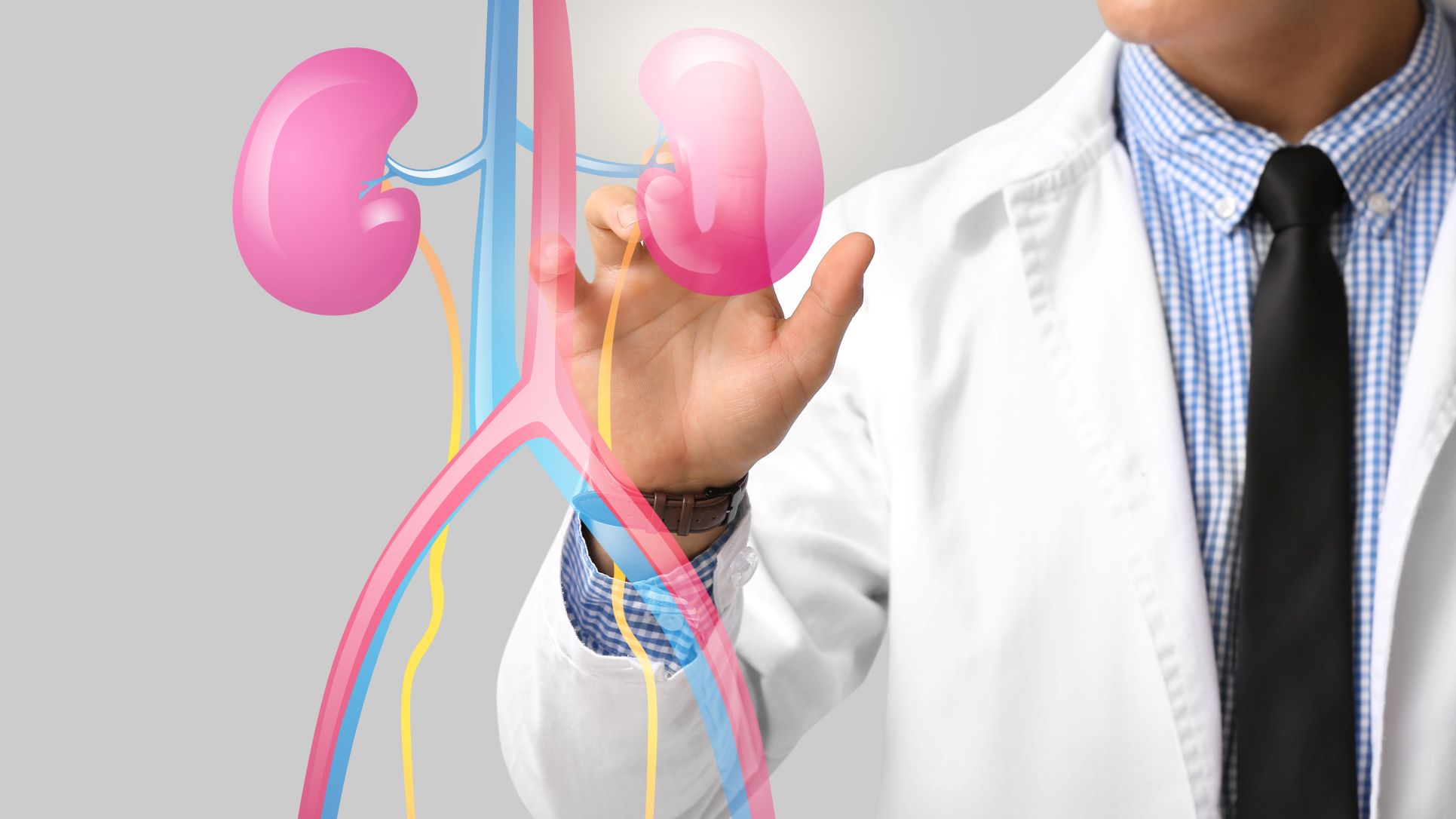
The term kidney stone flush therapy is commonly used online to describe drinking fluids—usually water—with the intention of increasing urine flow and helping a kidney stone move through the urinary tract.
Adequate hydration is important for kidney health and may support the natural passage of some smaller stones. However, drinking large quantities of water does not physically dissolve or "wash out" every kidney stone.
The effectiveness of a fluid-based approach depends on factors such as:
-
Stone size
-
Stone location
-
Stone composition
-
Urinary tract anatomy
-
Degree of obstruction
-
Presence of infection
-
Kidney function
-
The patient's overall health
A small stone that is already moving through the ureter may pass naturally, while a larger stone may require an active treatment procedure.
At Prabhakar Bhurke Clinic, Dr. Sandip Prabhakar Bhurke, super specialist nephrologist and transplant physician, provides individualized evaluation of kidney stones and associated kidney-function concerns.
Can Drinking Water Flush Out a Kidney Stone?
Sometimes, but not in the way the phrase "flush therapy" may suggest.
Water does not act like a cleaning solution that dissolves most kidney stones. Instead, maintaining appropriate hydration helps maintain urine production and may support the passage of a stone that is small enough to travel through the urinary tract.
The chance of spontaneous passage is influenced strongly by stone size and location.
For example, a small ureteric stone may pass without a procedure, whereas a large renal stone is unlikely to pass simply because a person drinks more water.
Is Drinking Excessive Water Safe for Kidney Stones?
No—not necessarily.
Drinking excessive amounts of water in a short period does not guarantee faster stone passage.
It can also be unsafe in certain situations, particularly when:
-
The urinary tract is obstructed
-
Kidney function is significantly reduced
-
The person has heart failure or another condition requiring fluid restriction
-
Severe nausea or vomiting is present
-
The patient has been advised to restrict fluids
Trying to force a blocked stone through the urinary tract by rapidly drinking large volumes of water is not a substitute for medical treatment.
Fluid intake should be appropriate for the individual's condition.
When Can Hydration Support Natural Stone Passage?
Hydration may be part of conservative management when a healthcare professional determines that spontaneous passage is reasonably likely.
This approach may be considered when:
-
The stone is relatively small
-
There is no serious obstruction
-
There is no significant infection
-
Kidney function is stable
-
Pain and symptoms are manageable
-
The patient can maintain adequate fluid intake
Medical follow-up is still important because a stone that does not pass may eventually require intervention.
What Size Kidney Stone Can Pass Naturally?
There is no single size at which passage becomes impossible, because stone passage also depends on location and individual anatomy.
However, smaller stones are generally more likely to pass spontaneously than larger stones.
As stone size increases, the likelihood of natural passage decreases and the likelihood of requiring a procedure increases.
A stone's location also matters. A stone that has entered the ureter may have a different chance of passage than a similarly sized stone that remains within the kidney.
Does Kidney Stone Flush Therapy Dissolve Stones?
For most kidney stones, no.
Common stones such as calcium oxalate stones do not simply dissolve because a person drinks more water.
Certain uric acid stones may sometimes be dissolved through medically supervised urine alkalinization. This is different from simply drinking large amounts of water and requires appropriate diagnosis and monitoring.
The composition of a stone can therefore influence treatment.
What Symptoms May Occur During Kidney Stone Passage?
When a stone moves through the ureter, symptoms may include:
-
Sudden severe flank pain
-
Pain spreading toward the abdomen or groin
-
Blood in the urine
-
Nausea
-
Vomiting
-
Burning during urination
-
Frequent urination
-
Urinary urgency
-
Restlessness
Pain may come in waves as the ureter contracts around the stone.
Some kidney stones, however, cause few or no symptoms.
Why Does a Kidney Stone Cause Pain?
The stone itself may not always be painful while it remains inside the kidney.
Pain often develops when a stone moves into the ureter and interferes with urine drainage.
The resulting stretching or pressure within the urinary system can produce intense, cramping pain known as renal or ureteric colic.
A blocked ureter can therefore cause significant discomfort even when the stone is relatively small.
Can a Kidney Stone Become Dangerous?
Yes.
A stone becomes particularly concerning when it causes:
-
Significant urinary obstruction
-
Infection
-
Reduced kidney function
-
Persistent severe pain
-
Repeated vomiting
-
Very low urine output
An infected and obstructed urinary tract can become a medical emergency.
Therefore, kidney stone treatment should not be delayed simply because the patient hopes to flush the stone naturally.
Kidney Stone With Fever: Do Not Try Flush Therapy at Home
Fever or chills in a person with a suspected obstructing kidney stone requires urgent medical evaluation.
An infected urinary system that is blocked by a stone may require urgent drainage.
Depending on the circumstances, a healthcare team may use:
-
A ureteral stent
-
A nephrostomy tube
-
Appropriate antimicrobial treatment
-
Definitive stone removal after the acute infection is controlled
Attempting aggressive fluid intake at home is not an appropriate treatment for an infected obstruction.
How Is a Kidney Stone Evaluated?
A specialist may recommend several investigations depending on symptoms and medical history.
Ultrasound
Ultrasound can identify many stones and may show swelling of the kidney caused by obstruction.
CT Scan
A non-contrast CT scan can provide detailed information about:
-
Stone size
-
Stone location
-
Number of stones
-
Urinary obstruction
-
Kidney and urinary tract anatomy
Urine Testing
Urinalysis may detect:
-
Blood
-
White blood cells
-
Infection
-
Crystals
-
Other abnormalities
Blood Tests
Testing may include:
-
Creatinine
-
eGFR
-
Electrolytes
-
Blood count
-
Other tests based on the clinical situation
These investigations help determine whether conservative management is appropriate or whether active treatment is required.
What Are the Alternatives to Kidney Stone Flush Therapy?
When a stone is unlikely to pass naturally, several treatment approaches may be considered.
Medical Management
Selected small stones may be managed with appropriate pain control and, in some cases, medicines that can facilitate ureteric stone passage.
These medicines should be prescribed according to the patient's stone location, medical history and clinical condition.
Shock Wave Lithotripsy
Shock wave lithotripsy (SWL/ESWL) uses externally generated shock waves to break a stone into smaller fragments.
Its suitability depends on stone size, location, composition, density and patient factors.
Ureteroscopy With Laser Lithotripsy
A thin endoscope can be passed through the urinary tract to reach the stone.
A laser may then fragment the stone, allowing the pieces to be removed or pass subsequently.
Percutaneous Nephrolithotomy
For larger kidney stones, percutaneous nephrolithotomy (PCNL) may be considered.
The procedure uses a small access tract through the skin to reach the kidney and remove or fragment the stone.
The appropriate procedure depends on the individual stone and the patient's overall condition.
Can Kidney Stone Flush Therapy Prevent Future Stones?
Adequate fluid intake can play an important role in preventing future kidney stones.
However, prevention is different from flushing out an existing large stone.
Depending on the type of stone and individual risk factors, prevention may include:
-
Maintaining appropriate fluid intake
-
Reducing excessive dietary sodium
-
Following an individualized dietary plan
-
Maintaining normal dietary calcium intake unless advised otherwise
-
Avoiding unnecessary supplements
-
Treating recurrent urinary infections
-
Taking prescribed preventive medicines
-
Undergoing metabolic evaluation when recommended
The prevention plan should be based on the type of stone and the patient's risk factors.
What If the Stone Is Large?
Large stones are less likely to pass naturally.
If imaging shows a substantial stone burden, relying exclusively on water or home "flush" remedies may delay appropriate treatment.
Depending on the location and characteristics of the stone, the specialist may recommend:
-
Ureteroscopy
-
Laser lithotripsy
-
SWL
-
PCNL
-
A staged or combined procedure
The treatment decision should be based on imaging and clinical assessment.
Can Kidney Stones Affect Kidney Function?
Yes.
A stone that causes persistent obstruction can interfere with urine drainage and potentially impair kidney function.
The risk may be greater when:
-
Both urinary tracts are affected
-
A person has only one functioning kidney
-
Obstruction persists for a prolonged period
-
Infection is present
-
Baseline kidney function is already reduced
Creatinine and eGFR may therefore be checked when obstruction or significant kidney disease is suspected.
When Should You Stop Home Remedies and See a Doctor?
Medical evaluation is important if:
-
Pain is severe or persistent
-
Pain keeps returning
-
You have fever or chills
-
You are vomiting repeatedly
-
Urine output decreases significantly
-
There is visible blood in the urine with worsening symptoms
-
You have known kidney disease
-
You have a single functioning kidney
-
Imaging shows a large stone
-
Symptoms are not improving
Do not continue home flush methods indefinitely when a stone is not passing.
Kidney Stone Assessment at Prabhakar Bhurke Clinic
At Prabhakar Bhurke Clinic, Dr. Sandip Prabhakar Bhurke, super specialist nephrologist and transplant physician, evaluates patients with kidney stones and related kidney-function concerns.
Depending on the clinical situation, assessment may include:
-
Review of ultrasound or CT reports
-
Kidney-function testing
-
Creatinine and eGFR evaluation
-
Assessment of urinary obstruction
-
Evaluation of urinary infection
-
Review of recurrent stone history
-
Guidance regarding hydration
-
Assessment of kidney-related complications
-
Coordination with appropriate urological specialists when a stone-removal procedure is required
-
Follow-up kidney care after stone treatment
The recommended approach depends on stone size, location, composition, obstruction, infection status and overall kidney health.
Frequently Asked Questions
What is the fastest way to flush a kidney stone?
There is no guaranteed method for rapidly flushing out a kidney stone. Appropriate hydration may support passage of selected small stones, but large or obstructing stones may require medical treatment.
How much water should I drink to flush a kidney stone?
There is no universal amount that is safe or appropriate for everyone. Excessive water intake can be harmful in people with obstruction, reduced kidney function or certain heart conditions. Follow individualized medical advice.
Can lemon water flush out a kidney stone?
Lemon water can contribute to fluid intake and provides citrate, which may have a role in preventing certain stones. However, it should not be considered a guaranteed method for removing an existing kidney stone.
Can a large kidney stone be flushed out with water?
Usually not. Larger stones are much less likely to pass naturally, and attempting to force them through by drinking excessive water is not recommended.
Does drinking water dissolve kidney stones?
Water does not dissolve most kidney stones. Certain uric acid stones may be medically dissolved using urine alkalinization under professional supervision.
When is kidney stone flushing dangerous?
Aggressive fluid intake can be particularly concerning when a stone is obstructing urine flow, kidney function is impaired or the patient has a condition requiring fluid restriction.
Should I flush a kidney stone if I have fever?
No. Fever or chills with suspected urinary obstruction may indicate an infected blockage and requires urgent medical assessment rather than home flush therapy.
Conclusion
Kidney stone flush therapy generally refers to using adequate fluid intake to support natural stone passage. While hydration is an important part of kidney stone care and prevention, it does not guarantee that an existing stone will pass or dissolve.
Small, appropriately selected stones may sometimes pass with conservative management. Larger stones, persistent obstruction, severe symptoms or infection may require active treatment such as ureteroscopy, laser lithotripsy, shock wave lithotripsy or PCNL.
The safest approach is to determine the stone's size and location and assess kidney function before deciding whether home management is appropriate.
For individualized kidney stone evaluation and kidney-function care, consult Dr. Sandip Prabhakar Bhurke, super specialist nephrologist and transplant physician, at Prabhakar Bhurke Clinic.
Medical Disclaimer
This article is provided for general educational and informational purposes only and does not constitute medical advice, diagnosis or treatment. "Kidney stone flush therapy" is not a standardized medical treatment, and drinking excessive quantities of water does not guarantee stone removal. The appropriate management depends on stone size, location, composition, urinary obstruction, infection status, kidney function and the patient's overall health. Do not use excessive fluid intake, unprescribed medicines, supplements or herbal remedies to force a stone to pass. Fever, chills, severe or persistent flank pain, repeated vomiting, very little or no urine, confusion or rapidly worsening symptoms may indicate a serious complication requiring urgent medical attention. Consult Dr. Sandip Prabhakar Bhurke or another qualified healthcare professional for individualized treatment.