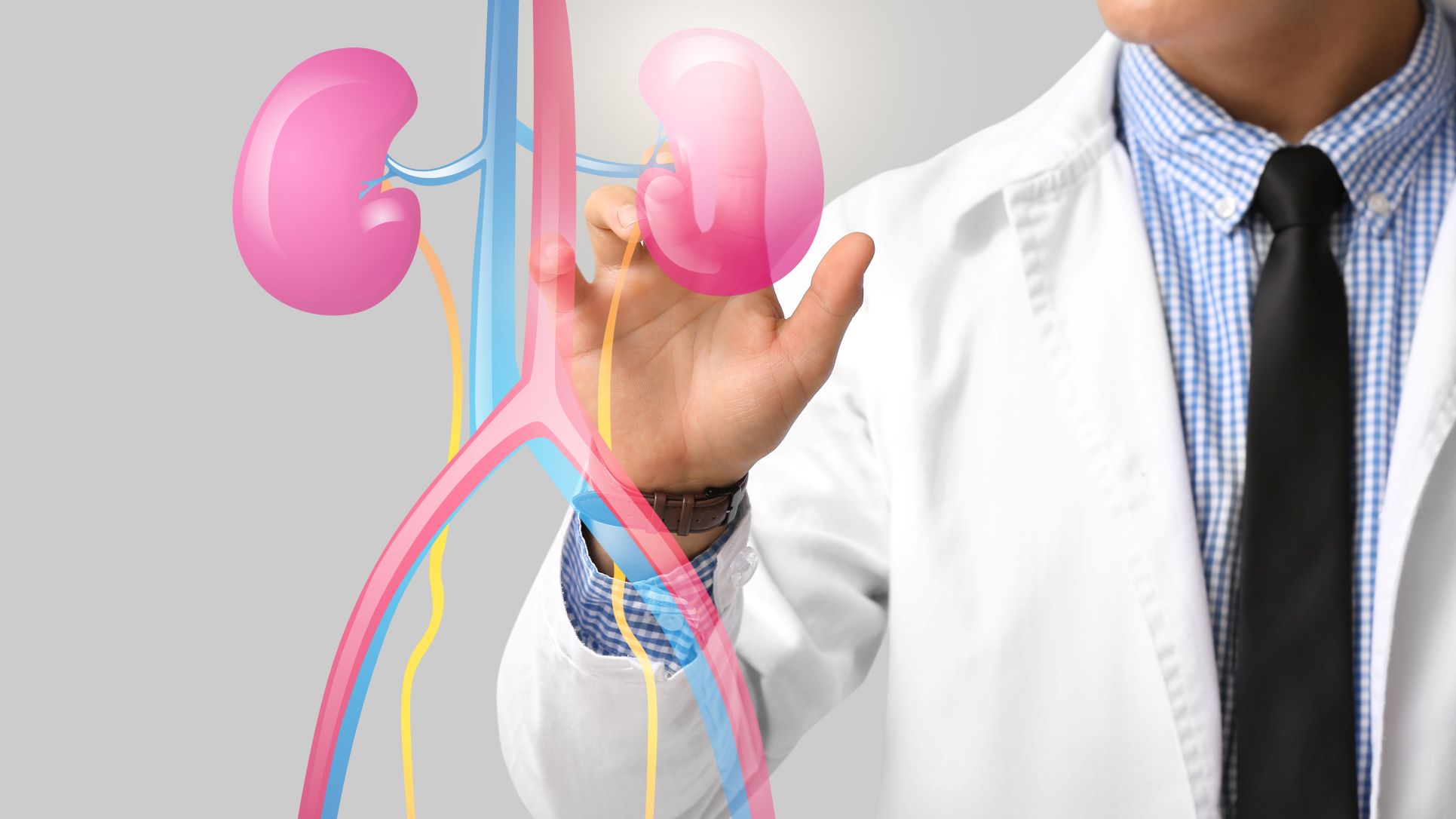
Left PCNL stands for left-sided percutaneous nephrolithotomy. It is a minimally invasive procedure used to remove kidney stones from the left kidney.
The term “left” simply identifies the side of the kidney being treated, while PCNL describes the surgical technique used to reach and remove the stone.
During PCNL, the surgeon creates a small access tract through the skin of the back into the kidney. Specialized instruments are then introduced through this tract to break the stone into smaller pieces and remove them.
PCNL is particularly useful for patients with a large stone burden, complex renal stones or stones that are unlikely to be cleared effectively with less invasive approaches.
At Prabhakar Bhurke Clinic, Dr. Sandip Prabhakar Bhurke, super specialist nephrologist and transplant physician, provides specialist evaluation of kidney function and kidney stone-related problems and can coordinate appropriate treatment when procedural stone removal is required.
Why Might Someone Need Left PCNL?
Not every kidney stone requires surgery.
Small stones may sometimes be observed or treated with conservative measures depending on their size, location and symptoms.
PCNL may be considered when a stone in the left kidney is:
-
Large in size
-
Occupying a significant portion of the renal collecting system
-
Complex or branching
-
Unlikely to be cleared adequately with other treatments
-
Associated with obstruction
-
Associated with recurrent infection
-
Causing persistent symptoms
-
Increasing in size on follow-up imaging
The decision is based on imaging findings and the patient's overall medical condition.
Which Stones Are Commonly Treated With PCNL?
PCNL is often considered for larger renal stones, particularly when the stone burden is substantial.
It may be used for:
Large Kidney Stones
As stone size increases, spontaneous passage becomes less likely. PCNL can provide direct access for fragmentation and removal.
Staghorn Stones
Large branching stones that occupy multiple parts of the kidney may require PCNL or a staged combination of procedures.
Multiple Renal Stones
When several stones are present in the left kidney, PCNL may allow substantial stone clearance during one procedure or a planned series of procedures.
Hard or Dense Stones
Some stones are less responsive to shock-wave treatment. Depending on their characteristics, direct endoscopic treatment may be preferred.
How Is Left PCNL Performed?
The exact technique varies according to the stone and the patient's anatomy, but the procedure generally involves several stages.
1. Preoperative Imaging
The medical team reviews imaging such as CT scans or ultrasound to determine:
-
Stone size
-
Stone location
-
Number of stones
-
Kidney anatomy
-
Possible obstruction
-
Surrounding structures
This information helps determine the safest access route.
2. Anesthesia
PCNL is generally performed under anesthesia so that the patient remains comfortable during the procedure.
3. Access to the Left Kidney
A small opening is made in the back to create access into the left kidney.
Imaging guidance may be used to help establish the appropriate tract.
4. Stone Fragmentation
A specialized instrument is passed through the access tract.
The stone may be broken into smaller pieces using an appropriate energy source.
5. Stone Removal
Stone fragments are removed through the access tract.
Depending on the stone burden, additional procedures may sometimes be required.
6. Drainage or Stent Placement
A nephrostomy tube, ureteral stent or another form of temporary drainage may be used depending on the procedure and the surgeon's assessment.
What Tests Are Needed Before Left PCNL?
Before surgery, the treating team may evaluate both the stone and the patient's general health.
Tests can include:
-
CT scan or ultrasound
-
Serum creatinine
-
eGFR
-
Blood urea
-
Electrolytes
-
Complete blood count
-
Urine examination
-
Urine culture when indicated
-
Blood-group testing
-
Coagulation studies when appropriate
-
Other pre-anesthesia investigations
A urine infection is particularly important to identify before definitive stone removal.
If infection is present, it may need to be appropriately treated before proceeding with the stone procedure.
Why Is a CT Scan Important Before PCNL?
A CT scan can provide detailed information about the urinary tract and the stone.
It may help the treating team understand:
-
Exact stone dimensions
-
Stone density
-
Location within the kidney
-
Number of stones
-
Anatomy of the collecting system
-
Degree of obstruction
-
Relationship of the kidney to nearby structures
This information can assist in planning the safest and most effective PCNL approach.
Can Left PCNL Be Used for a 20 mm or Larger Stone?
PCNL is commonly considered for larger kidney stones, including stones around or above 20 mm in selected patients.
However, stone size alone does not determine the procedure.
The doctor may also consider:
-
Stone location
-
Stone density
-
Kidney anatomy
-
Number of stones
-
Previous stone procedures
-
Urinary obstruction
-
Infection
-
Kidney function
-
Overall health
Some patients may instead be suitable for flexible ureteroscopy, shock-wave lithotripsy or a staged treatment approach.
Left PCNL Compared With Laser Treatment
Patients often compare left PCNL with laser treatment.
Flexible ureteroscopy uses a small scope passed through the natural urinary passage to reach the kidney. A laser can then fragment the stone.
PCNL, in contrast, creates a direct access tract through the back into the kidney.
For larger or complex stone burdens, PCNL may provide a more direct route for removing substantial amounts of stone.
For selected stones, flexible ureteroscopy may be appropriate and can sometimes avoid creating a percutaneous access tract.
The best approach depends on the individual stone rather than simply choosing the procedure with the shortest name or lowest apparent invasiveness.
Is Left PCNL Better Than ESWL?
There is no procedure that is automatically best for every patient.
ESWL, also called shock-wave lithotripsy, uses externally generated shock waves to fragment a stone.
PCNL provides direct access to the kidney and allows stone fragments to be removed through the access tract.
ESWL may be appropriate for selected stones, while PCNL is frequently considered when the stone is large or complex.
Stone size, location, density, anatomy and other factors influence the decision.
Is Left PCNL a Major Surgery?
PCNL is considered a minimally invasive surgical procedure, but it is still a real surgical intervention and should not be treated as a minor home-treatment procedure.
Compared with traditional open stone surgery, PCNL uses a much smaller access incision.
However, patients can still experience complications such as bleeding, infection, injury to surrounding structures or residual stone fragments.
The risks vary according to stone complexity, access route, medical history and other factors.
How Long Does Left PCNL Take?
The duration of PCNL varies.
Factors affecting procedure time include:
-
Number of stones
-
Stone size
-
Stone location
-
Stone hardness
-
Complexity of the collecting system
-
Number of access tracts required
-
Previous procedures
-
Need for additional treatment
A straightforward stone procedure may be completed relatively quickly, while complex stone disease can require a longer operation or staged treatment.
Is Hospitalization Required After Left PCNL?
Many patients require a period of hospital observation after PCNL.
The treating team may monitor:
-
Urine output
-
Blood pressure
-
Pain
-
Hemoglobin
-
Kidney function
-
Signs of infection
-
Drainage from any nephrostomy tube
-
Passage of residual stone fragments
The length of hospitalization depends on the patient's recovery and whether complications or additional treatment are required.
What Is Recovery Like After Left PCNL?
Recovery differs from one patient to another.
Temporary symptoms can include:
-
Mild discomfort around the access site
-
Blood-tinged urine
-
Urinary frequency
-
Burning while urinating
-
Fatigue
-
Mild flank discomfort
Patients should follow their treating doctor's instructions regarding physical activity, medicines, wound care, hydration and follow-up.
Heavy physical activity may need to be avoided for a period after the procedure.
Is a Stent Always Needed After Left PCNL?
No.
A ureteral stent or nephrostomy tube may be used when clinically appropriate, but the decision depends on the procedure and the patient's urinary drainage.
A stent may help maintain urine flow when:
-
The ureter is swollen
-
Stone fragments remain
-
There is concern about temporary obstruction
-
The urinary tract needs additional support after the procedure
If a stent is placed, it is important to have it removed or exchanged according to the treating doctor's instructions.
What Are the Possible Risks of Left PCNL?
PCNL is generally an established treatment for suitable kidney stones, but complications are possible.
Potential risks include:
-
Bleeding
-
Infection
-
Fever
-
Residual stone fragments
-
Injury to the urinary tract
-
Injury to nearby structures
-
Urine leakage
-
Need for blood transfusion in selected cases
-
Need for another procedure
-
Anesthetic complications
The risk profile depends on the patient's health, stone complexity and surgical approach.
What If the Stone Is Associated With Infection?
An infected obstructed urinary system requires urgent medical attention.
Symptoms may include:
-
Fever
-
Chills
-
Severe flank pain
-
Vomiting
-
Reduced urine output
-
Weakness or feeling very unwell
In such circumstances, definitive stone removal may not be the first step.
The immediate priority can be to restore urine drainage and control the infection. This may involve a ureteral stent or nephrostomy drainage, followed by definitive stone treatment after the infection has been appropriately managed.
Can PCNL Affect Kidney Function?
The purpose of stone treatment is to remove the stone while protecting kidney function.
A kidney stone can itself affect kidney function when it causes prolonged obstruction, recurrent infection or other complications.
Before and after treatment, kidney function may be assessed using tests such as:
-
Creatinine
-
eGFR
-
Urinalysis
-
Other blood tests when indicated
Patients with pre-existing kidney disease require individualized treatment planning.
What Happens to the Stone After Removal?
Retrieved stone material may be sent for stone analysis.
Understanding the stone's composition can help identify factors contributing to stone formation.
Depending on the patient's history, additional metabolic evaluation may be recommended.
This is important because removing one stone does not necessarily prevent another stone from forming in the future.
How Can Kidney Stones Be Prevented After PCNL?
Prevention depends on the stone type and individual risk factors.
General strategies may include:
-
Maintain appropriate fluid intake.
-
Avoid excessive dietary salt.
-
Follow a balanced diet suited to the stone type.
-
Avoid unnecessary supplements.
-
Take prescribed preventive medicines correctly.
-
Treat urinary infections when present.
-
Attend recommended follow-up imaging.
-
Complete metabolic evaluation when advised.
Fluid intake should be individualized if kidney function is reduced or another condition requires fluid restriction.
Can Left PCNL Remove All the Stones in One Session?
Sometimes, but not always.
A single procedure may achieve excellent clearance in some patients.
However, complex stone disease can require:
-
Multiple access tracts
-
A second-look procedure
-
Flexible ureteroscopy
-
Additional stone fragmentation
-
Staged treatment
The likelihood of needing additional treatment depends on the total stone burden and anatomy.
The objective is safe and effective clearance rather than forcing every stone to be removed at the expense of unnecessary risk.
When Should You Seek Immediate Medical Care After PCNL?
Contact your treating team urgently or seek emergency care if you develop:
-
High fever or chills
-
Severe or worsening pain
-
Heavy or persistent blood in urine
-
Very little or no urine
-
Difficulty breathing
-
Severe weakness or fainting
-
Confusion
-
Persistent vomiting
-
Rapid deterioration
These symptoms can indicate infection, bleeding, obstruction or another complication requiring prompt evaluation.
Follow-Up After Left PCNL
Follow-up is an important part of successful kidney stone treatment.
Your doctor may recommend:
-
Imaging to check for residual stones
-
Kidney-function testing
-
Urine testing
-
Stent removal when applicable
-
Stone analysis
-
Metabolic evaluation
-
Dietary advice
-
Long-term stone-prevention measures
A patient who has had one kidney stone may have an increased risk of forming another, so preventive care should not be overlooked.
Left PCNL and Kidney Care at Prabhakar Bhurke Clinic
At Prabhakar Bhurke Clinic, Dr. Sandip Prabhakar Bhurke, super specialist nephrologist and transplant physician, provides individualized evaluation for patients with kidney stones and associated kidney-function concerns.
Depending on the patient's condition, care may involve:
-
Reviewing CT and ultrasound reports
-
Assessing creatinine and eGFR
-
Evaluating urinary obstruction
-
Assessing infection risk
-
Reviewing existing kidney disease
-
Planning appropriate kidney-stone management
-
Coordinating with urological or surgical specialists when a stone-removal procedure is required
-
Monitoring kidney function after treatment
-
Advising on long-term kidney and stone prevention
The appropriate treatment depends on the patient's stone characteristics, urinary anatomy, kidney function and overall health.
Frequently Asked Questions About Left PCNL
What does left PCNL mean?
Left PCNL means percutaneous nephrolithotomy performed to treat a stone or stones in the left kidney.
Is left PCNL painful?
The procedure is performed under anesthesia. Some discomfort around the kidney access site or during urination may occur during recovery, but pain management is provided according to the patient's needs.
How many days does it take to recover from PCNL?
Recovery varies depending on stone complexity, the patient's health and whether additional procedures are required. Your treating specialist can provide an individualized recovery plan.
Is PCNL safe for large kidney stones?
PCNL is an established treatment option for many large renal stones. Like any surgical procedure, it has potential risks, so suitability should be assessed individually.
Can PCNL damage the kidney?
PCNL is designed to remove stones while preserving kidney tissue, but complications can occur. The potential risks depend on the access route, stone complexity and patient's medical condition.
Can kidney stones return after left PCNL?
Yes. Stone removal treats the existing stone burden but does not necessarily eliminate the metabolic or lifestyle factors that cause stones. Preventive evaluation can help reduce recurrence.
Is laser used during PCNL?
Depending on the equipment and stone characteristics, different energy sources may be used to fragment stones during PCNL. Laser technology is more commonly associated with ureteroscopy, while PCNL can use several stone-fragmentation methods.
Conclusion
Left PCNL is an established minimally invasive procedure for removing selected stones from the left kidney, particularly when the stone burden is large or complex.
The procedure involves creating a small access route through the back into the kidney, fragmenting the stone and removing the resulting pieces. Depending on stone size, location, anatomy and infection status, other treatments such as flexible ureteroscopy or ESWL may also be considered.
Successful stone treatment does not end with stone removal. Follow-up imaging, kidney-function monitoring and appropriate stone-prevention measures can help protect long-term kidney health.
If you have been advised to undergo left PCNL, discuss the procedure, alternatives, expected recovery and potential risks with a qualified specialist who has reviewed your imaging and medical history.
For individualized kidney evaluation and specialist care, consult Dr. Sandip Prabhakar Bhurke at Prabhakar Bhurke Clinic.
Medical Disclaimer
This article is provided for general educational and informational purposes only and is not a substitute for professional medical advice, diagnosis or treatment. Left PCNL may be appropriate for some kidney stones but is not suitable for every patient. The choice between PCNL, ureteroscopy, ESWL, observation or other treatment depends on stone size, location, composition, anatomy, obstruction, infection, kidney function and overall health. Surgical procedures carry potential risks and outcomes vary between patients. Do not delay treatment for an obstructed or infected urinary system, and do not start medicines or change fluid intake without appropriate medical guidance. Fever, chills, severe pain, very little or no urine, heavy bleeding, confusion, breathing difficulty or rapidly worsening symptoms require prompt medical assessment. Consult Dr. Sandip Prabhakar Bhurke or another qualified specialist for an individualized treatment plan.