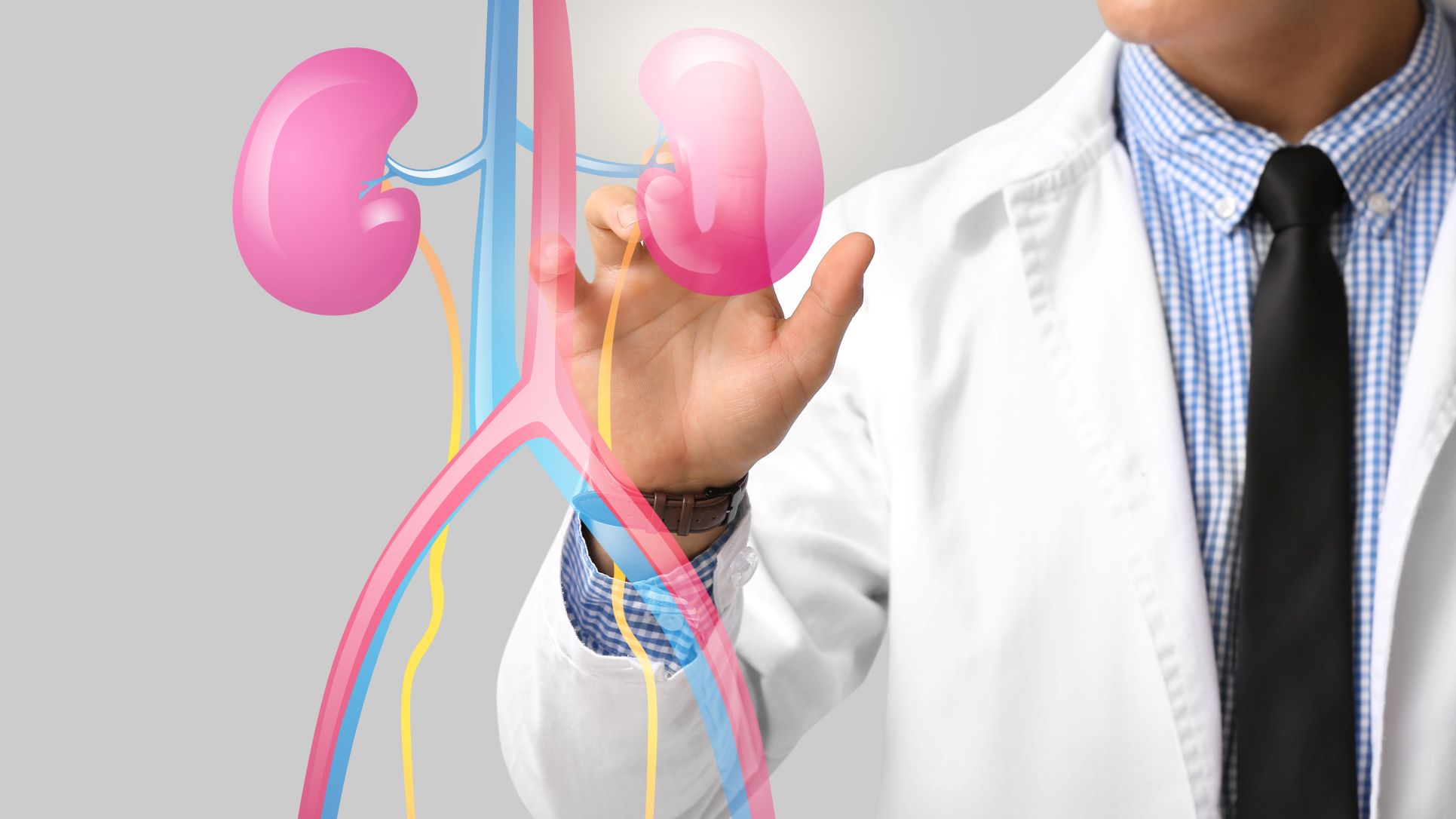
Chronic kidney disease stage 3a (CKD 3a) means there is a mild-to-moderate reduction in kidney filtration.
Stage 3a generally corresponds to an eGFR of 45 to 59 mL/min/1.73 m², when the reduced eGFR is persistent or there is other evidence of chronic kidney disease.
An important point is that one low eGFR result does not automatically establish chronic kidney disease. Doctors consider whether the abnormality persists over time and whether there is other evidence of kidney damage, such as albumin in the urine.
CKD stage 3a is not the same as kidney failure.
Many people with stage 3a kidney disease continue their normal daily activities and may remain stable for years when the underlying cause and risk factors are appropriately managed.
At Prabhakar Bhurke Clinic, Dr. Sandip Prabhakar Bhurke, super specialist nephrologist and transplant physician, provides individualized evaluation and management for patients with chronic kidney disease and reduced kidney function.
What Does an eGFR of 45 to 59 Mean?
eGFR is an estimate of how efficiently the kidneys filter blood.
An eGFR between 45 and 59 falls within the G3a category of chronic kidney disease when the criteria for CKD are met.
The eGFR number should not be interpreted in isolation.
Doctors may also consider:
-
Previous eGFR results
-
Serum creatinine
-
Urine albumin
-
Blood pressure
-
Diabetes status
-
Age and other health factors
-
Medication history
-
Imaging findings
-
Rate of change in kidney function
For example, a stable eGFR of 52 may have a different clinical significance from an eGFR that has rapidly fallen from 85 to 52.
Is Stage 3a Kidney Disease Serious?
CKD stage 3a deserves medical attention, but it does not automatically mean kidney failure or dialysis.
At this stage, the priority is usually to identify the cause, reduce factors that can accelerate kidney damage and monitor kidney function.
The future course can vary considerably between individuals.
Some people remain stable, while others experience progressive decline.
The risk of progression depends on factors such as:
-
Amount of albumin in urine
-
Diabetes
-
Blood-pressure control
-
Underlying kidney disease
-
Smoking
-
Cardiovascular health
-
Previous acute kidney injury
-
Medication-related kidney injury
-
Rate of eGFR decline
What Causes CKD Stage 3a?
CKD stage 3a can develop from many different kidney conditions.
Common contributors include:
Diabetes
Long-standing diabetes can damage the kidney's filtering structures and lead to albumin leakage and declining filtration.
High Blood Pressure
Persistent hypertension can damage blood vessels within the kidneys.
At the same time, kidney disease can contribute to high blood pressure, creating a cycle that needs careful management.
Glomerular Diseases
Diseases affecting the kidney's filtering units may cause proteinuria, blood in urine and declining kidney function.
Polycystic Kidney Disease
Inherited kidney disorders such as autosomal dominant polycystic kidney disease can gradually reduce kidney function.
Recurrent Kidney Problems
Repeated obstruction, infections, stones or episodes of acute kidney injury may contribute to chronic kidney damage in some patients.
Other Causes
Autoimmune diseases, congenital kidney abnormalities, certain medications and other medical conditions can also affect long-term kidney function.
Finding the underlying cause is important because treatment may differ substantially between conditions.
Does Stage 3a Kidney Disease Have Symptoms?
Many people with CKD stage 3a have few or no obvious symptoms.
This is one reason routine kidney testing is important for people at increased risk.
Some people may experience:
-
Tiredness
-
Swelling of the feet or ankles
-
Changes in urination
-
Foamy urine
-
High blood pressure
-
Muscle cramps
-
Reduced appetite
-
Nausea in some cases
These symptoms are not specific to stage 3a CKD.
A person should not assume that the absence of symptoms means kidney function is normal.
Can Stage 3a Kidney Disease Cause Swelling?
It can, but swelling is not present in everyone with CKD stage 3a.
Edema may become more likely when there is significant sodium and fluid retention or substantial protein loss through the urine.
Swelling may appear around:
-
Ankles
-
Feet
-
Lower legs
-
Hands
-
Eyelids
Persistent swelling should be evaluated because heart, liver, venous and other conditions can also cause edema.
What Happens to Creatinine in CKD Stage 3a?
Creatinine often rises as kidney filtration decreases, but there is no single creatinine value that defines stage 3a for every person.
Creatinine levels are influenced by factors including:
-
Muscle mass
-
Age
-
Sex
-
Diet
-
Hydration
-
Certain medications
This is why doctors use creatinine to calculate eGFR and consider the result alongside other findings.
A person with CKD stage 3a should generally be monitored based on trends rather than one isolated creatinine result.
Why Is Urine Albumin Important in Stage 3a?
Kidney health is assessed using more than eGFR.
Albuminuria, meaning excess albumin in urine, provides important information about kidney damage and future risk.
A urine albumin-to-creatinine ratio may be used to assess albumin loss.
Two people can have the same eGFR but different levels of albuminuria and therefore different risk profiles.
This makes urine testing an important part of CKD evaluation.
What Tests Are Used for CKD Stage 3a?
A nephrologist may use several investigations to understand kidney health.
Blood Tests
Depending on the patient's condition, these may include:
-
Serum creatinine
-
eGFR
-
Urea
-
Potassium
-
Sodium
-
Bicarbonate
-
Hemoglobin
-
Calcium
-
Phosphorus
Urine Tests
Testing may assess:
-
Albumin
-
Protein
-
Blood
-
Infection
-
Other abnormalities
Blood Pressure
Blood-pressure measurement is important because hypertension can accelerate kidney damage.
Kidney Imaging
Ultrasound or other imaging may be recommended when the doctor needs to assess kidney size, obstruction, cysts, stones or structural abnormalities.
Additional investigations may be required depending on the suspected cause.
Can CKD Stage 3a Get Better?
It depends on the reason for the reduced kidney function.
If a temporary or reversible factor is contributing to reduced filtration, kidney function may improve after that problem is treated.
For example, dehydration, urinary obstruction, certain medication effects or acute illness may temporarily worsen kidney function.
However, established chronic kidney scarring generally cannot simply be reversed.
The goal of treatment is therefore often to:
-
Identify the cause
-
Remove reversible factors
-
Reduce further kidney injury
-
Control complications
-
Slow progression
-
Preserve remaining kidney function
Can Stage 3a Progress to Stage 3b or Stage 4?
It can, but progression is not inevitable.
Some people with CKD stage 3a remain stable for long periods.
The risk of progression depends on the cause and several other factors, particularly the degree of albuminuria and the trend in eGFR.
A rapidly falling eGFR requires closer evaluation than a stable result.
Regular follow-up allows the doctor to identify meaningful changes early.
How Is Chronic Kidney Disease Stage 3a Treated?
There is no single medicine that treats every case of CKD stage 3a.
Treatment is directed at the underlying cause and factors associated with progression.
Depending on the individual, management may include:
-
Blood-pressure control
-
Diabetes management
-
Treatment aimed at reducing albuminuria when appropriate
-
Kidney-protective therapies when indicated
-
Cholesterol and cardiovascular-risk management
-
Treatment of anemia or mineral abnormalities when present
-
Avoidance of unnecessary kidney-harming medicines
-
Appropriate dietary management
-
Regular kidney-function monitoring
The treatment plan should be individualized according to kidney function, urine findings and other medical conditions.
Medicines That May Be Used in Stage 3a CKD
Depending on the diagnosis, doctors may prescribe medicines to control conditions contributing to kidney damage.
These may include appropriate:
-
Blood-pressure medicines
-
Diabetes medicines
-
Medicines that reduce albuminuria
-
SGLT2 inhibitors in eligible patients
-
Cholesterol-lowering medicines
-
Treatments for specific kidney diseases
Not every medicine is suitable for every patient.
Kidney function and potassium levels may need to be monitored when certain kidney-protective medicines are used.
Patients should not stop prescribed medication simply because a creatinine result has changed.
Can SGLT2 Inhibitors Help in CKD Stage 3a?
SGLT2 inhibitors are an important part of modern treatment for selected people with chronic kidney disease, particularly those with diabetes and certain patients without diabetes.
They may help reduce the risk of kidney-function decline and cardiovascular complications in appropriate patients.
However, eligibility depends on the individual's kidney function, diagnosis, medications and other health factors.
A temporary fall in eGFR can occur after starting certain kidney-protective therapies and does not necessarily mean that the medicine is damaging the kidneys.
Medication decisions should be made by the treating healthcare professional.
CKD Stage 3a Diet: What Should You Eat?
There is no universal menu for everyone with stage 3a kidney disease.
Dietary recommendations depend on:
-
Potassium level
-
Phosphorus level
-
Protein intake
-
Blood pressure
-
Diabetes
-
Albuminuria
-
Body weight
-
Other medical conditions
General principles may include:
Reduce Excess Salt
Lowering excessive sodium intake can help with blood-pressure and fluid management.
Avoid Excessive Protein Intake
Protein is essential for the body, but very high protein intake may not be appropriate for some people with CKD.
Protein intake should be individualized rather than severely restricted without guidance.
Be Careful With Potassium Only When Necessary
Not every person with stage 3a CKD needs a low-potassium diet.
If blood potassium is normal, unnecessarily avoiding nutritious fruits and vegetables may not be beneficial.
Potassium restrictions should be based on medical advice and laboratory results.
Consider Phosphorus When Elevated
Some patients may need to limit certain high-phosphorus foods, especially when blood phosphorus becomes elevated.
Dietary management should be personalized.
How Much Water Should You Drink With Stage 3a CKD?
People with CKD stage 3a do not all require the same amount of fluid.
Adequate hydration is important, but drinking excessive quantities of water does not repair chronic kidney damage.
Fluid requirements may vary depending on:
-
Urine output
-
Kidney function
-
Heart health
-
Blood pressure
-
Medications
-
Weather
-
Presence of swelling
Follow the fluid recommendations provided by your healthcare professional.
What Should You Avoid With CKD Stage 3a?
People with stage 3a kidney disease should be cautious about unnecessary substances that may affect kidney function.
Avoid or discuss with a healthcare professional:
-
Unnecessary NSAID painkillers
-
Unverified herbal kidney remedies
-
"Kidney detox" products
-
Unsupervised supplements
-
Excessive protein supplements
-
High-sodium processed foods
Do not discontinue an important prescribed medicine without consulting the prescribing doctor.
CKD Stage 3a and Painkillers
Some nonsteroidal anti-inflammatory drugs, or NSAIDs, can reduce kidney blood flow and may cause kidney problems in susceptible people.
The risk can be greater in people with:
-
CKD
-
Dehydration
-
Low blood pressure
-
Heart disease
-
Certain medications
If you have CKD stage 3a and require pain treatment, ask your doctor or pharmacist which option is appropriate for you.
Can Stage 3a CKD Be Managed Without Dialysis?
Yes.
CKD stage 3a is not an indication for dialysis by itself.
Dialysis is generally considered much later when kidney function becomes severely impaired and complications cannot be adequately controlled through other treatment.
For most people with stage 3a CKD, management focuses on preserving kidney function and reducing the risk of progression.
Does Stage 3a Kidney Disease Mean Kidney Failure?
No.
Stage 3a is not the same as kidney failure.
CKD is commonly classified from G1 through G5 based on eGFR, with G5 representing severely reduced kidney function.
Stage 3a falls in the middle portion of this classification and requires monitoring and management, but it does not automatically indicate end-stage kidney disease.
What Is the Life Expectancy With CKD Stage 3a?
It is not possible to accurately predict an individual's life expectancy from the label CKD stage 3a alone.
Outcomes vary depending on:
-
Age
-
Cause of CKD
-
eGFR trend
-
Albuminuria
-
Diabetes
-
Blood pressure
-
Cardiovascular disease
-
Smoking
-
Other health conditions
Many people with stage 3a CKD live for many years, particularly when risk factors are appropriately managed.
Rather than focusing only on a predicted lifespan, regular monitoring and management of modifiable risk factors are more useful.
How Often Should CKD Stage 3a Be Monitored?
There is no single follow-up schedule that applies to every patient.
Monitoring frequency depends on:
-
eGFR
-
Albuminuria
-
Rate of kidney-function change
-
Underlying cause
-
Blood pressure
-
Diabetes
-
Medication changes
-
Electrolyte abnormalities
People with higher-risk findings may need more frequent testing.
Your nephrologist can determine an appropriate monitoring schedule.
What Can Help Slow CKD Stage 3a Progression?
Protecting kidney function involves several areas rather than one treatment.
Helpful measures may include:
-
Control blood pressure according to your doctor's target.
-
Manage diabetes appropriately.
-
Take prescribed kidney-protective medicines correctly.
-
Reduce excessive dietary salt.
-
Avoid unnecessary NSAIDs.
-
Maintain a healthy body weight.
-
Avoid smoking.
-
Follow an individualized diet.
-
Attend regular kidney-function tests.
-
Treat urinary obstruction or infections when present.
-
Discuss supplements and herbal products with your healthcare professional.
Can Exercise Be Done With Stage 3a CKD?
For many people, regular physical activity is appropriate and can support cardiovascular and overall health.
The suitable type and intensity depend on age, fitness, symptoms and other medical conditions.
People with significant fatigue, breathlessness, cardiovascular disease or other complications should discuss an exercise plan with their healthcare professional.
CKD itself does not mean that a person must avoid all physical activity.
CKD Stage 3a and Diabetes
Diabetes is one of the important causes of chronic kidney disease.
People with CKD stage 3a and diabetes may need regular monitoring of:
-
eGFR
-
Urine albumin
-
Blood glucose
-
Blood pressure
-
Cardiovascular risk
Appropriate diabetes treatment can be an important part of slowing kidney-function decline.
CKD Stage 3a and High Blood Pressure
Blood pressure management is a major component of kidney protection.
High blood pressure can accelerate kidney damage, while CKD itself can make blood pressure more difficult to control.
Your doctor may select medications based on factors such as:
-
Albuminuria
-
Potassium
-
Kidney function
-
Diabetes
-
Cardiovascular health
Regular home blood-pressure monitoring may be useful for selected patients.
When Should You See a Nephrologist for Stage 3a CKD?
A nephrologist can be particularly helpful when:
-
eGFR remains below 60
-
Kidney function is declining
-
Albuminuria is significant
-
Creatinine is increasing
-
Blood pressure is difficult to control
-
The cause of CKD is unclear
-
Electrolyte abnormalities develop
-
There is recurrent acute kidney injury
-
The patient has a complex kidney condition
Specialist care can help identify the cause and create an individualized long-term management plan.
Warning Signs That Need Prompt Medical Attention
A person with CKD stage 3a should seek prompt medical assessment if they develop:
-
A sudden major reduction in urine output
-
Severe breathlessness
-
Chest pain
-
Severe swelling
-
Persistent vomiting
-
Confusion
-
Severe weakness
-
Fever with flank pain
-
Rapidly worsening health
These symptoms may indicate an acute complication and should not be attributed automatically to stable CKD.
CKD Stage 3a Evaluation at Prabhakar Bhurke Clinic
At Prabhakar Bhurke Clinic, Dr. Sandip Prabhakar Bhurke, super specialist nephrologist and transplant physician, provides individualized evaluation and ongoing kidney care for patients with CKD stage 3a and other kidney-function abnormalities.
Depending on the patient's condition, evaluation may include:
-
Review of previous eGFR and creatinine results
-
Urine albumin and protein assessment
-
Blood-pressure evaluation
-
Diabetes-related kidney assessment
-
Electrolyte monitoring
-
Medication review
-
Kidney ultrasound or other imaging when appropriate
-
Assessment of CKD progression risk
-
Individualized dietary and lifestyle guidance
-
Management of kidney-related complications
The objective is to understand the cause of reduced kidney function and develop an appropriate plan to preserve kidney health.
Frequently Asked Questions
Is CKD stage 3a a serious condition?
CKD stage 3a indicates a meaningful reduction in kidney filtration and should be monitored. However, it does not automatically mean kidney failure or dialysis.
What eGFR is stage 3a kidney disease?
Stage 3a generally corresponds to an eGFR of 45 to 59 mL/min/1.73 m² when chronic kidney disease criteria are met.
Can stage 3a kidney disease return to normal?
If a reversible factor is contributing to reduced kidney function, eGFR may improve. Established chronic kidney scarring usually cannot be completely reversed.
Does CKD stage 3a require dialysis?
No. Stage 3a CKD does not by itself require dialysis. Dialysis decisions are based on much more advanced kidney dysfunction and/or serious complications that cannot be adequately managed otherwise.
Can I live normally with CKD stage 3a?
Many people with stage 3a CKD continue normal daily activities. The course varies, so regular monitoring and management of the underlying cause are important.
What foods should be avoided in CKD stage 3a?
There is no universal list of foods that every stage 3a patient must avoid. Sodium, protein, potassium and phosphorus recommendations should be based on laboratory results, kidney function and other medical conditions.
Is high creatinine always present in CKD stage 3a?
Not necessarily. Creatinine varies with muscle mass and other factors. eGFR, urine albumin and trends over time provide additional information.
Can CKD stage 3a progress to kidney failure?
It can in some patients, but progression is not inevitable. The risk depends on the underlying disease, albuminuria, eGFR trend and other health factors.
Conclusion
Chronic kidney disease stage 3a means that kidney filtration is moderately reduced, generally corresponding to an eGFR of 45 to 59 when chronic kidney disease criteria are fulfilled.
Stage 3a should be taken seriously, but it does not mean that dialysis is required or that kidney failure is inevitable.
The most important steps are to identify the cause, monitor eGFR and urine albumin, control blood pressure and diabetes when applicable, use appropriate kidney-protective treatment, avoid unnecessary kidney-harming medicines and follow an individualized lifestyle and dietary plan.
Because CKD can progress differently from one person to another, the trend in kidney function and the presence of albuminuria are often more informative than a single test result.
For personalized evaluation and management of CKD stage 3a, consult Dr. Sandip Prabhakar Bhurke at Prabhakar Bhurke Clinic.
Medical Disclaimer
This article is intended for general educational and informational purposes only and should not be considered a substitute for professional medical advice, diagnosis or treatment. CKD stage 3a is generally associated with an eGFR of 45 to 59 mL/min/1.73 m² when chronic kidney disease criteria are fulfilled, but one abnormal eGFR result alone does not necessarily establish CKD. Individual prognosis and treatment depend on the cause of kidney disease, eGFR trend, urine albumin, blood pressure, diabetes status, medications and other health factors. Do not start, stop or change medicines, supplements, painkillers, diet or fluid intake based solely on this article. Seek prompt medical attention for very little or no urine, severe breathlessness, chest pain, confusion, persistent vomiting, severe swelling, fever with flank pain or rapidly worsening symptoms. For individualized kidney care, consult Dr. Sandip Prabhakar Bhurke or another qualified nephrologist.