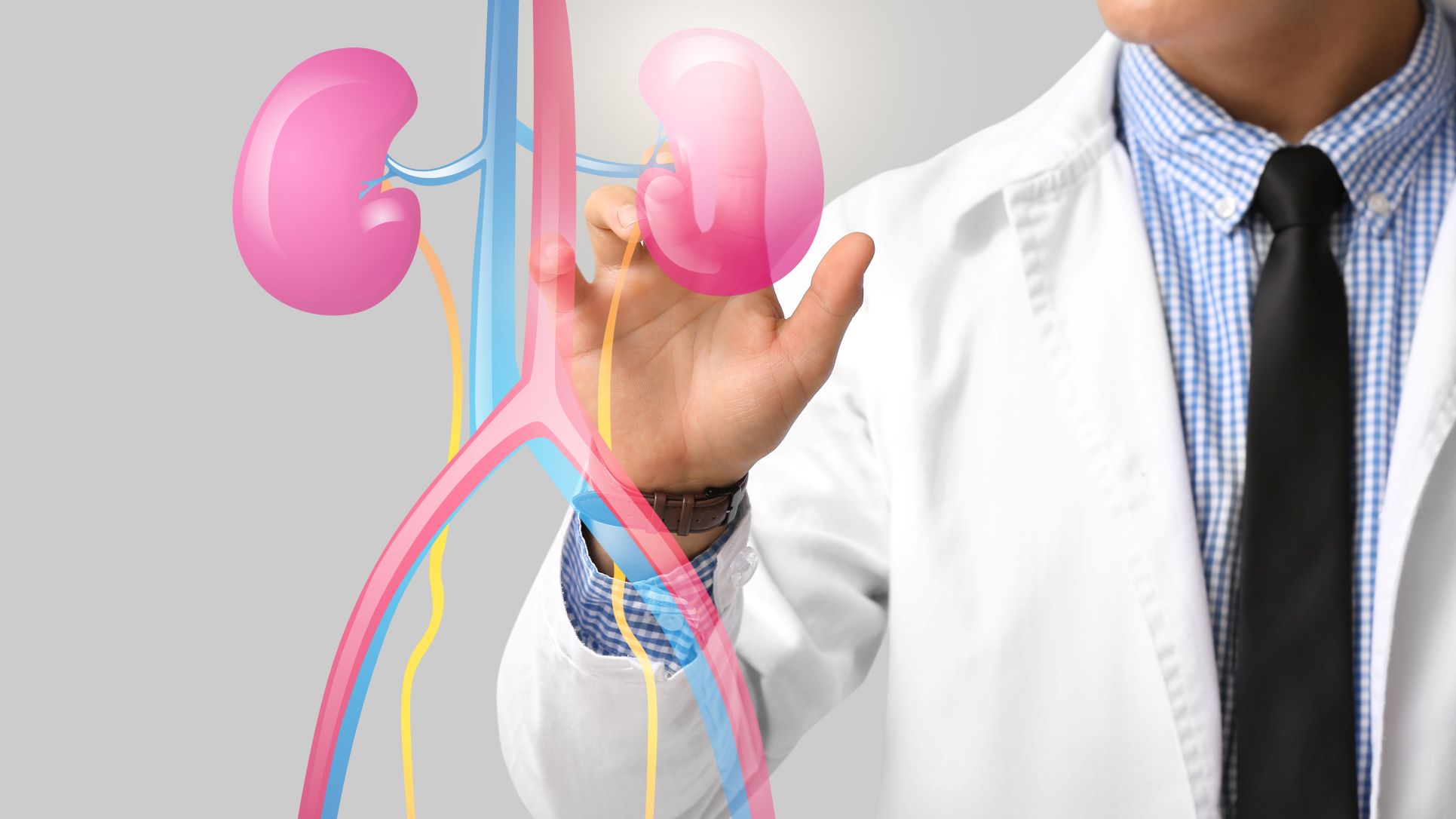
Kidney stones can cause sudden and severe pain, particularly when a stone moves from the kidney into the ureter. Many people searching for a cure for kidney stones treatment want to know whether stones can disappear with medicines, whether they require surgery, and how they can prevent another stone from developing.
The right treatment depends on several factors, including the size, location and type of stone, whether it is blocking urine flow, the severity of symptoms and the patient's overall health.
At Prabhakar Bhurke Clinic, Dr. Sandip Prabhakar Bhurke, super specialist nephrologist and transplant physician, provides evaluation and specialist management for patients with kidney and urinary tract conditions.
Can kidney stones be cured completely?
Kidney stones can often be successfully treated or removed, but treatment is different from preventing future stones.
A stone that is already present may:
- Pass naturally through the urinary tract
- Be treated with appropriate medicines in selected cases
- Be broken into smaller fragments
- Be removed using an endoscopic procedure
- Require another surgical approach depending on its size and location
Even after successful stone removal, a person may develop another stone later. Finding the reason for stone formation and taking preventive measures is therefore an important part of long-term care.
What determines the best kidney stone treatment?
A doctor may consider several factors before recommending treatment.
Stone size
Small stones have a greater chance of passing naturally than larger stones.
Stone location
A stone in the kidney may be managed differently from a stone lodged in the ureter.
Urinary obstruction
A stone that blocks urine flow may require more urgent treatment, particularly when accompanied by infection or deterioration in kidney function.
Symptoms
Severe or persistent pain, repeated vomiting or other complications may influence the treatment decision.
Stone composition
Kidney stones can be composed of different substances. Knowing the stone type can help doctors recommend strategies to reduce recurrence.
Infection
A blocked urinary system associated with infection can become a medical emergency and requires prompt evaluation.
Can small kidney stones pass without surgery?
Yes, some small kidney stones can pass naturally.
Doctors may recommend observation and appropriate supportive treatment when the stone is considered likely to pass safely.
Depending on the individual situation, treatment may include:
- Pain management
- Adequate fluid intake as advised
- Monitoring for stone passage
- Follow-up imaging
- Medicines that may facilitate passage in selected patients
Patients should not assume that every stone can be passed at home. Stone size, location and the presence of obstruction are important.
What medicines are used for kidney stones?
There is no single medicine that dissolves every type of kidney stone.
Treatment depends on the stone's composition and clinical circumstances.
Medicines may be used for:
- Pain relief
- Nausea and vomiting
- Helping certain ureteric stones pass
- Treating urinary infection
- Preventing formation of particular types of stones
Some specific stones, such as certain uric acid stones, may respond to urine alkalinization under medical supervision.
Taking medicines without knowing the stone type or without medical advice may delay appropriate treatment.
When is a kidney stone procedure necessary?
A procedure may be considered when:
- The stone is too large to pass naturally
- Pain remains severe or recurrent
- The stone causes significant obstruction
- Kidney function is affected
- The stone remains stuck
- Repeated urinary infections occur
- The stone is unlikely to pass on its own
- Symptoms persist despite conservative management
The appropriate procedure depends on stone size, location, anatomy and other clinical factors.
Kidney stone treatment options
Shock wave lithotripsy
Shock wave lithotripsy, commonly called SWL, uses externally generated shock waves to break a kidney stone into smaller fragments.
The fragments can then pass through the urinary tract.
SWL may be suitable for selected stones depending on their size, location and composition.
Ureteroscopy and laser treatment
During ureteroscopy, a thin instrument is passed through the urinary tract to reach the stone.
A laser may then be used to fragment the stone into smaller pieces or facilitate its removal.
This approach is commonly considered for ureteric and selected kidney stones.
RIRS
Retrograde intrarenal surgery, or RIRS, uses a flexible ureteroscope to access stones within the kidney.
A laser can fragment the stone, allowing the fragments to be removed or passed naturally.
RIRS can be particularly useful for certain kidney stones that are not suitable for other approaches.
Percutaneous nephrolithotomy
For larger or complex kidney stones, percutaneous nephrolithotomy, or PCNL, may be considered.
A small access tract is created through the skin into the kidney, allowing the stone to be fragmented and removed.
The choice of procedure should be made after appropriate imaging and specialist assessment.
What happens if a kidney stone blocks urine?
A blocked urinary tract can become serious, especially if infection is also present.
Symptoms such as:
- Fever
- Chills
- Severe flank pain
- Vomiting
- Difficulty passing urine
- Feeling acutely unwell
may require urgent medical evaluation.
A stone causing obstruction together with infection can require urgent drainage of the urinary system before definitive stone treatment.
Is drinking more water enough to cure kidney stones?
Water is important for kidney stone prevention and may support the passage of some small stones.
However, drinking large amounts of water does not guarantee that an existing stone will dissolve or pass.
Excessive fluid intake can also be inappropriate in some medical conditions.
Fluid recommendations should therefore be individualized, particularly for people with kidney disease, heart conditions or other health problems.
How can kidney stones be prevented after treatment?
Removing a stone is only one part of kidney stone care.
Prevention can include:
Maintain appropriate hydration
Adequate fluid intake can help dilute substances that contribute to stone formation.
Reduce excessive salt
High sodium intake can increase urinary calcium in some people and may contribute to calcium stone formation.
Follow an individualized diet
Dietary recommendations depend on the type of stone and urine test results.
Do not unnecessarily eliminate calcium
People sometimes stop consuming calcium because they have calcium stones. However, dietary calcium can be important, and unnecessarily restricting it may not be beneficial.
Discuss dietary changes with a healthcare professional.
Manage underlying conditions
Certain metabolic disorders and medical conditions can increase the likelihood of recurrent stones.
Why does stone analysis matter?
If a stone is recovered after passage or removal, laboratory analysis can identify its composition.
Common types include:
- Calcium oxalate
- Calcium phosphate
- Uric acid
- Struvite
- Cystine
Knowing the composition can help guide preventive treatment.
What is a metabolic evaluation for kidney stones?
People with recurrent stones or specific risk factors may benefit from additional testing.
Depending on the situation, evaluation may include:
- Blood tests
- Urine testing
- Urine volume assessment
- Urinary calcium
- Urinary oxalate
- Urinary citrate
- Uric acid measurements
- Stone composition analysis
These results can help identify factors contributing to repeated stone formation.
Can kidney stones damage the kidneys?
Many kidney stones do not cause permanent kidney damage when appropriately managed.
However, prolonged obstruction, repeated infections or recurrent severe stone disease can potentially affect kidney function.
This is why persistent symptoms, recurrent stones or urinary obstruction should not be ignored.
When should you see a kidney specialist?
A specialist evaluation may be useful if you have:
- Repeated kidney stones
- Stones in both kidneys
- Reduced kidney function
- Recurrent urinary infections
- A family history of stone disease
- Large or multiple stones
- Persistent blood in the urine
- Difficult-to-manage stone disease
A specialist can help determine whether further investigation is needed to identify why stones are forming.
Kidney stone care at Prabhakar Bhurke Clinic
At Prabhakar Bhurke Clinic, Dr. Sandip Prabhakar Bhurke provides specialist evaluation and management for patients with kidney disorders and kidney stone-related problems.
Depending on the individual case, care may involve:
- Assessment of kidney function
- Evaluation of stone-related symptoms
- Review of imaging reports
- Assessment of urinary obstruction
- Medical management
- Prevention of recurrent stones
- Referral or coordination for appropriate stone removal procedures when required
- Long-term kidney health monitoring
The appropriate treatment is selected according to the patient's stone characteristics and overall medical condition.
Frequently Asked Questions
What is the fastest cure for kidney stones?
There is no single fastest treatment for every stone. Small stones may pass naturally, while larger or obstructing stones may require procedures such as SWL, ureteroscopy with laser treatment, RIRS or PCNL.
Can kidney stones disappear without surgery?
Some small stones can pass naturally without a procedure. Whether observation is appropriate depends on the stone's size, location, symptoms and whether it is causing obstruction or other complications.
Can medicines dissolve kidney stones?
Certain uric acid stones may be dissolved with medically supervised urine alkalinization. Most calcium-based stones cannot simply be dissolved with a medicine and may require passage, fragmentation or removal.
Can kidney stones come back after treatment?
Yes. Stone removal does not necessarily eliminate the underlying tendency to form stones. Hydration, dietary measures and evaluation of stone composition can help reduce recurrence risk.
Is kidney stone treatment always painful?
Treatment and recovery vary depending on the procedure and individual circumstances. Doctors use appropriate pain management and select the treatment approach based on the patient's needs.
Conclusion
There is no universal cure for kidney stones treatment because kidney stones differ in size, location, composition and severity. Some small stones can pass naturally, while others require medication, shock wave lithotripsy or minimally invasive procedures such as ureteroscopy, laser treatment or RIRS.
The most important step is obtaining an accurate assessment rather than relying on home remedies or self-prescribed medication. After the stone is treated, identifying its possible cause can also help reduce the chance of recurrence.
For specialist evaluation of kidney stone disease and overall kidney health, patients can consult Dr. Sandip Prabhakar Bhurke at Prabhakar Bhurke Clinic.
Medical Disclaimer
This blog is intended for general educational purposes only and does not constitute medical advice, diagnosis or treatment. Kidney stone treatment depends on factors including stone size, location, composition, urinary obstruction, infection, kidney function and the patient's overall health. Do not self-medicate or attempt to force a stone to pass by consuming excessive amounts of water. A blocked urinary tract accompanied by fever, chills, severe pain, vomiting, reduced urine output or feeling seriously unwell requires prompt medical evaluation. Always consult a qualified healthcare professional before starting medicines or deciding on a kidney stone treatment. For personalized assessment, consult Dr. Sandip Prabhakar Bhurke or another appropriately qualified specialist.