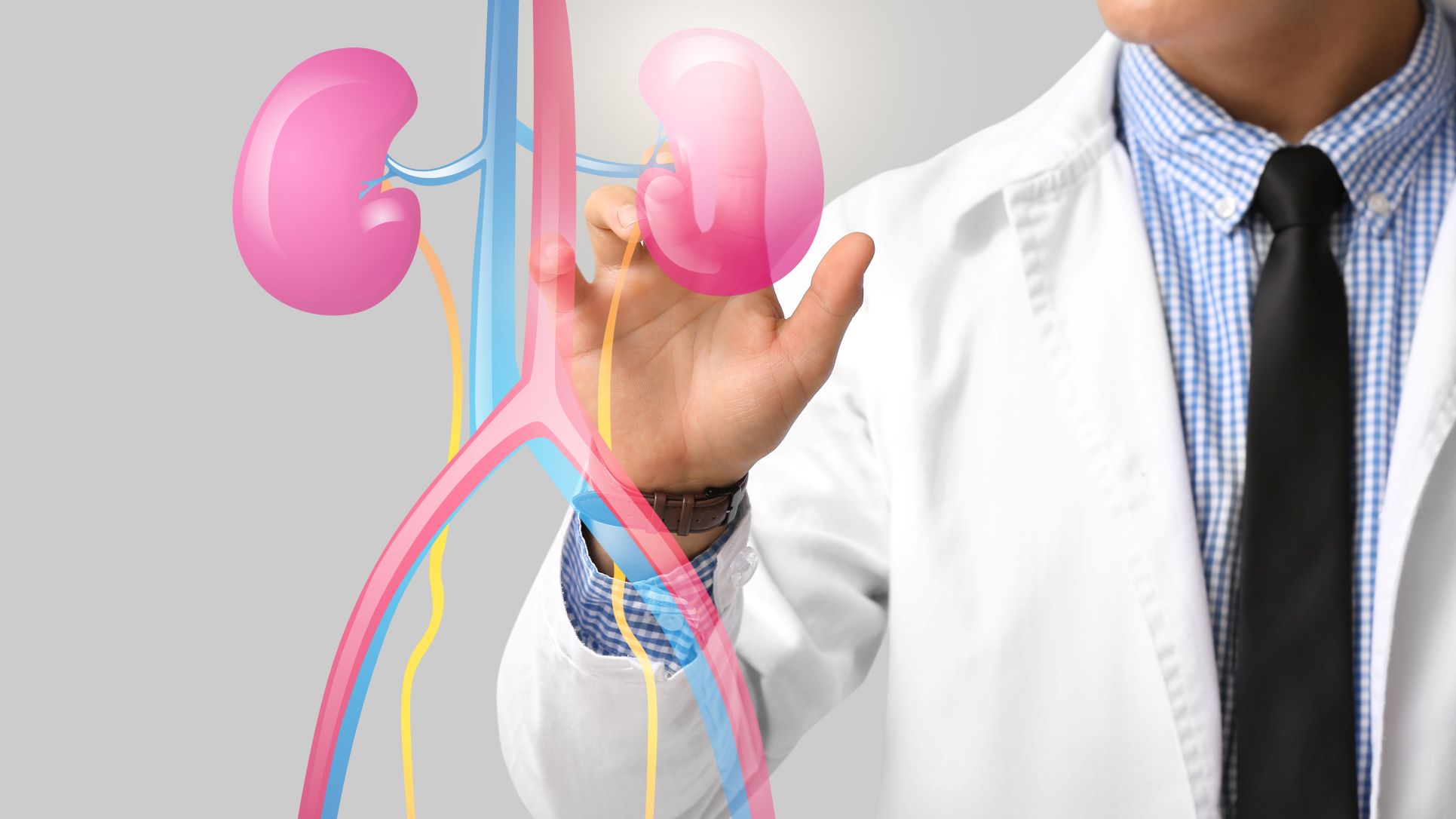
ESWL, or extracorporeal shock wave lithotripsy, is a non-invasive treatment used to break selected kidney or urinary-tract stones into smaller fragments.
Instead of making an incision to reach the stone, ESWL uses focused shock waves generated outside the body. These waves are directed toward the stone and gradually fragment it. The smaller pieces can then pass through the urinary tract naturally or may require additional treatment if they do not clear.
ESWL has been used for many years as an option for appropriately selected patients with urinary stones.
At Prabhakar Bhurke Clinic, Dr. Sandip Prabhakar Bhurke, super specialist nephrologist and transplant physician, provides specialized evaluation and kidney-focused care for patients with kidney stones and related complications.
Why Is ESWL Used for Kidney Stones?
A kidney stone does not always need an immediate procedure. Small stones may pass naturally with appropriate medical management.
ESWL may be considered when a stone:
-
Is unlikely to pass without intervention
-
Causes recurrent or significant pain
-
Produces urinary obstruction
-
Continues to increase in size
-
Causes recurrent urinary problems
-
Is located in a position suitable for shock-wave treatment
-
Requires stone fragmentation but an external approach is considered appropriate
The decision is based on imaging, stone characteristics and the patient's overall health.
How Does ESWL Work?
During ESWL, a specialized machine produces shock waves outside the body.
The treatment generally involves:
-
Locating the stone using imaging.
-
Positioning the patient appropriately.
-
Aligning the shock-wave source with the stone.
-
Delivering repeated shock waves.
-
Fragmenting the stone into smaller pieces.
-
Allowing the fragments to pass through the urinary tract or be managed subsequently.
The exact technique varies depending on the equipment, stone location and clinical circumstances.
What Does "Extracorporeal" Mean?
The term extracorporeal means that the treatment is performed from outside the body.
The shock waves travel through the body's tissues toward the targeted urinary stone.
This is different from procedures such as ureteroscopy, where an instrument is passed through the urinary tract to reach the stone directly.
Which Stones May Be Suitable for ESWL?
ESWL can be useful for selected stones in the kidney or ureter.
Suitability depends on several factors, including:
Stone Size
Smaller stones are generally easier to fragment and clear than very large stones.
Stone Location
The stone's position within the kidney or ureter can affect whether fragments are likely to pass.
Stone Composition
Some stones are harder and more resistant to fragmentation than others.
Kidney Anatomy
The anatomy of the collecting system can influence how easily fragments leave the kidney.
Urinary Drainage
A blocked urinary system may require a different treatment approach before or instead of ESWL.
Is ESWL Suitable for Everyone?
No.
A patient may need another treatment if:
-
The stone is very large
-
The stone is particularly hard
-
The location makes fragment clearance difficult
-
There is significant urinary obstruction
-
There is an active urinary infection
-
Certain bleeding-related conditions are present
-
The patient's anatomy makes ESWL less suitable
A specialist reviews imaging and medical history before recommending the procedure.
What Tests May Be Needed Before ESWL?
Before treatment, the healthcare team may evaluate:
-
Kidney function
-
Urine analysis
-
Urine culture when infection is suspected
-
Blood tests
-
Blood pressure
-
Current medications
-
Previous stone history
-
Imaging findings
Imaging such as ultrasound, X-ray or CT may help determine the stone's size, location and characteristics.
What Happens During an ESWL Session?
The patient is positioned so that the stone can be targeted accurately.
Imaging is used to locate the stone.
The ESWL device then delivers a series of shock waves focused on the stone.
Patients may experience tapping, pressure or discomfort during treatment.
Pain-control measures or sedation may be provided according to the patient's needs and the treatment protocol.
The healthcare team monitors the patient during the procedure.
Does ESWL Require Surgery?
ESWL is generally considered a non-invasive stone-fragmentation procedure because the shock waves are delivered from outside the body and no surgical incision is made to reach the stone.
However, ESWL is still a medical procedure and can have risks and limitations.
Some patients may require additional treatment if stone fragments remain.
Is ESWL Painful?
Some patients experience discomfort during ESWL.
The level of discomfort depends on:
-
Individual pain tolerance
-
Shock-wave intensity
-
Stone location
-
Number of shock waves
-
Treatment duration
Pain-management measures can be used when appropriate.
How Long Does ESWL Take?
The length of treatment varies depending on the stone and the specific equipment used.
Some procedures can be completed within a relatively short period, while more complex cases may require longer treatment or multiple sessions.
The treating team can provide a more accurate estimate after reviewing the patient's imaging.
What Happens After ESWL?
The main goal is for the fragmented stone pieces to leave the urinary tract.
After treatment, patients may be advised to:
-
Follow their prescribed fluid plan
-
Take recommended medicines
-
Monitor for passage of stone fragments
-
Watch for fever or worsening symptoms
-
Attend scheduled follow-up appointments
The patient's urine may contain small stone fragments for several days or longer.
Is Blood in Urine Normal After ESWL?
Some blood in the urine can occur temporarily after ESWL.
However, significant or persistent bleeding should not be ignored.
Patients should contact their healthcare provider if they develop heavy bleeding, severe pain, dizziness or other concerning symptoms.
ESWL Recovery
Recovery varies from person to person.
Some patients return to routine activities relatively quickly after ESWL, while others may need additional time depending on pain, stone fragments and other factors.
The treating doctor will provide specific instructions regarding:
-
Physical activity
-
Medicines
-
Fluid intake
-
Follow-up imaging
-
Work and daily activities
Possible Side Effects of ESWL
Temporary side effects may include:
-
Flank discomfort
-
Blood in the urine
-
Bruising
-
Urinary frequency
-
Passage of stone fragments
-
Mild abdominal or back discomfort
These effects generally depend on the treatment and individual response.
Possible Complications of ESWL
Although ESWL is generally considered safe when appropriately selected, complications can occur.
Potential complications include:
-
Urinary infection
-
Persistent stone fragments
-
Ureteral blockage by fragments
-
Bleeding
-
Kidney or surrounding tissue injury
-
Need for additional stone treatment
The individual risk depends on the patient's health and stone characteristics.
What Is Steinstrasse After ESWL?
Steinstrasse is a term used to describe a collection of stone fragments within the ureter following stone fragmentation.
A small amount of fragmented material may pass without causing problems.
However, a larger collection can obstruct urine flow and may require further treatment.
Severe pain, fever, vomiting or difficulty passing urine after ESWL should be evaluated promptly.
Can ESWL Completely Remove a Kidney Stone?
ESWL breaks a stone into smaller pieces rather than physically extracting every fragment during the procedure.
The fragments may pass naturally afterward.
Some patients achieve complete clearance after one treatment, while others may have residual fragments and require another session or a different stone-removal procedure.
What Determines ESWL Success?
Several factors influence the likelihood of successful stone clearance.
These include:
-
Stone size
-
Stone density
-
Stone location
-
Kidney anatomy
-
Patient anatomy
-
Urinary drainage
-
Previous treatment
-
Stone composition
This is why a specialist assessment is important before selecting ESWL.
ESWL vs Laser Lithotripsy
Both treatments can be used to fragment urinary stones, but they work differently.
ESWL uses shock waves generated outside the body.
Laser lithotripsy generally involves an endoscopic procedure in which an instrument reaches the stone and a laser is used to fragment it.
The choice depends on the size, location and characteristics of the stone and the patient's overall condition.
ESWL vs Ureteroscopy
Ureteroscopy involves passing a small endoscope through the urinary tract to reach the stone.
It can allow direct visualization and treatment of the stone.
ESWL is less invasive in terms of instrument access because the shock waves are delivered externally.
Neither option is universally best. The appropriate procedure should be selected based on the individual case.
Can ESWL Be Used for Large Kidney Stones?
Large stones may be less suitable for ESWL as a single treatment because complete clearance can be difficult and multiple sessions may be necessary.
For certain large or complex stones, other approaches such as ureteroscopy or percutaneous nephrolithotomy may provide a more appropriate treatment strategy.
When Should ESWL Be Avoided or Delayed?
Treatment may need to be postponed or an alternative approach considered in situations such as:
-
Active urinary infection
-
Significant untreated obstruction
-
Certain bleeding disorders
-
Some pregnancy-related circumstances
-
Certain anatomical problems
-
Stone characteristics unfavorable for ESWL
A doctor must assess each patient individually.
Can Kidney Stones Return After ESWL?
Yes.
ESWL removes or fragments the current stone but does not necessarily eliminate the metabolic or dietary factors that caused stone formation.
Recurrent stones may be associated with:
-
Low fluid intake
-
High dietary sodium
-
Certain metabolic abnormalities
-
Family history
-
Specific types of kidney stones
-
Certain medications or medical conditions
Patients with recurrent stones may benefit from a preventive evaluation.
How Can Future Kidney Stones Be Prevented?
Prevention depends on the type of stone and individual risk factors.
Your doctor may recommend:
-
Adequate fluid intake when medically appropriate
-
Reducing excessive salt intake
-
Maintaining a balanced diet
-
Appropriate calcium intake
-
Weight management
-
Evaluation of recurrent stone disease
-
Medicines when specifically indicated
Patients with advanced kidney, heart or liver disease should follow individualized fluid advice rather than adopting a generic high-fluid plan.
When Is a Kidney Stone an Emergency?
A suspected kidney stone requires urgent assessment when accompanied by:
-
Fever or chills
-
Severe uncontrolled pain
-
Persistent vomiting
-
Difficulty passing urine
-
Significant urinary obstruction
-
Worsening kidney function
-
Signs of severe infection
-
Obstruction in a person with a single functioning kidney
An infected obstructed urinary system can require urgent treatment.
ESWL and Kidney Function
For appropriately selected patients, ESWL is generally performed with attention to existing kidney health.
However, untreated obstruction, repeated infections and recurrent stone disease can affect kidney function.
Patients with pre-existing kidney disease may need additional consideration when planning stone treatment.
ESWL Treatment at Prabhakar Bhurke Clinic
At Prabhakar Bhurke Clinic, Dr. Sandip Prabhakar Bhurke, super specialist nephrologist and transplant physician, provides specialized evaluation of patients with kidney stones and kidney-related complications.
Assessment may include:
-
Review of stone history
-
Kidney-function evaluation
-
Urine testing
-
Imaging review
-
Assessment for urinary obstruction
-
Evaluation of recurrent stone risk
-
Guidance regarding suitable stone-management options
-
Post-treatment kidney and stone follow-up
When an interventional stone procedure is required, the appropriate treatment can be planned with the relevant specialist team according to the patient's clinical needs.
Frequently Asked Questions About ESWL
What does ESWL stand for?
ESWL stands for extracorporeal shock wave lithotripsy.
Is ESWL a surgery?
ESWL is a non-invasive stone-fragmentation procedure performed using shock waves from outside the body. It does not require a surgical incision to reach the stone.
Can ESWL remove kidney stones permanently?
ESWL can fragment selected stones, after which fragments may pass through the urinary tract. Residual fragments can sometimes remain and require additional treatment.
How many ESWL sessions are required?
The number of sessions varies. Some stones clear after one treatment, while others may require repeat treatment or an alternative procedure.
How quickly do stone fragments pass after ESWL?
The timing varies according to stone size, location, urinary anatomy and individual factors. Some fragments pass over several days or weeks.
Is ESWL better than laser treatment?
Neither is automatically better for every patient. Stone size, location, density, anatomy and other clinical factors determine which approach may be most appropriate.
Can ESWL cause blood in urine?
Yes, temporary blood in the urine can occur after ESWL. Heavy, persistent or worsening bleeding requires medical evaluation.
Conclusion
ESWL is an established treatment option for selected kidney and urinary stones. By directing focused shock waves from outside the body, the procedure can fragment stones into smaller pieces that may subsequently pass through the urinary tract.
However, ESWL is not appropriate for every stone. Size, location, density, anatomy, urinary drainage, infection status and kidney function all influence treatment selection.
Early specialist evaluation can help determine whether ESWL, observation, medication, ureteroscopy, laser lithotripsy, percutaneous treatment or another approach is most suitable.
At Prabhakar Bhurke Clinic, Dr. Sandip Prabhakar Bhurke, super specialist nephrologist and transplant physician, provides individualized kidney and stone-related care based on each patient's medical condition.
Medical Disclaimer
This article is intended for general educational purposes only and does not constitute medical diagnosis or treatment. ESWL is not suitable for every patient or every kidney stone, and treatment decisions require appropriate clinical assessment and imaging. Do not self-treat suspected kidney stones or delay medical care because of information found online. Fever, chills, severe uncontrolled pain, persistent vomiting or difficulty passing urine may indicate a serious complication and requires prompt medical evaluation.