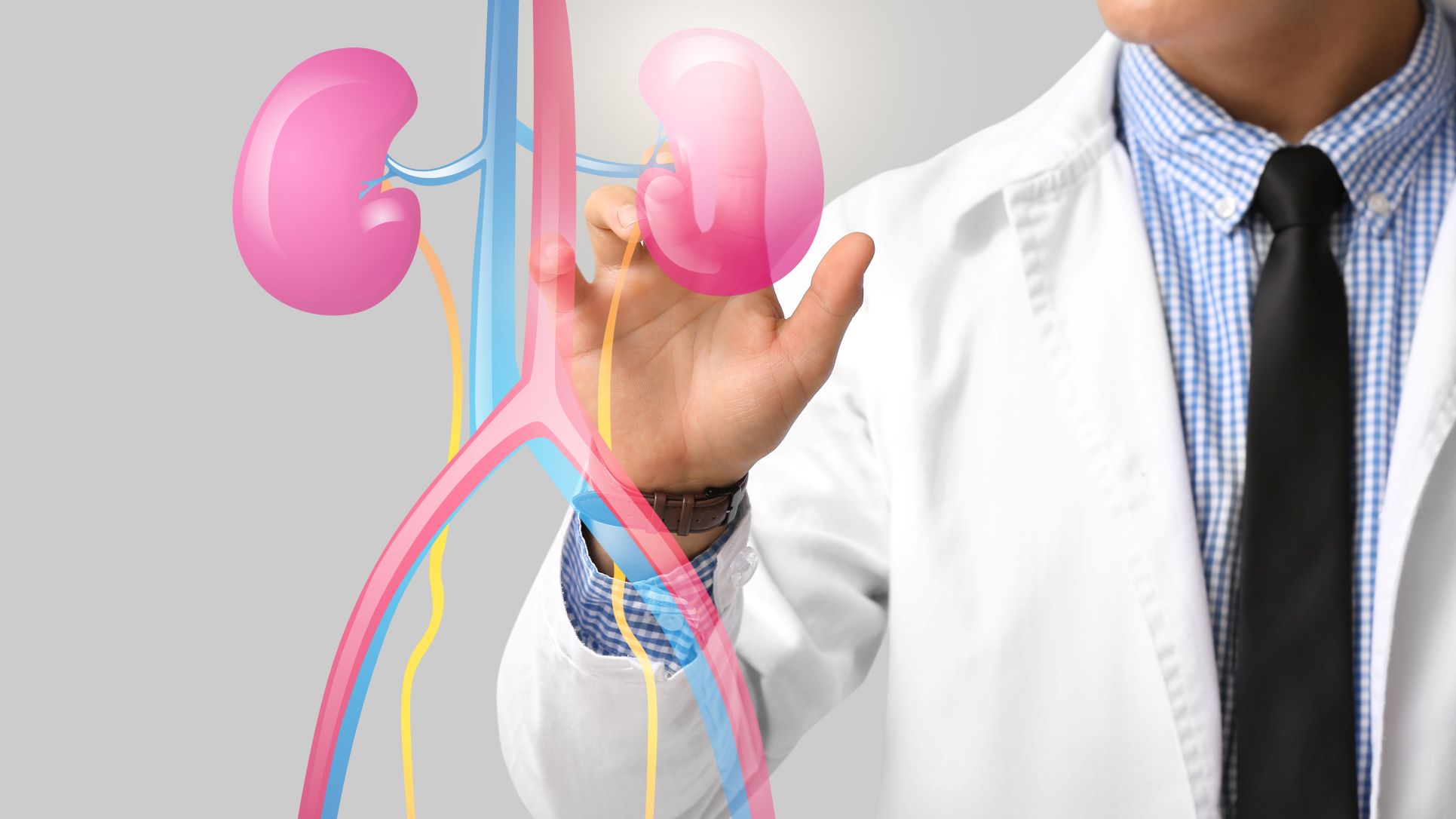
Kidney pain on both sides can feel like aching, pressure, tenderness or discomfort in the flank areas below the ribs on either side of the back.
Because the kidneys are located toward the back of the upper abdomen, people may assume that any pain in this region is coming from the kidneys. However, pain in the same area can also originate from muscles, the spine, nerves, gastrointestinal organs or other structures.
When discomfort occurs on both sides, it is important to consider the pattern of pain and accompanying symptoms rather than assuming that the kidneys are responsible.
Possible kidney-related causes include:
-
Kidney infection
-
Kidney stones
-
Urinary obstruction
-
Polycystic kidney disease
-
Certain inflammatory kidney conditions
-
Kidney swelling or other structural abnormalities
At Prabhakar Bhurke Clinic, Dr. Sandip Prabhakar Bhurke, super specialist nephrologist and transplant physician, provides individualized evaluation for patients experiencing kidney-area pain and other urinary or kidney-related symptoms.
Where Is Kidney Pain Usually Felt?
Kidney-related discomfort is commonly felt in the flank, which is the area between the lower ribs and the upper part of the hip.
It may be felt:
-
On one side of the back
-
On both sides
-
Toward the abdomen
-
Toward the groin in some cases
-
Deep inside rather than directly on the skin
The exact location and pattern can vary depending on the underlying condition.
Common Causes of Kidney Pain on Both Sides
1. Kidney Infection
A kidney infection, also called pyelonephritis, can cause pain in the flank or back.
Symptoms may include:
-
Fever
-
Chills
-
Burning while urinating
-
Frequent urination
-
Nausea
-
Vomiting
-
Flank pain
-
Feeling generally unwell
When infection affects both kidneys, discomfort may occur on both sides.
Fever combined with significant flank pain requires prompt medical evaluation.
2. Kidney Stones
Kidney stones can cause severe pain when they move into the urinary tract or obstruct urine flow.
Typical stone pain may:
-
Begin suddenly
-
Come in waves
-
Start in the flank
-
Travel toward the abdomen or groin
-
Be associated with nausea or vomiting
Although stones often affect one side at a time, a person can have stones in both kidneys.
The location, size and degree of obstruction determine the appropriate treatment.
3. Urinary Obstruction
Anything that interferes with normal urine drainage can cause pressure within the urinary system.
Possible causes include:
-
Kidney stones
-
Ureteric narrowing
-
Blood clots
-
Certain tumors
-
Structural abnormalities
If both urinary systems become obstructed, kidney function can deteriorate rapidly.
Reduced urine output associated with severe pain requires urgent medical assessment.
4. Polycystic Kidney Disease
People with polycystic kidney disease develop multiple fluid-filled cysts within the kidneys.
As cysts enlarge, some patients may experience:
-
Flank discomfort
-
Abdominal fullness
-
Back pain
-
Blood in urine
-
Recurrent urinary infections
Pain may occur on both sides because both kidneys can be affected.
Polycystic kidney disease can also cause high blood pressure and progressive loss of kidney function.
5. Other Kidney Conditions
Some kidney disorders may produce discomfort or tenderness, although many chronic kidney diseases do not cause pain.
Possible conditions include:
-
Kidney inflammation
-
Kidney swelling
-
Certain structural abnormalities
-
Complications associated with cystic kidney disease
-
Rare kidney-related masses
A proper evaluation is needed to determine whether the kidneys are actually responsible for the pain.
Could Kidney Pain on Both Sides Be Muscle Pain?
Yes.
Musculoskeletal pain is a very common alternative explanation for discomfort around the kidney area.
Muscle or spine-related pain may become worse with:
-
Bending
-
Twisting
-
Lifting
-
Certain sleeping positions
-
Physical activity
-
Pressing on the affected area
Kidney-related pain may behave differently, although symptoms can overlap.
Because the distinction is not always obvious, persistent or unexplained bilateral flank pain should be medically assessed.
How Can Kidney Pain Be Different From Back Pain?
There is no single symptom that can reliably distinguish kidney pain from muscular back pain.
However, some patterns may provide clues.
Pain More Suggestive of a Kidney or Urinary Problem
Pain accompanied by:
-
Fever
-
Chills
-
Burning urination
-
Blood in urine
-
Nausea or vomiting
-
Changes in urine output
-
Urinary urgency
-
Severe colicky pain
may suggest a urinary or kidney-related condition.
Pain More Suggestive of a Musculoskeletal Cause
Pain that clearly changes with movement, posture or physical activity may be more consistent with a musculoskeletal source.
However, this is not a diagnosis.
Can Kidney Disease Cause Pain on Both Sides?
Some kidney diseases can cause flank discomfort, but many chronic kidney diseases are painless.
For example, a person can have significantly reduced kidney function without experiencing kidney pain.
This is why symptoms alone cannot determine kidney function.
People at risk of kidney disease may need blood and urine testing even when they have no pain.
What Symptoms Can Occur Along With Bilateral Kidney Pain?
Depending on the cause, kidney-area pain may occur with:
-
Fever
-
Chills
-
Burning urination
-
Frequent urination
-
Blood in urine
-
Foamy urine
-
Nausea
-
Vomiting
-
Swelling
-
Reduced urine output
-
High blood pressure
-
Fatigue
The combination of symptoms can help a doctor determine which tests are appropriate.
What Tests Are Used for Kidney Pain on Both Sides?
The evaluation depends on the symptoms and suspected cause.
Urine Testing
A urine test may look for:
-
Blood
-
White blood cells
-
Protein
-
Albumin
-
Signs of infection
A urine culture may be recommended when infection is suspected.
Blood Tests
Depending on the situation, tests may include:
-
Serum creatinine
-
eGFR
-
Urea
-
Sodium
-
Potassium
-
Complete blood count
-
Other tests based on the suspected diagnosis
These tests can help determine whether kidney function is affected.
Ultrasound
A kidney and urinary-tract ultrasound can help identify:
-
Stones in some cases
-
Hydronephrosis
-
Kidney cysts
-
Kidney size
-
Structural abnormalities
CT Scan
CT imaging may be recommended when detailed evaluation is required, particularly for suspected urinary stones or obstruction.
The choice of imaging depends on symptoms, age, pregnancy status and other medical considerations.
How Is Kidney Pain on Both Sides Treated?
Treatment depends entirely on the underlying cause.
If a Kidney Infection Is Diagnosed
Appropriate antimicrobial treatment may be required.
If obstruction is also present, restoring urine drainage may be necessary.
If Kidney Stones Are Responsible
Treatment may include:
-
Observation for selected small stones
-
Pain management
-
Medicines to assist stone passage in suitable cases
-
Shock-wave lithotripsy
-
Ureteroscopy
-
Laser stone treatment
-
Percutaneous procedures for selected larger stones
If Urinary Obstruction Is Present
Treatment focuses on identifying and relieving the obstruction.
If Polycystic Kidney Disease Is Involved
Management may include:
-
Blood-pressure control
-
Kidney-function monitoring
-
Pain management
-
Treatment of infections
-
Management of complications
-
Specialist follow-up
If the Pain Is Musculoskeletal
Treatment may involve rest, physical therapy, activity modification or other measures depending on the diagnosis.
Should You Drink More Water for Kidney Pain?
Not automatically.
Water intake recommendations depend on the underlying problem.
Adequate hydration can be important in some situations, including certain stone-prevention strategies.
However, excessive fluid intake can be inappropriate for people with:
-
Advanced kidney disease
-
Fluid overload
-
Certain heart conditions
-
Some urinary obstructions
If severe kidney pain is accompanied by vomiting, reduced urine or obstruction, simply drinking large quantities of water may not be appropriate.
Ask a healthcare professional for individualized advice.
Can Kidney Pain on Both Sides Be a Sign of Kidney Failure?
Pain alone is not a reliable indicator of kidney failure.
Kidney failure can occur with few pain symptoms.
A person with worsening kidney function may instead develop:
-
Reduced urine output
-
Swelling
-
Breathlessness
-
Fatigue
-
Nausea
-
Confusion
-
Changes in blood tests
Creatinine and eGFR, along with other clinical findings, are used to assess kidney function.
When Should Bilateral Kidney Pain Be Taken Seriously?
Seek medical evaluation when pain is:
-
Severe
-
Persistent
-
Recurrent
-
Associated with fever
-
Associated with blood in urine
-
Accompanied by vomiting
-
Associated with reduced urine
-
Accompanied by swelling
-
Associated with known kidney disease
Early assessment can help identify infections, stones, obstruction and other conditions before complications become more serious.
When Is Kidney Pain an Emergency?
Seek urgent medical attention for kidney-area pain accompanied by:
-
Severe or rapidly worsening pain
-
Fever and chills
-
Very little or no urine
-
Persistent vomiting
-
Severe breathlessness
-
Confusion
-
Fainting
-
Significant blood in urine
-
Sudden deterioration in health
A urinary obstruction combined with infection can become particularly serious and may require urgent treatment.
How Can Kidney Health Be Protected?
Not every cause of kidney pain can be prevented, but general kidney-care measures include:
-
Keep blood pressure under appropriate control.
-
Manage diabetes when applicable.
-
Avoid unnecessary NSAID painkillers.
-
Maintain an appropriate fluid intake.
-
Follow stone-prevention advice if you have recurrent stones.
-
Do not use unverified kidney-detox products.
-
Seek timely treatment for urinary infections.
-
Attend follow-up appointments when kidney tests are abnormal.
-
Maintain a healthy lifestyle.
Kidney Pain Evaluation at Prabhakar Bhurke Clinic
At Prabhakar Bhurke Clinic, Dr. Sandip Prabhakar Bhurke, super specialist nephrologist and transplant physician, provides individualized assessment of kidney and urinary symptoms.
Depending on the clinical presentation, evaluation may include:
-
Detailed symptom and medical-history review
-
Blood-pressure assessment
-
Serum creatinine and eGFR testing
-
Urine examination
-
Assessment for protein or albumin in urine
-
Evaluation for kidney infection
-
Kidney-stone assessment
-
Review of ultrasound or CT imaging
-
Evaluation of urinary obstruction
-
Chronic kidney disease assessment
When a condition requires procedural or surgical management, coordination with the appropriate specialist may be recommended.
Frequently Asked Questions
What causes kidney pain on both sides?
Possible causes include kidney infection, stones affecting both kidneys, urinary obstruction, polycystic kidney disease and other kidney or urinary conditions. Muscle and spine problems can also cause pain in the same area.
Is pain on both sides always kidney pain?
No. Bilateral flank or back pain can arise from muscles, the spine, nerves and other abdominal or urinary structures. Medical evaluation may be needed to identify the cause.
Can kidney stones cause pain on both sides?
Yes. Stones can occur in both kidneys, although severe stone pain often affects one side at a time.
Does kidney failure cause kidney pain?
Not necessarily. Many people with advanced kidney disease do not have kidney pain. Kidney function must be assessed through appropriate blood and urine tests.
Should I drink lots of water if both kidneys hurt?
Do not assume that excessive water will solve the problem. Fluid requirements vary, and some kidney conditions require controlled fluid intake.
What test checks whether pain is coming from the kidneys?
Depending on symptoms, doctors may use urine tests, serum creatinine and eGFR, ultrasound or CT imaging to investigate a possible kidney or urinary cause.
Which doctor should I see for kidney pain?
A nephrologist evaluates medical kidney conditions and kidney-function problems. A urologist may be involved when stones, obstruction or other structural urinary problems require procedural treatment.
Conclusion
Kidney pain on both sides can have several possible explanations, and not all pain around the flanks is caused by the kidneys. Kidney infections, stones, urinary obstruction and certain structural kidney disorders can produce bilateral discomfort, while muscle and spinal conditions can create very similar symptoms.
Pain accompanied by fever, urinary changes, blood in the urine, vomiting or reduced urine output deserves prompt medical attention. Blood tests, urine analysis and appropriate imaging can help determine whether the kidneys or urinary tract are involved.
Do not rely on pain location alone to judge kidney health. Persistent or unexplained symptoms should be evaluated by a qualified healthcare professional.
For specialist assessment of kidney-related symptoms and kidney function, consult Dr. Sandip Prabhakar Bhurke at Prabhakar Bhurke Clinic.
Medical Disclaimer
This article is intended for general educational and informational purposes only and does not constitute medical advice, diagnosis or treatment. Pain in the kidney area can have many causes, including conditions unrelated to the kidneys. The appropriate diagnosis requires clinical evaluation and, when indicated, blood tests, urine tests or imaging. Do not self-medicate with painkillers, antibiotics or herbal products based solely on this article. Do not force large amounts of water if you have severe pain, reduced urine output, advanced kidney disease or a prescribed fluid restriction. Seek urgent medical attention for severe pain with fever or chills, very little or no urine, persistent vomiting, severe breathlessness, confusion, fainting or sudden deterioration in health. Consult Dr. Sandip Prabhakar Bhurke or another qualified nephrologist for individualized evaluation and treatment.