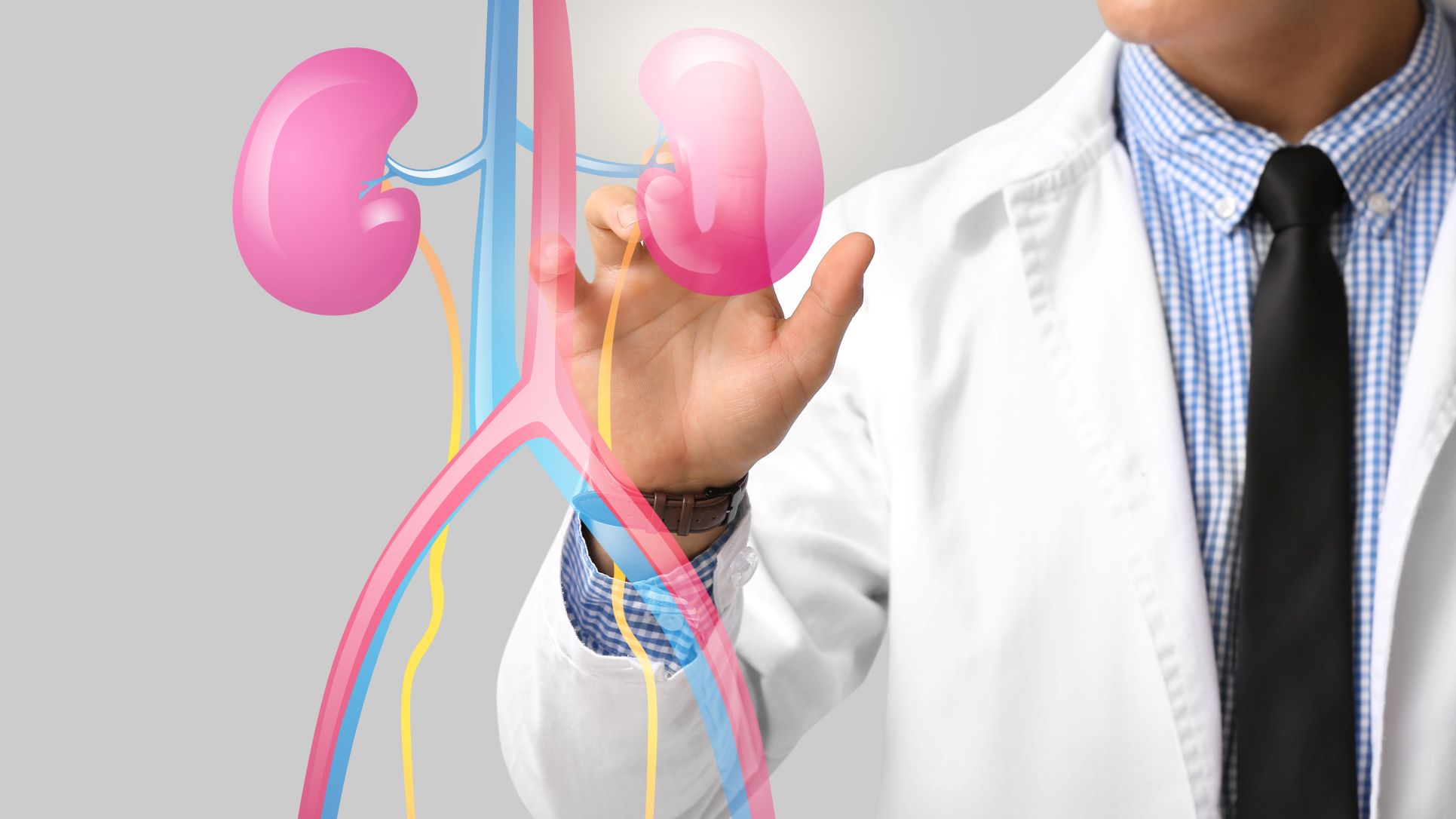
One of the most common questions people ask after developing sudden back or side pain is: “Where exactly is kidney stone pain located?”
Kidney stone pain commonly occurs in the flank, which is the area on either side of the back, below the ribs and above the hip.
The pain may be felt:
-
On the left side of the back
-
On the right side of the back
-
Below the lower ribs
-
Along the side of the abdomen
-
In the lower abdomen
-
Toward the groin
The exact location can change as a stone moves through the urinary tract.
A person may initially feel pain around the side or back and later notice discomfort closer to the abdomen or groin.
At Prabhakar Bhurke Clinic, Dr. Sandip Prabhakar Bhurke, super specialist nephrologist and transplant physician, provides specialist evaluation for kidney stones, kidney-function abnormalities and related urinary conditions.
What Does Kidney Stone Pain Feel Like?
Kidney stone pain can be quite different from ordinary muscular back pain.
When a stone obstructs or irritates the urinary tract, pain may:
-
Begin suddenly
-
Become severe
-
Come in waves
-
Increase and decrease in intensity
-
Move from the flank toward the abdomen or groin
-
Occur with nausea or vomiting
Some patients describe a strong urge to change position because they cannot find a comfortable posture.
However, symptoms vary considerably.
Not every stone produces severe pain, and some stones remain in the kidney without causing noticeable symptoms.
Why Does a Kidney Stone Cause Back or Side Pain?
The kidney itself is located toward the back of the upper abdomen.
When a stone moves from the kidney into the ureter, it can interfere with urine flow and irritate the urinary tract.
The resulting pain is often related to obstruction and stretching of the urinary tract rather than the stone simply “sitting” inside the kidney.
As the stone moves downward, the location of the pain may also change.
This is why kidney stone pain can sometimes begin in the back and later be felt in the abdomen or groin.
Is Kidney Stone Pain Always on One Side?
Usually, kidney stone pain is felt on the side corresponding to the affected urinary tract.
For example, a stone in the right ureter may cause right-sided flank or abdominal pain.
A stone in the left urinary tract may cause left-sided symptoms.
However, pain location alone cannot confirm which kidney is affected.
People with stones in both kidneys or other urinary conditions may experience pain differently.
Imaging and clinical assessment are needed when the diagnosis is uncertain.
Kidney Stone Pain Area in the Back
The typical kidney stone back pain area is often described as the flank.
This is approximately:
Below the ribs → toward the side of the back → above the hip
It is different from the center of the lower back in many cases.
However, there can be considerable variation.
Pain from other organs and structures can also be felt in the flank region, including:
-
Muscles
-
Spine
-
Nerves
-
Gastrointestinal organs
-
Urinary tract
-
Other abdominal structures
Therefore, the location of pain provides a clue but does not establish the diagnosis.
Does Kidney Stone Pain Spread to the Groin?
Yes.
One characteristic feature of ureteral stone pain is that it can radiate downward as the stone moves.
Pain may travel from:
Flank or back → side of abdomen → lower abdomen → groin
In some people, discomfort may also be felt around the genital region.
The pattern depends partly on the location of the stone within the ureter.
Does the Location Change as the Stone Moves?
It can.
A stone located higher in the urinary tract may produce pain closer to the flank.
As it moves toward the lower ureter, discomfort may become more prominent in the lower abdomen, pelvis or groin.
This changing pain pattern can be one clue that the problem involves a ureteral stone.
However, other conditions can produce migrating or radiating pain as well.
Kidney Stone Back Pain vs Muscle Back Pain
Back pain is extremely common, and not every episode of back pain is related to the kidneys.
Pain More Suggestive of a Kidney Stone
Kidney stone pain may:
-
Start suddenly
-
Become severe
-
Come in waves
-
Radiate toward the abdomen or groin
-
Occur with nausea or vomiting
-
Be associated with blood in urine
-
Be accompanied by urinary symptoms
Pain More Suggestive of a Musculoskeletal Cause
Muscle or spinal pain may:
-
Follow exercise or lifting
-
Be affected by movement
-
Be associated with muscle tenderness
-
Improve with certain positions
-
Be linked with posture
-
Remain localized around the back
These patterns are not absolute.
A proper evaluation may be necessary when pain is severe, persistent or unexplained.
Can Kidney Stones Cause Lower Back Pain?
They can, although the classic location is often the flank or side rather than the very center of the lower back.
A stone can produce pain that is perceived in different parts of the back, abdomen and pelvis.
If lower back pain occurs without urinary symptoms, flank pain or other stone-related features, other causes such as muscles, joints, discs or nerves may be more likely.
The symptom pattern and examination help determine whether kidney imaging is necessary.
Can a Kidney Stone Cause Pain Without Urine Changes?
Yes.
A person may have a kidney stone without obvious blood in the urine or major changes in urination.
Some stones cause pain because they move or temporarily obstruct the urinary tract.
Other stones may cause no symptoms at all.
Therefore, absence of visible blood or urinary changes does not completely rule out a stone.
Kidney Stone Back Pain With Blood in Urine
A kidney stone can irritate the urinary tract and cause hematuria, meaning blood in the urine.
The urine may appear:
-
Pink
-
Red
-
Brownish
In other cases, blood may only be detected through urine testing.
However, blood in urine has many possible causes.
It should not automatically be assumed to be caused by a kidney stone, particularly when it is persistent or unexplained.
Kidney Stone Pain With Nausea and Vomiting
Severe stone pain can trigger nausea and vomiting.
This can create an additional problem because repeated vomiting may cause dehydration.
Dehydration can affect kidney function and may be particularly concerning in people who already have kidney disease.
Persistent vomiting, inability to keep fluids down or worsening weakness warrants medical assessment.
Do not attempt to compensate by drinking excessive quantities of water, especially if there is suspected urinary obstruction or known kidney disease.
Can a Kidney Stone Cause Fever?
A typical uncomplicated kidney stone does not usually cause fever.
Fever or chills in someone with suspected urinary obstruction are concerning for infection.
A blocked urinary tract combined with infection can become a serious medical emergency.
Urgent medical assessment is particularly important when flank pain occurs with:
-
Fever
-
Chills
-
Vomiting
-
Weakness
-
Reduced urine output
-
Feeling severely unwell
Treatment may require antibiotics and, when drainage is obstructed, urgent restoration of urine flow.
What Tests Confirm a Kidney Stone?
Doctors may use a combination of clinical assessment and investigations.
Urine Testing
Urinalysis can look for:
-
Blood
-
Infection
-
Crystals
-
Other abnormalities
Blood Testing
Depending on the situation, testing may include:
-
Serum creatinine
-
eGFR
-
Electrolytes
-
Blood count
-
Other relevant tests
Ultrasound
Ultrasound may identify stones and can also show urinary tract dilation associated with obstruction.
CT Scan
A non-contrast CT scan can provide detailed information about:
-
Stone size
-
Stone location
-
Number of stones
-
Urinary obstruction
-
Relevant urinary anatomy
The most appropriate imaging depends on the patient's age, symptoms, medical history and clinical situation.
Does the Size of a Stone Affect Back Pain?
Stone size can influence the likelihood of obstruction and the treatment approach, but pain severity does not always correspond directly to stone size.
A relatively small stone can cause severe pain if it obstructs the ureter.
A larger stone may remain in the kidney and produce few symptoms for a period of time.
Therefore, pain intensity alone cannot determine the size or seriousness of a stone.
What Is the Treatment for Kidney Stone Back Pain?
Treatment depends on:
-
Stone size
-
Location
-
Degree of obstruction
-
Infection status
-
Kidney function
-
Symptoms
-
Overall health
For selected smaller stones, conservative treatment may be appropriate while waiting for spontaneous passage.
Depending on the situation, treatment can include:
-
Appropriate pain management
-
Medicines to facilitate passage in selected ureteral stones
-
Shock wave lithotripsy
-
Ureteroscopy with laser lithotripsy
-
Percutaneous nephrolithotomy for larger or complex stones
An obstructed urinary tract with infection requires urgent management rather than routine observation.
Should You Drink More Water During Kidney Stone Pain?
Adequate hydration is important for many people with kidney stones.
However, forcing large amounts of water does not reliably push an obstructing stone through the ureter.
Excessive fluid intake can increase discomfort in some situations and may be unsafe for people with reduced kidney function or certain heart conditions.
Fluid recommendations should therefore be individualized.
Can Painkillers Be Used for Kidney Stone Pain?
Pain relief may be an important part of kidney stone treatment.
However, the appropriate medicine depends on kidney function and the patient's medical history.
Some NSAID painkillers can affect kidney function, particularly in people with:
-
Chronic kidney disease
-
Dehydration
-
Reduced kidney function
-
Certain cardiovascular conditions
-
Other risk factors
Do not repeatedly self-medicate severe flank pain without medical advice.
When Does Kidney Stone Back Pain Need Urgent Attention?
Seek urgent medical evaluation if kidney stone-type back or flank pain occurs with:
-
Fever or chills
-
Persistent vomiting
-
Very little or no urine
-
Severe or uncontrollable pain
-
Fainting
-
Severe weakness
-
Confusion
-
Known kidney disease with worsening symptoms
-
Rapid deterioration
The combination of infection and urinary obstruction is particularly urgent.
Can a Kidney Stone Damage Kidney Function?
A stone does not automatically damage the kidney.
However, prolonged obstruction can interfere with urine drainage and potentially impair kidney function.
The risk can be greater when obstruction is associated with infection or occurs in someone with pre-existing kidney disease.
Doctors may therefore check creatinine and eGFR when obstruction or significant kidney involvement is suspected.
What Happens If the Stone Is Not Causing Pain?
Some kidney stones are discovered incidentally during ultrasound or CT scans.
An asymptomatic stone does not necessarily require immediate removal in every patient.
Management depends on:
-
Stone size
-
Location
-
Growth
-
Obstruction
-
Infection
-
Kidney function
-
Symptoms
-
Patient-specific factors
Regular follow-up may be recommended for selected patients.
How Can Future Kidney Stones Be Prevented?
After a stone has been diagnosed or removed, prevention can help reduce recurrence.
Depending on the stone type and individual risk factors, preventive measures may include:
-
Maintaining appropriate fluid intake
-
Reducing excessive dietary sodium
-
Following a balanced diet
-
Avoiding unnecessary supplements
-
Treating relevant metabolic abnormalities
-
Completing stone analysis when available
-
Undergoing metabolic evaluation when recommended
-
Taking prescribed preventive medicines
Prevention should be individualized rather than based on a one-size-fits-all “kidney cleanse.”
Kidney Stone Back Pain Evaluation at Prabhakar Bhurke Clinic
At Prabhakar Bhurke Clinic, Dr. Sandip Prabhakar Bhurke, super specialist nephrologist and transplant physician, provides specialist evaluation for patients concerned about kidney stone symptoms, kidney function and urinary complications.
Depending on the clinical situation, evaluation may include:
-
Detailed symptom assessment
-
Review of previous stone episodes
-
Kidney-function testing
-
Urine examination
-
Ultrasound or CT report review
-
Assessment for urinary obstruction
-
Evaluation of infection
-
Assessment of recurrent stone risk
-
Medical kidney management
-
Coordination with appropriate urological specialists when a stone procedure is required
The recommended treatment depends on the individual patient's stone characteristics and overall health.
Frequently Asked Questions
Where is kidney stone back pain usually located?
Kidney stone pain commonly occurs in the flank, below the ribs and toward the side of the back. It may spread toward the abdomen or groin.
Is kidney stone pain on the left or right side?
It can occur on either side depending on which urinary tract is affected. A stone in the right urinary tract may cause right-sided pain, while a left-sided stone may produce left-sided symptoms.
Does kidney stone pain feel like normal back pain?
Not always. Kidney stone pain may be sudden, severe, wave-like and radiating, while muscular back pain is often related to movement or posture. However, symptoms can overlap.
Can a kidney stone cause pain in the lower back?
Yes, but kidney stone pain is often more prominent in the flank or side. Lower back pain can also have many musculoskeletal or spinal causes.
Does kidney stone pain move?
Yes. As a stone travels down the ureter, pain may shift from the flank toward the abdomen, pelvis or groin.
Does every kidney stone cause back pain?
No. Some stones remain in the kidney without causing symptoms. Pain is more likely when a stone moves or obstructs urine flow.
Does severe kidney stone pain mean the stone is large?
Not necessarily. Even a small stone can cause severe pain if it obstructs the ureter.
When should I go to the hospital for kidney stone pain?
Urgent medical attention is needed for severe uncontrolled pain, fever or chills, persistent vomiting, very little or no urine, confusion, fainting or rapidly worsening symptoms.
Conclusion
Understanding the kidney stone back pain area can help people recognize a possible urinary stone, but pain location alone cannot confirm the diagnosis.
Kidney stone pain commonly occurs in the flank below the ribs and toward the side of the back. It may then travel toward the abdomen, pelvis or groin as the stone moves through the ureter.
Unlike ordinary muscular back pain, stone pain may be sudden, severe and intermittent. Blood in urine, nausea, vomiting or urinary symptoms may occur as well.
However, many other conditions can cause back or flank pain. Appropriate urine tests, kidney-function testing and imaging may be required to determine the actual cause.
If severe flank pain occurs with fever, chills, persistent vomiting, reduced urine output or rapidly worsening symptoms, seek urgent medical attention.
For specialist evaluation of kidney stones and associated kidney-function concerns, consult Dr. Sandip Prabhakar Bhurke at Prabhakar Bhurke Clinic.
Medical Disclaimer
This article is intended for general educational and informational purposes only and should not be considered medical advice, diagnosis or treatment. Back, flank and abdominal pain can have many causes, and pain location alone cannot confirm a kidney stone. The appropriate investigation and treatment depend on stone size, location, obstruction, infection, kidney function and the patient's overall health. Do not take prescription medicines, antibiotics or painkillers without appropriate medical guidance, particularly if you have kidney disease. Do not attempt to force an obstructing stone to pass by drinking excessive amounts of water. Fever, chills, severe uncontrolled pain, persistent vomiting, very little or no urine, confusion, fainting or rapidly worsening symptoms require urgent medical evaluation. Consult Dr. Sandip Prabhakar Bhurke or another qualified healthcare professional for individualized care.