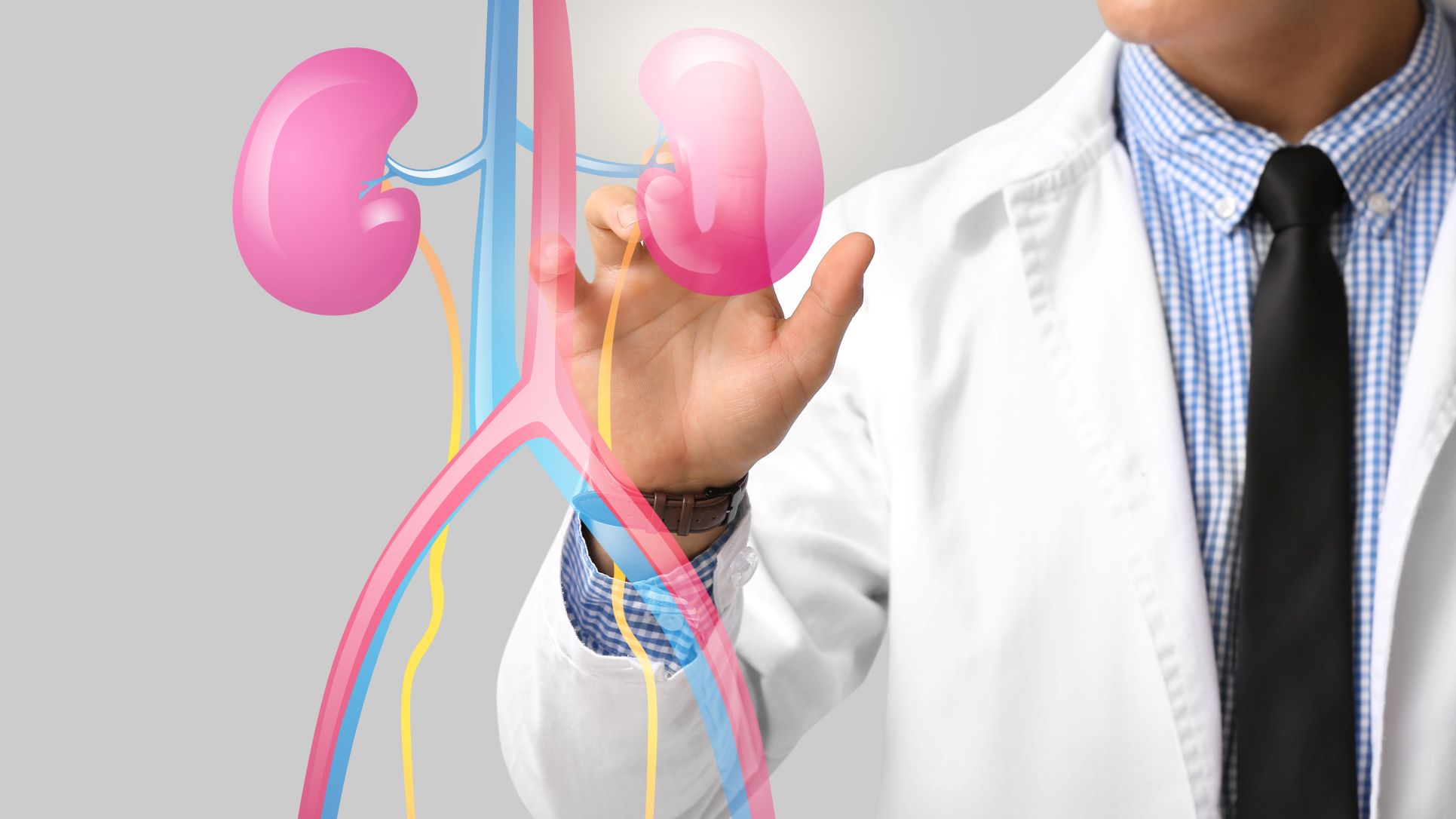
Yes. Kidney stones and back pain are commonly associated, particularly when a stone moves from the kidney into the ureter and interferes with urine flow.
Kidney stone pain is often felt in the side or back beneath the ribs. Depending on the location of the stone, discomfort can spread toward the lower abdomen, pelvis or groin.
The pain may be mild in some people and extremely severe in others. It can also come and go in waves rather than remaining constant.
However, not all back pain is caused by kidney stones. Muscle strain, spinal conditions, nerve problems and other abdominal or urinary conditions can produce similar symptoms.
At Prabhakar Bhurke Clinic, Dr. Sandip Prabhakar Bhurke, super specialist nephrologist and transplant physician, provides evaluation and management of kidney stones and other kidney-related conditions.
What Does Kidney Stone Back Pain Feel Like?
Kidney stone pain is often different from ordinary muscular back pain.
A person may experience:
-
Sudden sharp pain in the side or back
-
Severe pain that comes in waves
-
Pain that shifts as the stone moves
-
Pain spreading toward the lower abdomen
-
Pain extending toward the groin
-
Restlessness because it is difficult to find a comfortable position
The exact sensation depends on the size and location of the stone and whether it is obstructing urine flow.
Where Does Kidney Stone Pain Usually Start?
A kidney stone may initially cause discomfort in the flank, which is the area between the lower ribs and hip on either side of the back.
If the stone travels down the ureter, pain may move toward:
Side/back → lower abdomen → groin
This pattern can be an important clue, although it is not sufficient by itself to diagnose a kidney stone.
Why Do Kidney Stones Cause Back Pain?
The kidneys produce urine, which travels through narrow tubes called ureters into the bladder.
When a stone enters the ureter, it can obstruct urine flow and trigger stretching and contractions of the ureter.
These changes can produce the intense, colicky pain associated with kidney stones.
Pain may become particularly severe when the stone is moving or causing significant obstruction.
Kidney Stone Back Pain vs Muscle Back Pain
Knowing the differences can sometimes help, but only a medical evaluation can establish the cause.
| Kidney Stone Pain | Musculoskeletal Back Pain |
|---|---|
| Often felt in the flank or side | Often centered around the back |
| Can be sudden and severe | May follow physical activity or strain |
| May come in waves | Often changes with movement or posture |
| Can radiate toward the groin | May spread across the back or buttock |
| May occur with urinary symptoms | Usually does not cause urinary changes |
| Nausea or vomiting may occur | Nausea is less typical |
There can be considerable overlap, so persistent pain should not be self-diagnosed.
Common Symptoms of Kidney Stones
Back or flank pain may occur together with:
-
Severe side pain
-
Pain radiating toward the groin
-
Blood in urine
-
Burning while urinating
-
Frequent urge to urinate
-
Nausea
-
Vomiting
-
Restlessness
-
Difficulty passing urine
Some kidney stones cause no symptoms and are discovered incidentally during imaging performed for another reason.
Can a Small Kidney Stone Cause Severe Back Pain?
Yes.
The severity of kidney stone pain does not always correspond directly to the stone's size.
A relatively small stone can cause substantial pain if it enters the ureter and interferes with urine flow.
Conversely, a larger stone that remains in the kidney may sometimes cause little or no discomfort.
Does Kidney Stone Pain Come and Go?
It can.
Kidney stone pain may occur in waves as the ureter contracts around the stone. A person may experience periods of intense pain followed by temporary relief.
This pattern is sometimes called renal colic.
Persistent pain, however, should be evaluated because several different conditions can cause similar symptoms.
Can Kidney Stones Cause Lower Back Pain?
Yes. A stone can produce pain in the flank or back, and the location may change as the stone travels through the urinary tract.
Pain closer to the lower abdomen or groin can occur when the stone moves farther down the ureter.
Not every instance of lower back pain is kidney-related, so other causes should also be considered.
Kidney Stones and Back Pain With Blood in Urine
Blood in the urine can occur when a stone irritates the lining of the urinary tract.
The urine may appear:
-
Pink
-
Red
-
Brownish
Sometimes blood is only detected through laboratory testing.
Visible blood in urine should be medically evaluated rather than automatically attributed to a kidney stone.
Kidney Stone Pain With Nausea and Vomiting
Severe kidney stone pain can activate pathways that also cause nausea and vomiting.
If vomiting is persistent, dehydration can develop.
Someone who has severe flank pain with repeated vomiting may require urgent medical assessment, particularly if urine output decreases or fever develops.
Kidney Stone Pain With Fever: A Warning Sign
Fever and chills are not typical symptoms of an uncomplicated kidney stone.
When a urinary obstruction occurs together with infection, the situation can become serious.
Seek prompt medical attention if kidney stone symptoms occur with:
-
Fever
-
Chills
-
Feeling severely unwell
-
Vomiting
-
Reduced urine output
An obstructed and infected urinary system may require urgent treatment.
How Are Kidney Stones Diagnosed?
The doctor may use several investigations depending on symptoms.
Urine Examination
A urine test can help identify:
-
Blood
-
White blood cells
-
Bacteria
-
Crystals
-
Other abnormalities
Blood Tests
Blood tests may assess:
-
Kidney function
-
Electrolytes
-
Signs of infection
-
Other metabolic factors associated with stone formation
Ultrasound
Ultrasound can detect many kidney stones and may identify urinary tract dilation caused by obstruction.
CT Scan
A non-contrast CT scan may be recommended in selected situations because it can provide detailed information about stone location and size.
The appropriate imaging method depends on the patient's symptoms, age, pregnancy status and other clinical factors.
Kidney Stone Treatment
Treatment depends on:
-
Stone size
-
Stone location
-
Degree of obstruction
-
Symptoms
-
Infection
-
Kidney function
-
Patient's overall health
Possible approaches include:
Observation
Some smaller stones may pass naturally and can be monitored under medical guidance.
Medicines
Doctors may prescribe medicines for pain and, in selected cases, medications that can help facilitate passage of certain ureteral stones.
Shock Wave Treatment
Extracorporeal shock wave lithotripsy (ESWL) uses focused shock waves to break certain stones into smaller fragments.
Ureteroscopy
A small instrument can be passed through the urinary tract to locate and treat a stone. Laser energy may be used to fragment the stone when appropriate.
Percutaneous Procedures
Larger or complex kidney stones may require a percutaneous approach to remove the stone through a small access tract.
The best treatment cannot be determined from pain severity alone.
Can Kidney Stones Be Treated at Home?
Some small stones may pass with conservative management recommended by a healthcare professional.
However, severe pain should not simply be managed at home without considering the possibility of obstruction or infection.
Home measures should never delay medical care when there is:
-
Fever
-
Severe or persistent pain
-
Repeated vomiting
-
Very low urine output
-
Difficulty passing urine
-
Known single functioning kidney
-
Significant kidney disease
Does Drinking More Water Remove Kidney Stones?
Adequate hydration is important for preventing many types of kidney stones and may be part of conservative management for selected patients.
However, drinking excessive quantities of water does not automatically dissolve or remove a stone.
People with certain kidney, heart or other medical conditions may also have individualized fluid requirements.
Follow the hydration advice provided by your doctor.
Can Kidney Stones Cause Kidney Damage?
Many kidney stones do not cause permanent kidney damage when appropriately managed.
However, prolonged urinary obstruction, recurrent stones, repeated infections or complications can potentially impair kidney function.
The risk may be greater when a stone blocks urine flow from a kidney or when infection is present.
What Increases the Risk of Kidney Stones?
Risk factors can include:
-
Low fluid intake
-
Previous kidney stones
-
Family history
-
Certain dietary patterns
-
High urinary calcium
-
High urinary oxalate
-
High uric acid
-
Recurrent urinary infections
-
Certain metabolic disorders
-
Some medications
-
Obesity and related metabolic factors
The type of stone matters because prevention strategies differ between stone types.
How Can You Prevent Future Kidney Stones?
After a stone has been diagnosed, prevention should be tailored to its composition and the individual's risk factors.
General measures may include:
Stay Appropriately Hydrated
Adequate fluid intake can help dilute substances that form stones.
Moderate Salt Intake
High sodium intake can increase urinary calcium in some individuals.
Maintain a Balanced Diet
Extreme dietary restrictions are generally unnecessary unless recommended for a specific stone type.
Follow Medical Advice
People with recurrent stones may benefit from metabolic evaluation and targeted preventive treatment.
Analyze the Stone When Possible
If a stone is retrieved, laboratory analysis can help determine its composition and guide future prevention.
When Should You See a Kidney Specialist?
A nephrologist may be consulted when kidney stones are associated with:
-
Reduced kidney function
-
Recurrent stones
-
Metabolic abnormalities
-
High blood pressure
-
Chronic kidney disease
-
Recurrent urinary infections
-
A single functioning kidney
-
Persistent abnormalities in urine or blood tests
Some stone procedures are performed by urologists, while nephrologists may evaluate kidney function, metabolic risk factors and medical causes of recurrent stones.
Kidney Stone and Back Pain Care at Prabhakar Bhurke Clinic
At Prabhakar Bhurke Clinic, Dr. Sandip Prabhakar Bhurke, super specialist nephrologist and transplant physician, provides specialized evaluation for kidney-related conditions, including kidney stone-associated kidney problems.
Depending on individual needs, care may involve:
-
Assessment of kidney function
-
Evaluation of recurrent kidney stones
-
Urine and blood testing
-
Identification of metabolic risk factors
-
Management of kidney disease associated with stones
-
Prevention strategies
-
Coordination of further stone treatment when a procedure is required
The appropriate treatment is selected after evaluating the patient's stone characteristics and overall kidney health.
Frequently Asked Questions
Can kidney stones cause back pain on one side?
Yes. A stone affecting one kidney or ureter can cause pain on that side of the back or flank.
How do I know if my back pain is from a kidney stone?
Kidney stone pain often occurs in the flank and may be severe, wave-like and radiate toward the abdomen or groin. Urinary symptoms may also occur, but diagnosis usually requires medical assessment and sometimes imaging.
Is kidney stone pain constant?
It can be intermittent and wave-like, especially when the stone is moving through the ureter. Some patients may experience more persistent discomfort.
Can kidney stones cause severe lower back pain?
Yes, particularly when a stone moves into the ureter. However, severe lower back pain has many possible causes and should not automatically be attributed to a kidney stone.
Does every kidney stone need surgery?
No. Some stones can pass naturally with appropriate medical management. Larger, obstructing, infected or otherwise complicated stones may require a procedure.
When is kidney stone pain an emergency?
Severe pain accompanied by fever, chills, repeated vomiting, inability to pass urine, very low urine output or significant weakness requires prompt medical attention.
Conclusion
Kidney stones and back pain can be closely connected, especially when a stone moves into the ureter and obstructs urine flow. Typical kidney stone pain is often felt in the flank or side and may travel toward the abdomen or groin.
Because back pain can have many causes, accurate diagnosis is important. Urine tests, blood investigations and imaging can help identify a kidney stone and determine whether complications such as obstruction or infection are present.
Early evaluation is particularly important when pain is severe or accompanied by fever, vomiting, blood in the urine or reduced urine output.
For specialized kidney evaluation and long-term kidney care, Prabhakar Bhurke Clinic provides nephrology services under Dr. Sandip Prabhakar Bhurke, super specialist nephrologist and transplant physician.
Medical Disclaimer
This article is intended for general educational purposes only and does not constitute medical advice, diagnosis or treatment. Kidney stone symptoms can resemble pain caused by muscular, spinal, gastrointestinal and other conditions. Do not self-diagnose or use antibiotics or other prescription medicines without medical guidance. Fluid intake and treatment recommendations may differ for people with kidney disease, heart disease or other medical conditions. Seek urgent medical attention for severe flank or back pain with fever or chills, repeated vomiting, inability to urinate, very low urine output, fainting or rapidly worsening symptoms.