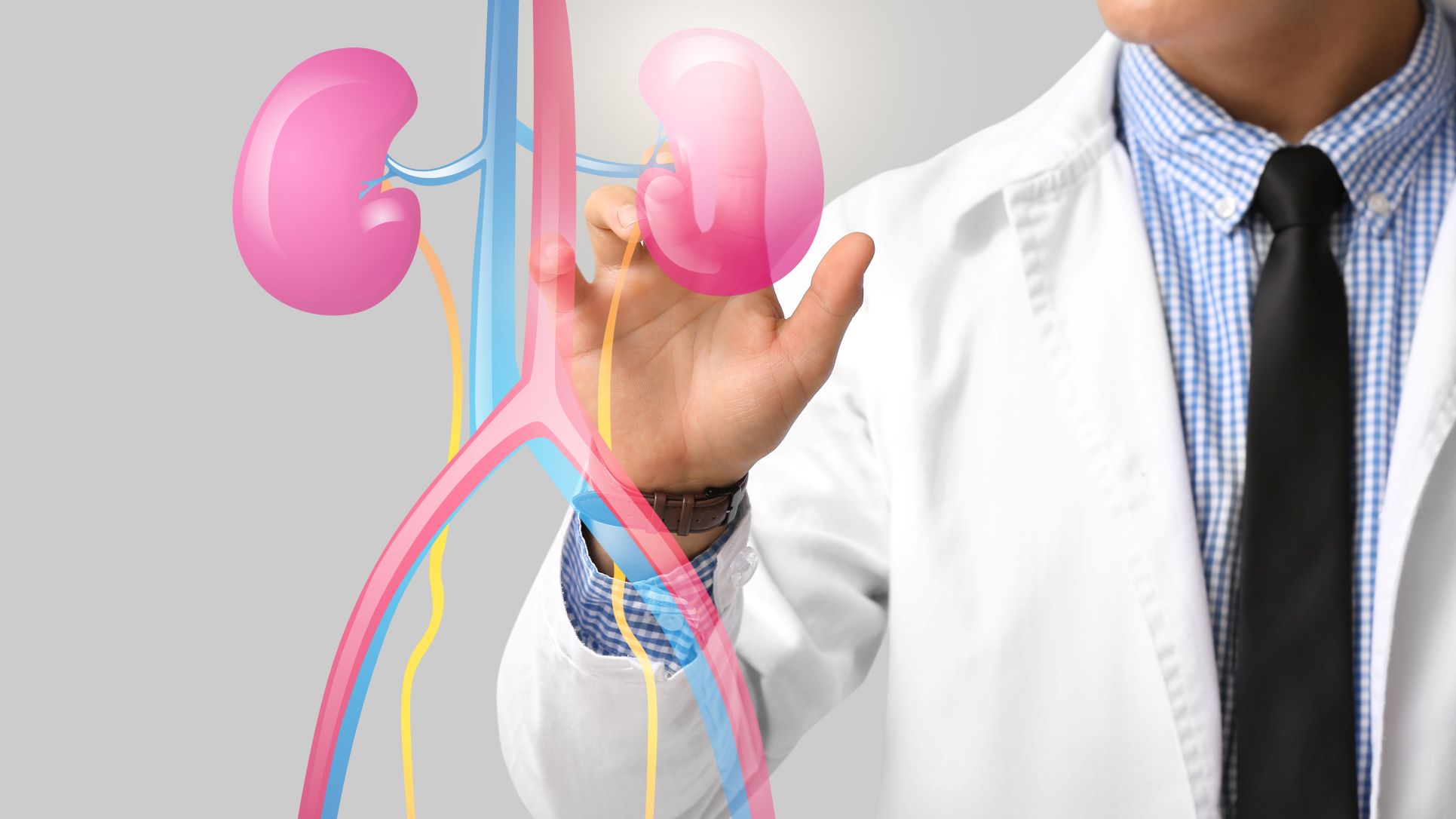
A non obstructing kidney stone is a stone that is present within the kidney or urinary system but is not currently blocking the normal flow of urine.
Many people discover a non obstructing stone unexpectedly during an ultrasound or CT scan performed for another reason.
Seeing the words “non obstructing renal calculus” or “non obstructive kidney stone” in an imaging report can create concern, but it does not automatically mean that emergency treatment or surgery is required.
The most appropriate approach depends on several factors, including:
-
Stone size
-
Stone location
-
Number of stones
-
Symptoms
-
Stone growth over time
-
Previous history of kidney stones
-
Urinary infection
-
Kidney function
-
Condition of the other kidney
For some patients, regular monitoring may be appropriate. For others, active treatment may be recommended to prevent symptoms, future obstruction or other complications.
At Prabhakar Bhurke Clinic, Dr. Sandip Prabhakar Bhurke, super specialist nephrologist and transplant physician, provides specialist kidney evaluation and management for patients with kidney stones and kidney-function concerns.
Is a Non Obstructing Kidney Stone Dangerous?
Not every non obstructing kidney stone is dangerous.
A small stone that is not causing symptoms, infection or kidney-function problems may sometimes be monitored.
However, a non obstructing stone should not automatically be ignored.
A stone can:
-
Increase in size
-
Move into the ureter
-
Begin causing pain
-
Cause urinary obstruction later
-
Contribute to recurrent urinary infections in selected situations
-
Be associated with recurrent stone formation
The level of concern depends on the individual patient and the characteristics of the stone.
Can a Non Obstructing Kidney Stone Cause Pain?
Yes, it can sometimes be associated with discomfort or pain, although pain does not always mean that the stone is causing complete obstruction.
Possible symptoms may include:
-
Dull flank discomfort
-
Intermittent side pain
-
Back discomfort
-
Episodes of more significant pain if the stone moves
However, not all pain in the kidney area is caused by a kidney stone.
Muscle, spinal, digestive and other urinary conditions can produce similar symptoms.
A doctor may need to determine whether the stone is actually responsible for the pain.
Does a Non Obstructing Kidney Stone Need Treatment?
The answer depends on the individual situation.
A non obstructing stone may be managed differently depending on:
Stone Size
Larger stones are less likely to pass naturally and may have a greater likelihood of causing future problems.
Stone Location
A stone located in one part of the kidney may behave differently from a stone positioned near the exit of the kidney.
Symptoms
Repeated pain or urinary symptoms may influence the decision to treat the stone.
Infection
A stone associated with recurrent or significant urinary infection may require additional attention.
Kidney Function
Reduced kidney function may affect the urgency and type of treatment.
Stone Growth
A stone that increases in size during follow-up may be more likely to require active treatment.
Non Obstructing Kidney Stone Treatment Options
Treatment is not the same for every patient.
Possible approaches include observation, preventive measures, medical management or stone-removal procedures.
1. Active Surveillance and Monitoring
For selected patients with a small stone and no significant symptoms or complications, a doctor may recommend monitoring.
Follow-up may include:
-
Ultrasound
-
Other appropriate imaging
-
Kidney-function testing when indicated
-
Assessment for stone growth
-
Monitoring for new symptoms
The purpose is to identify changes before the stone causes significant complications.
The follow-up schedule should be individualized.
2. Medical Management
There is no single medicine that can dissolve every type of kidney stone.
Medical treatment may be directed toward:
-
Pain management when appropriate
-
Prevention of future stones
-
Treatment of underlying metabolic abnormalities
-
Management of certain stone types
For example, selected stones composed of particular substances may respond to medically supervised changes in urine chemistry.
The correct approach depends on the stone composition and metabolic evaluation.
Do not take stone-dissolving medicines or supplements without medical advice.
3. Dietary and Lifestyle Measures
Preventive measures may help reduce the risk of stone growth or future stone formation.
Recommendations may include:
-
Maintaining appropriate fluid intake
-
Avoiding excessive dietary salt
-
Following an individualized diet
-
Avoiding unnecessary supplements
-
Maintaining a healthy lifestyle
However, prevention is not identical for every type of kidney stone.
For example, extreme restriction of dietary calcium is not appropriate for every person with kidney stones.
Dietary advice should ideally consider the patient's stone type and medical history.
4. Shock Wave Lithotripsy
In selected cases, shock wave lithotripsy may be considered.
This treatment uses externally generated shock waves to break a stone into smaller fragments.
Its suitability depends on factors such as:
-
Stone size
-
Stone location
-
Stone density
-
Body anatomy
-
Kidney anatomy
Not every non obstructing kidney stone is suitable for this procedure.
5. Ureteroscopy and Laser Stone Treatment
Some stones can be treated using an endoscopic procedure in which a specialized instrument is passed through the natural urinary passage.
Laser energy may be used to fragment the stone.
Depending on the stone characteristics, fragments may be removed or allowed to pass.
The suitability of ureteroscopy depends on the stone's location, size and the patient's overall condition.
6. PCNL for Larger Kidney Stones
For larger or more complex kidney stones, percutaneous nephrolithotomy (PCNL) may be considered.
PCNL involves creating access into the kidney through a small tract to remove or fragment stones.
The procedure is generally considered based on stone burden, location and patient-specific factors.
Can a Non Obstructing Kidney Stone Pass Naturally?
Some small stones may remain stable or may eventually move into the urinary tract.
However, whether a stone passes naturally depends on:
-
Stone size
-
Location
-
Shape
-
Anatomy of the urinary tract
A stone that is currently non obstructing may later move into the ureter.
Once a stone enters the ureter, it may cause severe pain or obstruction.
Therefore, patients should not assume that every kidney stone will naturally pass.
Can Drinking More Water Remove a Non Obstructing Kidney Stone?
Adequate fluid intake can be important for kidney stone prevention.
However, drinking excessive amounts of water does not guarantee that an existing stone will dissolve or pass.
The stone is a physical structure, and most common stone types do not simply disappear because more water is consumed.
Fluid requirements also differ among patients.
People with advanced kidney disease, heart disease or fluid restrictions should not dramatically increase fluid intake without medical guidance.
Can Medicine Dissolve a Non Obstructing Kidney Stone?
Most common kidney stones cannot be dissolved using a universal tablet.
However, certain types of stones may respond to specific medically supervised treatments.
For this reason, understanding the likely stone composition is important.
Stone evaluation may include:
-
Previous stone analysis
-
Urine testing
-
Blood tests
-
Metabolic evaluation
-
Imaging characteristics
Treatment should be based on the actual stone type whenever possible.
Can a Non Obstructing Stone Become an Obstructing Stone?
Yes.
A stone may remain in the kidney without blocking urine and later move into the ureter.
If the stone becomes lodged, it may interfere with urine drainage.
Symptoms may then include:
-
Severe flank pain
-
Nausea
-
Vomiting
-
Blood in urine
-
Difficulty passing urine
The risk depends on the stone and the patient's anatomy.
What Happens if a Non Obstructing Kidney Stone Is Left Untreated?
The outcome varies.
Some stones may:
-
Remain stable
-
Cause no symptoms
-
Grow slowly
-
Move and cause pain
-
Lead to future obstruction
This is why follow-up may be recommended even when immediate stone removal is not necessary.
The decision to observe should ideally be made after considering the stone's characteristics and the patient's overall kidney health.
How Is a Non Obstructing Kidney Stone Evaluated?
The evaluation may involve several investigations.
Ultrasound
Ultrasound can identify many stones and assess whether there is kidney swelling that may suggest obstruction.
CT Scan
CT imaging can provide more detailed information about:
-
Exact stone size
-
Stone location
-
Number of stones
-
Stone density
-
Urinary anatomy
-
Evidence of obstruction
Urine Testing
Urine tests may check for:
-
Blood
-
Infection
-
Crystals
-
Other abnormalities
Blood Tests
Depending on the situation, tests may include:
-
Creatinine
-
eGFR
-
Electrolytes
-
Other kidney-function markers
These results help determine whether the stone is affecting overall kidney health.
When Should a Non Obstructing Kidney Stone Be Removed?
Active treatment may be considered when there are factors such as:
-
Recurrent or significant symptoms
-
Increasing stone size
-
Recurrent urinary infections
-
High risk of future obstruction
-
Declining kidney function
-
Multiple or complex stones
-
Specific occupational or travel concerns
-
Patient preference after discussion of risks and benefits
The decision should be individualized.
A stone does not need to cause complete obstruction before treatment can be considered.
How Can Future Kidney Stones Be Prevented?
Stone prevention depends on the type of stone.
General measures may include:
-
Maintaining appropriate fluid intake
-
Reducing excessive sodium intake
-
Following individualized dietary recommendations
-
Completing metabolic evaluation when advised
-
Treating recurrent urinary infections
-
Taking prescribed preventive medication correctly
For recurrent stone formers, further evaluation may help identify why stones are developing.
When Should You Seek Urgent Medical Care?
Even if a stone was previously described as non obstructing, seek urgent medical attention if you develop:
-
Fever or chills
-
Severe or worsening flank pain
-
Persistent vomiting
-
Very little or no urine
-
Severe weakness
-
Confusion
-
Rapid deterioration in health
A kidney stone associated with infection or urinary obstruction may require urgent treatment.
Non Obstructing Kidney Stone Care at Prabhakar Bhurke Clinic
At Prabhakar Bhurke Clinic, Dr. Sandip Prabhakar Bhurke, super specialist nephrologist and transplant physician, provides specialist kidney evaluation for patients with kidney stones and kidney-function concerns.
Depending on the patient's clinical condition, evaluation may include:
-
Review of ultrasound findings
-
Review of CT scan reports
-
Kidney-function assessment
-
Creatinine and eGFR evaluation
-
Urine testing
-
Assessment for urinary obstruction
-
Evaluation of recurrent kidney stones
-
Assessment of metabolic and kidney-related risk factors
-
Long-term kidney monitoring
When a stone requires procedural removal, appropriate coordination with a urological specialist may be recommended.
Treatment decisions are based on the stone characteristics, kidney function, symptoms and overall health of the patient.
Frequently Asked Questions About Non Obstructing Kidney Stones
What does non obstructing kidney stone mean?
It means that a stone is present but is not currently blocking the normal flow of urine.
Does every non obstructing kidney stone require surgery?
No. Some small, asymptomatic stones may be monitored. Treatment depends on stone size, location, symptoms, growth and other risk factors.
Can a non obstructing kidney stone cause pain?
Yes, some patients may experience discomfort or pain. However, other causes of flank or back pain should also be considered.
Can a non obstructing kidney stone become dangerous?
A stone can grow, move or later cause urinary obstruction. Regular follow-up may therefore be recommended.
Can I dissolve a non obstructing kidney stone with medicine?
Most common kidney stones cannot be dissolved by a universal medicine. Certain stone types may respond to specific medically supervised treatment.
Can drinking water remove a non obstructing stone?
Adequate hydration may support stone prevention, but excessive water intake does not guarantee that an existing stone will dissolve or pass.
When is treatment necessary?
Treatment may be considered when the stone causes symptoms, grows, contributes to infection, creates a risk of obstruction or affects kidney health.
Conclusion
A non obstructing kidney stone is not currently blocking urine flow, but the appropriate management still depends on the characteristics of the stone and the patient's overall kidney health.
Some people may only require monitoring and preventive care, while others may benefit from active treatment.
The decision is influenced by stone size, location, symptoms, growth, infection history and kidney function.
Regular follow-up can help identify changes in a stone that is initially asymptomatic.
If you have been diagnosed with a non obstructing kidney stone, a specialist evaluation can help determine whether observation or active treatment is appropriate.
For specialist kidney evaluation and individualized kidney care, consult Dr. Sandip Prabhakar Bhurke, super specialist nephrologist and transplant physician, at Prabhakar Bhurke Clinic.
Medical Disclaimer
This article is provided for general educational and informational purposes only and should not be considered medical advice, diagnosis or treatment. A non obstructing kidney stone can vary in size, location and clinical significance, and treatment decisions should be based on appropriate medical evaluation and imaging findings. Not every non obstructing stone requires surgery, but some stones may grow, move or later cause obstruction or infection. Do not attempt to dissolve or force a stone to pass with excessive fluid intake, unprescribed medicines or herbal remedies. Seek urgent medical attention for fever, chills, severe or worsening flank pain, persistent vomiting, very little or no urine, confusion or sudden deterioration in health. Consult Dr. Sandip Prabhakar Bhurke or another qualified healthcare professional for an individualized treatment plan.