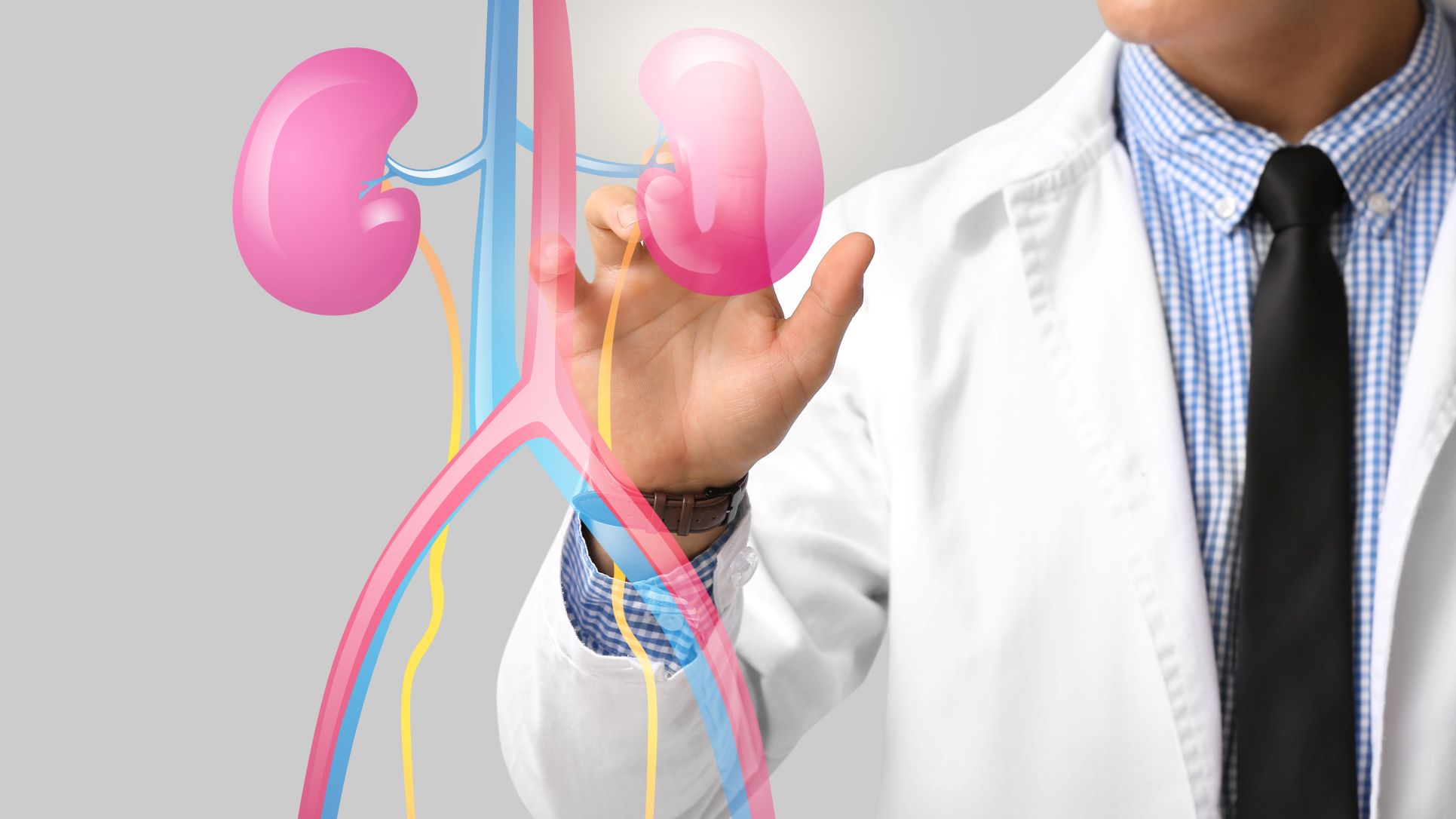
Kidney stones can affect both men and women, but women may sometimes mistake their symptoms for other urinary, menstrual or abdominal conditions.
A kidney stone may remain inside the kidney without causing noticeable symptoms. Problems often begin when the stone moves into the ureter, the narrow tube connecting the kidney to the bladder.
As the stone travels or obstructs urine flow, symptoms can develop suddenly and may vary considerably from one woman to another.
The most common signs of kidney stones in women include pain in the side or back, pain that moves toward the lower abdomen or groin, blood in the urine, nausea, vomiting and changes during urination.
At Prabhakar Bhurke Clinic, Dr. Sandip Prabhakar Bhurke, super specialist nephrologist and transplant physician, provides individualized evaluation for kidney stones, urinary abnormalities and associated kidney-function concerns.
1. Sudden Pain in the Side or Back
One of the most characteristic symptoms of a kidney stone is sudden pain in the flank.
The pain may occur on either side of the back, usually beneath the ribs.
It may:
-
Start suddenly
-
Become severe
-
Come in waves
-
Change in intensity
-
Spread toward the abdomen
-
Move toward the groin
The location of pain can change as the stone travels through the urinary tract.
Unlike ordinary muscular back pain, kidney-stone pain may be difficult to relieve by simply changing position.
2. Pain That Moves Toward the Lower Abdomen or Groin
A kidney stone does not always cause pain directly over the kidney.
When a stone moves through the ureter, discomfort can travel downward.
A woman may experience pain in:
-
Lower abdomen
-
Pelvic region
-
Side of the body
-
Groin
-
Upper inner thigh
Because pelvic and lower abdominal pain can have many causes in women, kidney stones should not be diagnosed based on pain location alone.
3. Blood in the Urine
Another possible sign is hematuria, or blood in the urine.
The urine may appear:
-
Pink
-
Red
-
Tea-colored
-
Brownish
In other cases, the amount of blood is too small to see and is detected only through urine testing.
Kidney stones can cause bleeding by irritating the lining of the urinary tract.
However, blood in urine can also occur because of urinary infections, kidney disease and other conditions. It should therefore be medically evaluated rather than automatically attributed to a stone.
4. Burning While Passing Urine
Some women with kidney stones experience burning or discomfort while urinating.
This may happen when the stone is located closer to the bladder or when the urinary tract is irritated.
However, burning urination is also a common symptom of a urinary tract infection.
If burning is accompanied by fever, chills, flank pain or feeling seriously unwell, prompt medical evaluation is important.
5. Frequent Urge to Urinate
A stone near the lower end of the ureter may create a frequent or urgent sensation of needing to urinate.
A woman may feel that she:
-
Needs to use the bathroom repeatedly
-
Cannot comfortably postpone urination
-
Passes only a small amount of urine
-
Has persistent bladder discomfort
These symptoms can resemble a bladder infection, so testing may be required to determine the actual cause.
6. Nausea and Vomiting
Severe renal colic can trigger nausea and vomiting.
Some women may experience:
-
Sudden nausea
-
Repeated vomiting
-
Reduced appetite
-
Difficulty keeping fluids down
Persistent vomiting is important because it can result in dehydration and may complicate kidney function.
A woman with severe stone pain who cannot keep fluids down should seek medical attention.
7. Urine May Look Cloudy or Smell Unusual
Changes in urine appearance can occur with urinary stones, particularly when a urinary infection is also present.
Urine may appear cloudy or develop an unusual smell.
These findings are not specific to kidney stones and may be more suggestive of infection when accompanied by fever, chills or urinary burning.
Urine testing can help distinguish between different causes.
8. Difficulty Passing Urine
A larger stone or a stone positioned in a way that obstructs urine flow can interfere with normal urination.
Possible warning signs include:
-
Very little urine
-
Difficulty passing urine
-
Increasing pressure or discomfort
-
A sudden reduction in urine output
A significant reduction or complete absence of urine requires urgent medical assessment, particularly when a stone is already known.
Can Kidney Stones Cause Period-Like Pain?
Yes, kidney-stone discomfort can sometimes be confused with menstrual or pelvic pain.
A woman may initially assume that lower abdominal or pelvic discomfort is related to her menstrual cycle.
However, kidney-stone pain often has additional features such as:
-
Severe flank pain
-
Pain that moves toward the groin
-
Blood in urine
-
Nausea or vomiting
-
Urinary urgency
-
Burning urination
The timing and character of the pain are important, but symptoms alone cannot establish the diagnosis.
Kidney Stone Symptoms Can Resemble Other Conditions
Women may experience abdominal or pelvic symptoms from several different causes.
Kidney-stone symptoms can overlap with conditions such as:
-
Urinary tract infection
-
Kidney infection
-
Menstrual cramps
-
Ovarian conditions
-
Gastrointestinal problems
-
Musculoskeletal pain
-
Other urinary disorders
This is why persistent, severe or unexplained pain should not be self-diagnosed.
A urine test and appropriate imaging can help identify whether a kidney stone is present.
Kidney Stones and Urinary Tract Infection in Women
Urinary infections are common in women, and infection can occur alongside a kidney stone.
Some symptoms overlap, including:
-
Burning urination
-
Frequent urination
-
Blood in urine
-
Lower abdominal discomfort
However, fever and chills are particularly concerning.
If a stone is blocking urine flow and infection is present behind the obstruction, the situation can become serious and requires urgent medical treatment.
Fever With a Kidney Stone Is a Warning Sign
A simple kidney stone does not usually cause fever.
Therefore, fever or chills in a woman with suspected or known kidney stones should not be ignored.
Particularly concerning symptoms include:
-
Fever
-
Chills
-
Severe flank pain
-
Vomiting
-
Weakness
-
Reduced urine output
-
Feeling severely unwell
An infected obstructed urinary tract may require urgent drainage and medical treatment.
Why Do Women Develop Kidney Stones?
Kidney stones form when certain substances in urine become concentrated and crystallize.
Depending on the stone type and individual risk factors, contributing factors may include:
-
Inadequate fluid intake
-
High dietary sodium
-
Certain dietary patterns
-
Family history
-
Metabolic abnormalities
-
Recurrent urinary infections
-
Obesity
-
Certain medical conditions
-
Previous kidney stones
Pregnancy and hormonal or dietary changes may also alter urinary and physiological factors, but kidney-stone risk is influenced by multiple factors rather than one cause.
Can Women Have Kidney Stones Without Symptoms?
Yes.
A stone may remain within the kidney without causing the classic severe pain associated with ureteral stones.
Some stones are discovered unexpectedly during:
-
Ultrasound
-
CT scans
-
Evaluation for another medical problem
-
Investigation of urinary abnormalities
An asymptomatic stone may still require monitoring or treatment depending on its size, location, growth and effect on urinary drainage.
How Are Kidney Stones Diagnosed in Women?
A healthcare professional may use several types of evaluation.
Urine Examination
Urinalysis can help detect:
-
Blood
-
White blood cells
-
Infection
-
Crystals
-
Other abnormalities
A urine culture may be recommended when infection is suspected.
Blood Tests
Depending on the situation, testing may include:
-
Serum creatinine
-
Kidney-function assessment
-
Electrolytes
-
Blood count
-
Other relevant investigations
These tests can help determine whether the stone or another condition is affecting kidney function.
Ultrasound
Ultrasound can identify many stones and may detect swelling of the kidney caused by urinary obstruction.
It can also be useful when radiation exposure is a consideration, including during pregnancy when imaging decisions require appropriate medical guidance.
CT Scan
A non-contrast CT scan can provide detailed information about:
-
Stone size
-
Stone location
-
Number of stones
-
Urinary obstruction
-
Relevant urinary tract anatomy
The most appropriate imaging depends on the patient's symptoms and clinical circumstances.
Does Every Kidney Stone Need Surgery?
No.
Treatment depends on the stone's size, location, symptoms and complications.
Some smaller uncomplicated stones may pass naturally under medical supervision.
Other stones may require active treatment, particularly when there is:
-
Persistent severe pain
-
Urinary obstruction
-
Infection
-
Kidney-function deterioration
-
Low likelihood of spontaneous passage
-
Significant stone growth or burden
Possible procedures include shock wave lithotripsy, ureteroscopy with laser fragmentation and, for selected larger or complex kidney stones, percutaneous nephrolithotomy.
What Treatment May Be Used for Kidney Stones in Women?
There is no single treatment appropriate for every woman.
Depending on the situation, management may include:
Observation
Selected small, uncomplicated stones may be monitored while waiting for spontaneous passage.
Medicines
A doctor may prescribe pain-relieving medicines and, in selected ureteral stones, medicines that may facilitate passage.
Medication choice must consider kidney function, pregnancy status, allergies and other health conditions.
Shock Wave Lithotripsy
Shock waves generated outside the body can be used to fragment selected stones.
Ureteroscopy and Laser Treatment
A small endoscope can be passed through the urinary tract to reach the stone.
Laser energy can fragment the stone, allowing the pieces to be removed or pass naturally depending on the circumstances.
Percutaneous Nephrolithotomy
PCNL may be considered for larger or complex kidney-stone burdens.
The most suitable procedure depends on imaging findings and the patient's overall health.
Kidney Stones During Pregnancy
Pregnancy requires additional care when kidney stones are suspected.
Flank or abdominal pain during pregnancy can have several causes, and not every pain episode is due to a stone.
If a pregnant woman develops suspected renal colic, fever, vomiting, urinary symptoms or reduced urine output, she should contact her healthcare team promptly.
Imaging and treatment choices during pregnancy are individualized to balance maternal and fetal safety.
Women should not take painkillers, antibiotics or stone-related medicines without medical advice during pregnancy.
Can Drinking More Water Remove Kidney Stones?
Adequate hydration is important for many people with kidney stones and can support stone prevention.
However, drinking excessive amounts of water does not guarantee that a stone will pass.
If a stone is causing significant obstruction, forcing large amounts of fluid may worsen discomfort and does not remove the physical blockage.
Fluid recommendations should be individualized according to kidney function, heart health, stone characteristics and other medical factors.
What Happens If a Kidney Stone Blocks Urine?
A significant obstruction can prevent normal urine drainage.
Depending on the location and duration of obstruction, this may cause:
-
Kidney swelling
-
Increasing pain
-
Infection
-
Reduced kidney function
If obstruction is accompanied by infection, urgent treatment may be necessary.
The immediate priority in an infected obstruction may be to restore urine drainage, followed by definitive stone treatment when clinically appropriate.
Can Kidney Stones Damage the Kidneys?
Many kidney stones do not cause permanent kidney damage, particularly when appropriately managed.
However, prolonged obstruction, repeated infections or severe complications can affect kidney function.
Women with recurrent stones may therefore benefit from evaluation of:
-
Kidney function
-
Urine abnormalities
-
Stone composition
-
Metabolic risk factors
Prevention is particularly important when stones repeatedly occur.
How Can Women Reduce the Risk of Future Kidney Stones?
Prevention depends on the type of stone and individual risk factors.
General measures may include:
-
Maintain appropriate fluid intake as advised by a healthcare professional.
-
Avoid excessive dietary salt.
-
Follow a balanced, individualized eating pattern.
-
Maintain a healthy body weight.
-
Complete stone analysis when a stone is recovered.
-
Consider metabolic evaluation when recurrent stones occur.
-
Take prescribed preventive medicines correctly.
-
Manage relevant medical conditions.
-
Attend recommended follow-up appointments.
Avoid extreme diets and unverified stone-cleansing products.
When Should a Woman See a Kidney Specialist?
Consider specialist evaluation when there are:
-
Repeated kidney stones
-
Large kidney stones
-
Persistent or recurrent flank pain
-
Recurrent urinary infections
-
Blood in urine without a clear explanation
-
Abnormal kidney-function tests
-
Urinary obstruction
-
Stones in both kidneys
-
A history of kidney disease
-
Complicated stones during pregnancy
A nephrologist can evaluate kidney function and associated medical problems. Depending on the stone's location and need for a procedure, a urologist may also be involved in treatment.
When Are Kidney Stone Symptoms an Emergency?
Seek urgent medical attention if suspected kidney-stone symptoms are accompanied by:
-
High fever or chills
-
Very little or no urine
-
Severe or rapidly worsening pain
-
Persistent vomiting
-
Confusion
-
Severe weakness
-
Fainting
-
Signs of serious infection
A combination of urinary obstruction and infection can become dangerous and should be treated promptly.
Kidney Stone Evaluation at Prabhakar Bhurke Clinic
At Prabhakar Bhurke Clinic, Dr. Sandip Prabhakar Bhurke, super specialist nephrologist and transplant physician, provides individualized assessment for women experiencing kidney-stone symptoms and related kidney-function concerns.
Depending on the clinical situation, evaluation may include:
-
Review of symptoms and medical history
-
Kidney-function testing
-
Urine examination
-
Assessment for urinary infection
-
Review of ultrasound or CT reports
-
Evaluation of urinary obstruction
-
Assessment of recurrent stone risk
-
Kidney-protection advice
-
Coordination with appropriate urological specialists when a stone-removal procedure is required
The treatment plan is based on the woman's symptoms, stone characteristics, kidney function, pregnancy status when applicable and overall health.
Frequently Asked Questions
What are the first signs of kidney stones in women?
Early symptoms can include flank or side pain, blood in urine, urinary burning, increased urinary urgency, nausea or abdominal discomfort. Some stones cause no symptoms until they move into the ureter.
Where does kidney stone pain occur in women?
Pain commonly begins in the flank or side beneath the ribs. It may move toward the abdomen, pelvis or groin as the stone travels through the ureter.
Can kidney stones feel like period cramps?
Yes, lower abdominal or pelvic pain from a kidney stone can sometimes resemble menstrual cramps. Other symptoms and appropriate testing help distinguish the cause.
Are kidney stones more painful for women?
Pain intensity varies from person to person and depends largely on factors such as stone movement and obstruction rather than simply being male or female.
Can kidney stones cause burning urination in women?
Yes. A stone can irritate the urinary tract and cause burning, particularly when it is near the lower ureter. Urinary infection can cause similar symptoms and should be considered.
Is blood in urine always caused by a kidney stone?
No. Kidney stones are one possible cause, but urinary infections, kidney disease and other conditions can also cause blood in urine.
Can a woman have a kidney stone without pain?
Yes. Some kidney stones remain inside the kidney without causing symptoms and may be found incidentally during imaging.
Can kidney stones affect pregnancy?
They can cause complications during pregnancy and require careful evaluation. A pregnant woman with severe pain, fever, vomiting or urinary symptoms should seek medical advice promptly.
Conclusion
Recognizing the signs of kidney stones in women can help women seek appropriate medical care rather than assuming that sudden abdominal, pelvic or back discomfort is caused by menstrual or digestive problems.
Flank pain that moves toward the lower abdomen or groin, blood in urine, urinary burning, frequent urination, nausea and vomiting can occur with kidney stones. However, these symptoms can overlap with urinary infections and several other conditions.
A kidney stone does not always require surgery. The appropriate approach depends on its size, location, obstruction, symptoms, infection status and kidney function. Some stones can pass naturally, while others require procedures such as ureteroscopy, laser treatment, shock wave lithotripsy or PCNL.
Women with recurrent stones, persistent symptoms, urinary obstruction or abnormal kidney-function tests should seek specialist evaluation.
For individualized kidney assessment and specialist care, women can consult Dr. Sandip Prabhakar Bhurke at Prabhakar Bhurke Clinic.
Medical Disclaimer
This article is intended for general educational and informational purposes only and should not be considered a substitute for medical diagnosis, treatment or professional advice. The signs of kidney stones can vary between individuals, and similar symptoms may occur with urinary infections, gynecological conditions, gastrointestinal disorders and other medical problems. Do not self-medicate with antibiotics, painkillers, stone-dissolving medicines or herbal remedies. Women who are pregnant or may be pregnant should consult a healthcare professional before taking any medicine or undergoing imaging. Fever or chills with suspected urinary obstruction, very little or no urine, severe pain, persistent vomiting, confusion or rapidly worsening symptoms requires urgent medical attention. For personalized evaluation, consult Dr. Sandip Prabhakar Bhurke or another qualified healthcare professional.