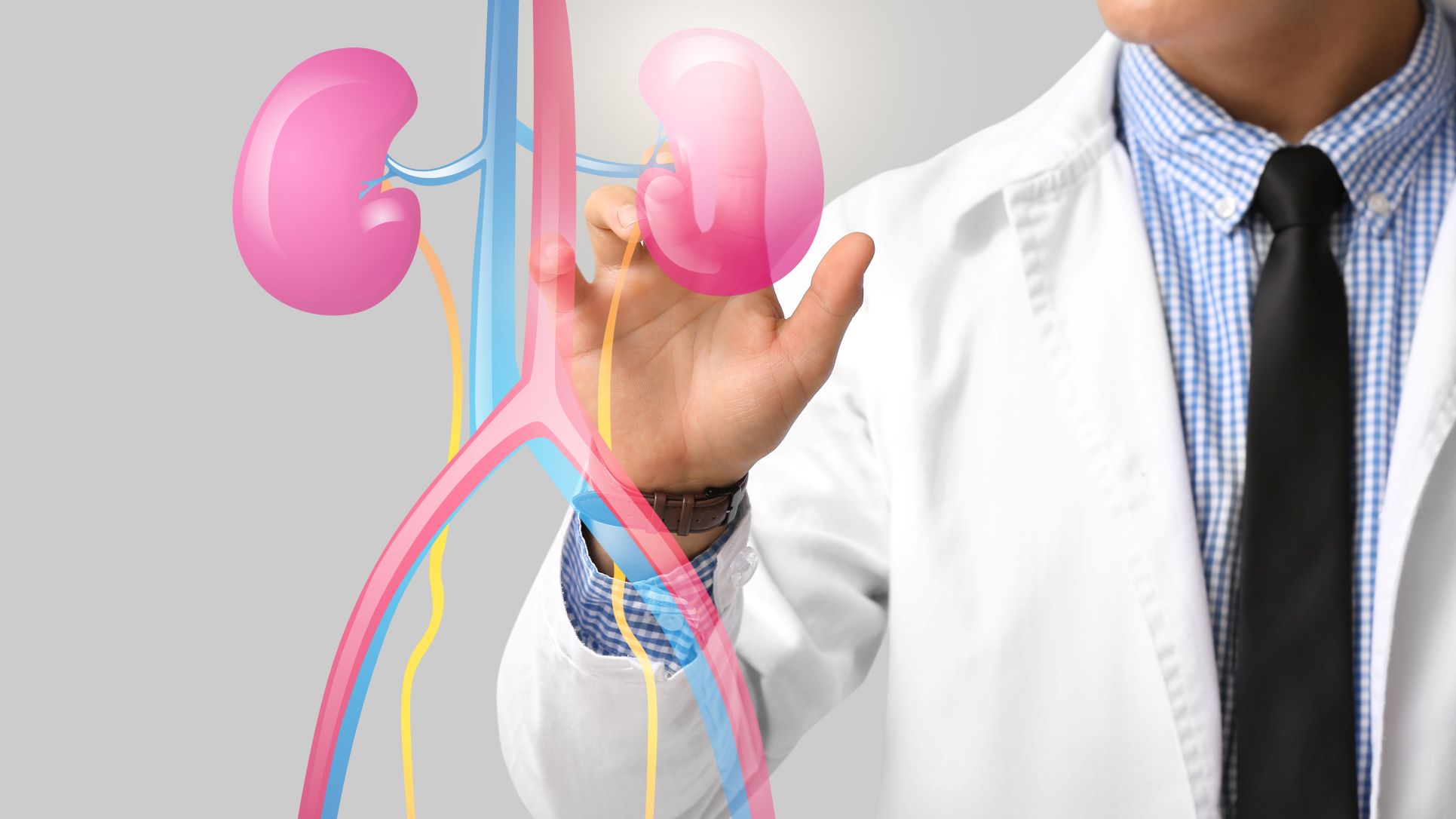
Ureteric colic is severe, often intermittent pain caused by obstruction or irritation of the ureter, commonly due to a kidney stone moving through the urinary tract.
The ureters are narrow tubes that carry urine from the kidneys to the bladder. When a stone becomes lodged in the ureter, urine flow can become partially or completely obstructed. The ureter may contract around the stone, producing intense cramping pain.
People searching for ureteric colic treatment are often looking for immediate pain relief. However, effective treatment involves more than controlling pain. The location and size of the stone, degree of obstruction, kidney function and presence or absence of infection must also be assessed.
At Prabhakar Bhurke Clinic, Dr. Sandip Prabhakar Bhurke, super specialist nephrologist and transplant physician, provides specialist evaluation for kidney-related conditions and can assess kidney function when urinary stones or obstruction are involved.
What Causes Ureteric Colic?
The most common cause is a ureteric stone that has moved from the kidney into the ureter.
Other less common causes of urinary obstruction can include:
-
Blood clots
-
Narrowing of the ureter
-
Scar tissue
-
Tumors or masses
-
Certain structural abnormalities
Kidney stones are by far one of the most common reasons for sudden severe renal or ureteric colic.
What Does Ureteric Colic Pain Feel Like?
Ureteric colic can be extremely painful.
Typical features include:
-
Sudden severe pain
-
Pain in the side or flank
-
Pain that comes in waves
-
Pain spreading toward the lower abdomen
-
Pain radiating toward the groin
-
Restlessness or difficulty finding a comfortable position
-
Nausea
-
Vomiting
Unlike some muscular back pain, people experiencing ureteric colic may frequently move around because they cannot find a comfortable position.
The exact location of pain can change as a stone moves down the ureter.
Ureteric Colic Symptoms to Watch For
Along with pain, a person may experience:
-
Blood in urine
-
Burning during urination
-
Frequent urge to urinate
-
Difficulty passing urine
-
Nausea
-
Vomiting
-
Sweating
-
Abdominal discomfort
If fever or chills occur with suspected ureteric obstruction, the situation requires urgent medical assessment.
How Is Ureteric Colic Diagnosed?
The first objective is to determine whether a stone is causing obstruction and whether kidney function is affected.
Medical History and Examination
The doctor may ask about:
-
Pain location
-
Duration of symptoms
-
Previous kidney stones
-
Urinary symptoms
-
Fever
-
Vomiting
-
Previous kidney problems
-
Current medicines
Urine Testing
A urine examination may help identify:
-
Blood
-
Infection
-
Crystals
-
Other abnormalities
A urine culture may be recommended when infection is suspected.
Blood Tests
Depending on the situation, blood tests may include:
-
Creatinine
-
eGFR
-
Electrolytes
-
Complete blood count
-
Other relevant investigations
Imaging
Ultrasound can identify many stones and may demonstrate urinary obstruction.
A non-contrast CT scan may provide more detailed information about:
-
Stone size
-
Stone location
-
Number of stones
-
Degree of obstruction
-
Urinary tract anatomy
Ureteric Colic Treatment: The First Step Is Pain Control
Managing severe pain is an important part of treatment.
Depending on the patient's medical history, a doctor may recommend an appropriate pain-relieving medicine.
Anti-inflammatory pain medicines are commonly used for renal colic in suitable patients, but they are not appropriate for everyone.
People with certain kidney conditions, stomach ulcers, bleeding risks, cardiovascular problems or other medical issues may need alternative treatment.
Do not self-medicate with painkillers, particularly if kidney function is abnormal.
Medicines That May Help a Ureteric Stone Pass
For selected patients with smaller ureteric stones, doctors may consider medical expulsive therapy.
Certain medicines can relax the ureter and may improve the chance of stone passage in appropriate situations, particularly for some distal ureteric stones.
However, medical expulsive therapy is not suitable for every stone.
The decision depends on:
-
Stone size
-
Stone location
-
Degree of obstruction
-
Kidney function
-
Infection status
-
Patient's symptoms
A large or persistently obstructing stone may require a procedure instead of waiting for spontaneous passage.
Can Ureteric Colic Be Treated at Home?
Some uncomplicated small stones can be managed initially under medical supervision.
Home care may involve:
-
Taking prescribed medicines correctly
-
Maintaining an appropriate fluid intake
-
Monitoring symptoms
-
Using a urine strainer if recommended
-
Attending follow-up imaging
However, home treatment should not replace medical evaluation when severe pain, obstruction or infection is suspected.
Drinking excessive amounts of water does not force a blocked stone through the ureter and can sometimes worsen discomfort.
How Much Water Should You Drink During Ureteric Colic?
Adequate hydration is important, but there is no benefit in forcing large quantities of water rapidly during an acute stone attack.
The appropriate fluid intake depends on:
-
Kidney function
-
Degree of obstruction
-
Urine output
-
Heart health
-
Other medical conditions
If a doctor has advised fluid restriction, follow that advice.
When Does Ureteric Colic Need a Procedure?
A procedure may be considered when:
-
The stone is unlikely to pass naturally
-
Pain remains uncontrolled
-
The stone causes persistent obstruction
-
Kidney function is deteriorating
-
There is recurrent obstruction
-
The stone is large
-
The patient has repeated emergency visits
-
There is an anatomical reason preventing passage
The specific procedure depends on the stone's location and size.
Ureteroscopy and Laser Lithotripsy
Ureteroscopy is a commonly used minimally invasive procedure for ureteric stones.
A thin scope is passed through the urinary tract to reach the stone.
A laser may then be used to fragment the stone into smaller pieces.
The fragments can be removed or allowed to pass depending on their size and the clinical situation.
A temporary ureteral stent may sometimes be placed after the procedure.
ESWL for Ureteric Stones
Extracorporeal shock wave lithotripsy (ESWL/SWL) uses externally generated shock waves to break a stone into smaller fragments.
Its suitability depends on:
-
Stone size
-
Stone location
-
Stone composition
-
Stone density
-
Body habitus
-
Urinary anatomy
Not every ureteric stone is appropriate for ESWL.
When Is Surgery Urgently Needed?
Most ureteric stones are not emergencies, but certain situations require immediate intervention.
A blocked urinary tract with infection can become dangerous.
Urgent treatment may be necessary if a patient has:
-
Fever with urinary obstruction
-
Chills
-
Severe infection
-
Very low urine output
-
Worsening kidney function
-
A solitary functioning kidney with significant obstruction
-
Uncontrolled pain or vomiting
In an infected obstructed system, the immediate priority may be to establish drainage using a ureteral stent or nephrostomy.
Definitive stone removal is generally planned after the acute infection has been appropriately managed.
Can Ureteric Colic Damage the Kidney?
A short episode of uncomplicated obstruction does not necessarily cause permanent kidney damage.
However, prolonged or severe obstruction can impair kidney function.
The risk may be greater when:
-
Both urinary tracts are obstructed
-
The patient has only one functioning kidney
-
Infection is present
-
Kidney function is already reduced
-
Obstruction persists for an extended period
This is why persistent stone-related obstruction should not be ignored.
Ureteric Colic and Kidney Function Tests
A doctor may check serum creatinine and eGFR when:
-
Obstruction is significant
-
The patient has known kidney disease
-
There is reduced urine output
-
The stone is large
-
There is a solitary functioning kidney
-
Symptoms are severe or persistent
Monitoring kidney function helps determine the urgency and safety of treatment.
How Long Does Ureteric Colic Last?
The duration varies.
Pain may come in waves as the ureter contracts and the stone changes position.
A small stone may eventually pass, while a larger stone may remain lodged and continue causing symptoms.
Persistent pain does not necessarily mean that the stone is moving successfully.
Follow-up assessment may be required to confirm whether the stone has actually passed.
What Happens After the Stone Passes?
Pain may improve significantly after the stone enters the bladder or leaves the urinary tract.
However, follow-up can still be important.
The doctor may recommend:
-
Imaging to confirm stone clearance
-
Stone analysis
-
Urine testing
-
Blood tests
-
Metabolic evaluation for recurrent stone formers
-
Dietary advice
If symptoms continue after presumed stone passage, another cause should be considered.
Pain After Passing a Kidney Stone
Some patients continue to experience mild discomfort after a stone passes.
Possible reasons include:
-
Temporary ureteral irritation
-
Residual stone fragments
-
Persistent obstruction
-
Another stone
-
Urinary infection
Severe or worsening pain after apparent stone passage should not automatically be attributed to normal recovery.
How Can Future Ureteric Colic Be Prevented?
Preventing future stones requires identifying the patient's risk factors.
Depending on the stone type, preventive strategies may include:
-
Maintaining appropriate fluid intake
-
Reducing excessive dietary sodium
-
Maintaining a balanced diet
-
Avoiding unnecessary supplements
-
Managing metabolic risk factors
-
Treating recurrent urinary infections
-
Taking prescribed preventive medicines
-
Completing metabolic evaluation when indicated
The ideal prevention plan depends on the stone's composition and the patient's medical history.
Why Is Stone Analysis Useful?
A passed or removed stone can sometimes be analyzed to determine its composition.
Common stone types include:
-
Calcium oxalate
-
Calcium phosphate
-
Uric acid
-
Struvite
-
Cystine
Knowing the composition can help doctors recommend more targeted prevention.
Ureteric Colic Treatment at Prabhakar Bhurke Clinic
At Prabhakar Bhurke Clinic, Dr. Sandip Prabhakar Bhurke, super specialist nephrologist and transplant physician, provides specialist evaluation for kidney-related problems associated with urinary stones and obstruction.
Depending on the patient's condition, assessment may include:
-
Evaluation of severe flank or renal colic
-
Kidney-function testing
-
Creatinine and eGFR assessment
-
Review of ultrasound or CT findings
-
Evaluation of urinary obstruction
-
Assessment of recurrent kidney stones
-
Management of kidney-related complications
-
Coordination with urological specialists when a stone-removal procedure is required
-
Long-term kidney health and stone-prevention guidance
Treatment is selected according to the patient's symptoms, stone characteristics, kidney function and overall health.
Frequently Asked Questions
What is the fastest treatment for ureteric colic?
Pain control is usually an immediate priority. If a stone is unlikely to pass or causes significant obstruction, a procedure such as ureteroscopy or another appropriate intervention may be required.
Can ureteric colic go away on its own?
Yes, some small stones can pass spontaneously. However, the likelihood depends strongly on stone size and location.
Is ureteric colic the same as kidney stone pain?
Ureteric colic is commonly caused by a kidney stone that has entered and obstructed the ureter. Kidney stones that remain inside the kidney may cause different or no symptoms.
Can drinking water remove a ureteric stone?
Adequate hydration supports urinary health, but drinking excessive water does not guarantee passage of a stone and is not a substitute for treatment of significant obstruction.
When is ureteric colic an emergency?
Severe pain accompanied by fever, chills, very low urine output, worsening kidney function or persistent vomiting requires urgent medical assessment.
Does every ureteric stone require surgery?
No. Some small uncomplicated stones can pass without a procedure. Larger, persistently obstructing, infected or otherwise complicated stones may require intervention.
Conclusion
Ureteric colic treatment depends on more than simply controlling severe pain. The size and location of the stone, degree of urinary obstruction, kidney function and presence of infection all influence management.
Small uncomplicated stones may sometimes pass with appropriate medical treatment and monitoring. Stones that are large, persistently obstructing or causing complications may require procedures such as ureteroscopy with laser lithotripsy or ESWL.
Particular caution is required when urinary obstruction occurs with fever or infection because this can become a medical emergency.
If you experience severe flank pain or have been diagnosed with a ureteric stone, specialist assessment can help determine whether observation, medication or stone removal is appropriate.
For specialist kidney evaluation and management, consult Dr. Sandip Prabhakar Bhurke at Prabhakar Bhurke Clinic.
Medical Disclaimer
This article is intended for general educational and informational purposes only and should not be considered medical advice, diagnosis or treatment. Ureteric colic can have different causes, and treatment depends on the size and location of the stone, degree of obstruction, kidney function, infection status and other medical factors. Pain medicines and medical expulsive therapy are not suitable for everyone and should be used only under appropriate medical guidance. Do not attempt to force a stone through the urinary tract by excessive water intake or use unprescribed medicines or herbal remedies. Fever, chills, severe or worsening pain, very little or no urine, persistent vomiting or sudden deterioration may indicate a serious complication requiring urgent medical attention. Consult Dr. Sandip Prabhakar Bhurke or another qualified healthcare professional for individualized diagnosis and treatment.